Luxury is more than a high price or a famous label. Over the last 50 years, it has meant skilled work, distinctive design, scarce materials, and the privilege...
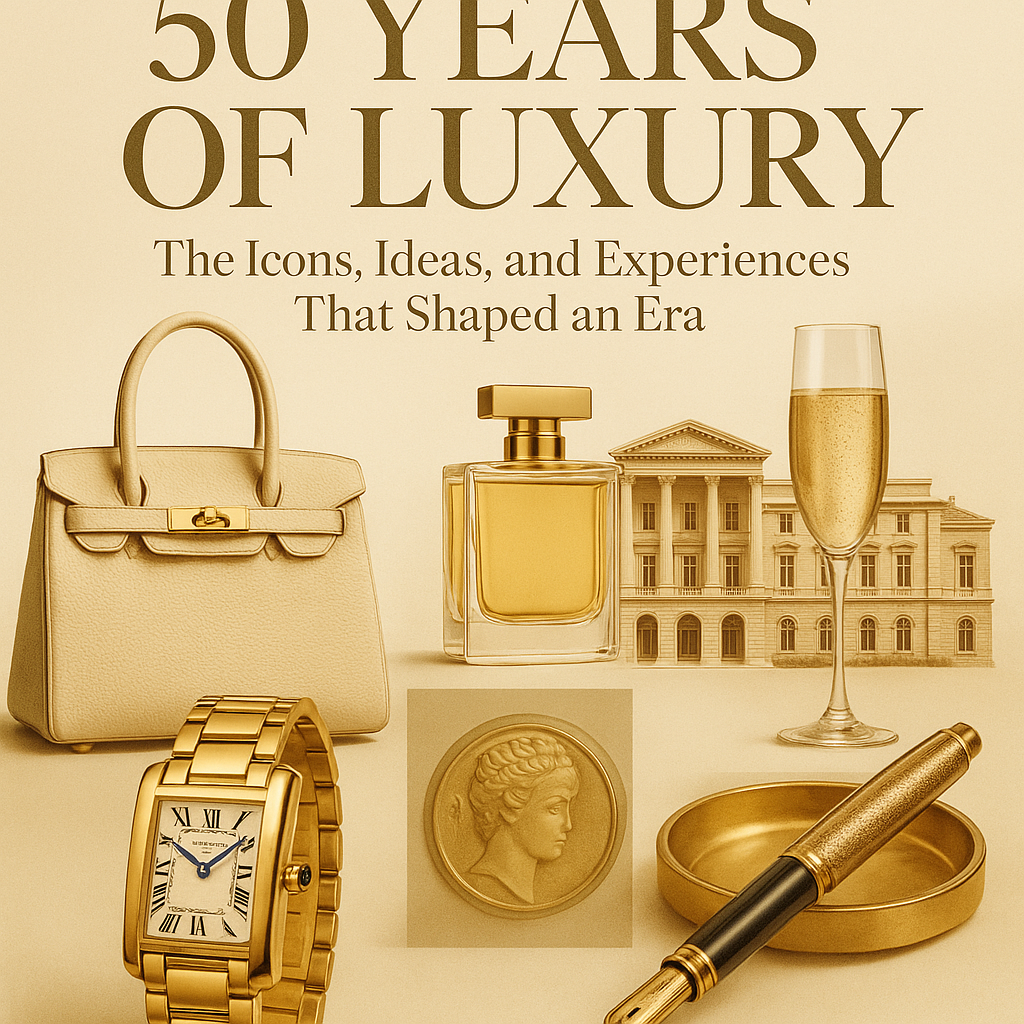
50 Years of Luxury: The Icons, Ideas, and Experiences That Shaped an Era
Luxury is more than a high price or a famous label. Over the last 50 years, it has meant skilled work, distinctive design, scarce materials, and the privilege of choosing how to spend time. Its strongest icons join lasting usefulness with beauty; its weakest promises mistake visibility for value. The next era will reward substance, care, and experiences worth remembering.
Key Takeaways- Luxury changed from a largely product-led world of craftsmanship and status into one that also prizes travel, dining, access, and personal meaning.
- Heritage matters when it explains quality and design; it is not a substitute for either.
- The most persuasive luxury experiences depend on skilled people, careful service, and a strong sense of place—not simply a large bill.
- Repair, resale, and responsible sourcing are becoming part of how buyers judge lasting value.
- The next generation of luxury will likely combine human expertise with useful technology, while keeping the human encounter at the center.
What Is Luxury Over the Past 50 Years?
Luxury is a form of considered excess: more care, rarity, service, or aesthetic pleasure than daily necessity requires. But that definition is incomplete. What counted as luxurious in the 1970s does not automatically satisfy a buyer in 2026. The category shifts with technology, wealth, culture, and taste, while the best products still share a few sturdy traits: competent workmanship, materials chosen for purpose, and a clear point of view.
The last half-century offers a useful correction to the idea that luxury simply means buying expensive things. In watches, the quartz revolution put accurate timekeeping within reach of many more people and forced traditional makers to explain what a mechanical watch offered beyond telling time. In fashion, designers moved between formal couture, ready-to-wear, street style, and global branding. In cars, engineering and comfort increasingly had to coexist with safety expectations and new powertrain technologies. At the same time, luxury travel, destination dining, and highly personal service made the experience itself an object of desire.
The change was not a neat march from old-fashioned to modern. It was a widening of the definition. A handmade leather bag can be a luxury; so can a quiet week at a well-run hotel, if the service gives guests genuine ease rather than a parade of scripted gestures. A tasting menu can be memorable because of thoughtful cooking and generous hospitality, not because each course arrives with a speech. Frankly, price is an unreliable guide. It measures what a seller asks, not whether the thing earns its place in a life.
When I examine luxury claims, I look for evidence: who made the object, how it performs, whether it can be repaired, and whether the experience feels personal without becoming fussy. Heritage is useful when it explains a technique or a design choice. A founding date on a campaign image, by itself, explains nothing. The history of Rolex, for example, is best understood through the development of its products and technical ideas, rather than as a string of anniversary slogans.
Beauty matters, too. Not as decoration laid over poor work, but as a sign that someone took care with form, proportion, and finish. That care honors the dignity of skilled labor and the gifts of the natural world; it also gives an object a chance to outlast a season. A luxury purchase is most convincing when it respects both its maker and its owner.
The five decades since 1976 have also changed who gets to define luxury. For a long time, a small number of maisons, department stores, editors, and wealthy patrons had an outsize say. Global travel, television, the internet, social media, and resale platforms gave consumers more reference points—and more ways to challenge a brand’s claims. Access broadened, though it did not become equal. Today, a logo can be recognized worldwide in seconds, while the work behind a quiet, unbranded object may remain invisible. That tension—between recognition and discernment—runs through the whole story.
Core Benefits and Importance
Luxury can be worthwhile. It can also be an expensive way to buy a feeling that fades by Tuesday. The difference lies in what the purchase contributes beyond the first impression.
- Craftsmanship and service. Skilled construction, careful finishing, and knowledgeable staff can make an object more reliable and an experience more comfortable. This is not a promise that every costly item is well made. Inspect the seams, movement, materials, and aftercare; ask practical questions. Good service answers them without turning the conversation into a sales performance.
- Durability and repair. Some luxury objects are designed to be maintained, restored, or passed on. That can make ownership more satisfying and reduce replacement churn. Yet repairability varies widely, and a high price does not guarantee available parts or affordable service. Ask before purchase, not after a clasp fails or a watch stops.
- A strong design identity. A well-designed chair, coat, car, or hotel suite can bring daily pleasure because its proportions, controls, textures, and materials have been thought through. The value is not mystical. It comes from repeated use: the jacket that fits well, the seat that supports a long drive, the room that makes it easy to rest.
- Access to expertise and place. A good guide, sommelier, concierge, or craftsperson can open up an experience that would otherwise be hard to arrange. Their knowledge matters. So does their discretion. For luxury travel, a clear itinerary and attentive local advice may beat a long list of exclusive-sounding add-ons.
- Cultural continuity. Houses that preserve techniques, archives, or specialist skills can keep knowledge alive across generations. The Victoria and Albert Museum’s fashion resources show how clothing reflects changing materials, technologies, social habits, and ideas of beauty. This context helps explain why a design may matter beyond its label.
- Personal meaning. The best purchases often connect to a milestone, a craft, a place, or a person. A watch received at graduation or a meal shared with family can carry meaning that its retail price cannot capture. That is a legitimate kind of value, provided we do not confuse emotional significance with a guaranteed financial return.
Here’s the kicker: luxury is not automatically an investment. Most fashion, jewelry, and travel spending should be judged as consumption, not a clever route to profit. Resale markets fluctuate; condition, provenance, demand, and fees all matter. Bain’s reporting on the wider luxury market is useful for understanding industry shifts, but market-wide growth figures cannot predict the future price of one handbag or timepiece. Its luxury goods market study is a better starting point for sector context than a promise of easy returns.
The larger benefit, when it is real, is a richer relationship with what we own and experience. A durable object can invite care rather than replacement. A meal prepared with skill can give attention to ingredients and hospitality. A journey can help a traveler see a place beyond its hotel lobby. None of this requires limitless consumption. In fact, selectiveness is part of the point. Buying fewer things, chosen well, is often a more convincing expression of taste than buying everything a campaign says is essential.
How to Choose Luxury Goods and Experiences
A good choice begins with your actual life, not a mood board. I use a simple selection process that works for a watch, a wardrobe, a hotel, or a special dinner.
- Name the job. What must the purchase or experience do? A travel bag may need to fit airline limits, hold a laptop, and survive frequent use. A resort may need quiet, accessible transport, and reliable food more than a famous spa. A restaurant chosen for a celebration should suit the guests, not simply collect prestige points.
- Set a whole-cost budget. Include maintenance, insurance, alterations, transport, tips, and the opportunity cost of the money. For a car, include servicing and depreciation. For a watch, ask about scheduled maintenance and the nearest authorized service center. For travel, check what the quoted room rate excludes. A price that looks manageable before extras can turn foolish afterward.
- Inspect materials and workmanship. Look closely at stitching, joints, hardware, finishes, and controls. For gemstones, ask for clear documentation and an explanation of grading. For clothing, examine fabric recovery and seam construction. For hotels and dining, look at the consistency of service and the clarity of policies. The details are not glamorous, but they are where the truth lives.
- Test the experience in person when possible. Wear the shoes; handle the bag; sit in the car; try the watch on your wrist. For a hotel, read recent guest reports and contact the property with specific questions. For a restaurant, inspect the menu, dietary options, location, and reservation terms. A beautiful photograph can conceal an awkward fit or a noisy room.
- Separate heritage from proof. Ask what a brand’s history actually contributes today: a technique, a durable design, specialist repair, or an archive that informs new work? If the answer is only a familiar logo and a story about founders, keep your wallet closed. Heritage earns attention; current quality earns the purchase.
- Check provenance, sourcing, and aftercare. For precious materials and collectibles, establish where they came from and what documentation accompanies them. Ask whether repairs are available, whether parts can be replaced, and how a brand handles returns. If a seller dodges straightforward questions, that is useful information.
- Consider the people and the place. For travel and dining, ask whether the experience respects local culture and the staff who make it possible. A thoughtful hotel can contribute to its community and treat its employees well; a polished lobby alone proves neither. Luxury should not require other people to become invisible.
- Pause before paying. Leave the tab open overnight if the purchase is not urgent. Compare alternatives on substance, not just status. I have found that a brief pause cuts through scarcity language and lets a buyer remember what they actually wanted. If the decision still makes sense in daylight, proceed with clearer eyes.
Most important, define your own standard. Some people value a discreet hotel with exceptional sleep; others care about a rare vintage watch or a dining room with a singular point of view. No ranking can decide that for you. The sensible question is whether the experience delivers the qualities you value, at a cost you can carry without resentment. Good taste is not a contest in spending. It is attention, restraint, and the ability to recognize excellent work.
Luxury Then and Now: A Comparison
The strongest competitor to traditional, product-centered luxury is today’s experience-centered luxury. Neither has replaced the other. Many buyers want both: a well-made object and the time, access, or service that gives it context. This comparison is qualitative; it describes broad shifts, not a measurement of every brand or buyer.
| Dimension | Traditional product-led luxury | Experience-led and future-facing luxury |
|---|
| Main focus | Objects such as watches, clothing, jewelry, cars, and home furnishings | Travel, dining, wellness, events, access, and tailored service |
| Typical proof of value | Materials, construction, design, maker expertise, and provenance | Quality of hosting, local knowledge, comfort, privacy, and memorable detail |
| How it is enjoyed | Ownership, daily use, collecting, repair, or passing an item on | Participation, discovery, rest, learning, and shared occasions |
| Common weakness | A famous name can overshadow current quality or practical use | A high price can disguise a generic itinerary or service that feels staged |
| Best test | Does the object perform well and age with dignity? | Does the experience feel thoughtful, humane, and worth remembering? |
| Future advantage | Repair, durable design, traceable materials, and specialist care | Personalization, cultural connection, useful technology, and excellent human service |
The table should not be read as an argument to abandon objects. A good watch can be an heirloom; a favorite coat can be worn for decades; a car can embody a maker’s engineering culture. Nor should experiences receive a free pass. A private transfer, chef’s table, or remote retreat is not inherently meaningful just because it is expensive. The competition is really between substance and theatre, and both categories can supply either.
The next chapter will likely reward brands that connect the two. A hotel may offer an excellent bed and a thoughtful local guide. A fashion house may support repair and resale, not just release another seasonal product. A watchmaker can combine traditional finishing with precise digital service records. Technology has a role when it removes friction; it becomes tiresome when it replaces a human being who could solve the problem in thirty seconds.
The Michelin Guide is one example of how an experience can gain authority through a recognizable system of assessment rather than price alone. Its restaurant and hotel guides help travelers discover places, but even a respected guide cannot decide whether a particular meal will suit a particular guest. Use recommendations as evidence, not as a substitute for your own judgment. That is true for a restaurant, a resort, and a watch review.
Five Decades of Ideas and Icons
Luxury history is not a procession of flawless innovations. It is a story of disruptions, adaptations, and a few objects or places that captured their moment. Looking back helps distinguish lasting change from the season’s loudest campaign.
In the late 1970s and 1980s, new technology and expanding global markets challenged established assumptions. Quartz watches delivered accuracy at a lower cost than many mechanical alternatives, putting pressure on traditional watchmakers. Mechanical horology survived not because quartz failed, but because consumers also valued craft, engineering, design, and the pleasure of a mechanical object. The lesson still applies: a product need not win on the simplest utility to deserve a place, but its other qualities must be real.
The 1980s made visible status especially powerful. Designer labels, conspicuous accessories, and performance cars became recognizable shorthand for success. Luxury houses expanded their reach, and fashion communication grew more global. There was genuine creative energy in this period; there was also plenty of logo worship. The two are not the same thing.
During the 1990s, a different appetite emerged. Minimalist clothing, clean interiors, and quieter forms of branding offered relief from excess. At the same time, global corporate ownership and wider distribution changed how many heritage houses operated. This period complicated the old claim that luxury was always small-scale and personal. Some brands maintained specialist production while building international businesses; others sold the language of rarity at a much larger scale.
The early 2000s brought online retail, digital media, and a faster exchange of images. Buyers could compare products and discover designers outside their home markets, while brands learned to tell stories through screens. Travel also became more visible as an expression of taste: distinctive hotels, private itineraries, and destination restaurants became part of the conversation. A photograph, however, is an edited fragment. It cannot tell you whether the room is quiet, the guide is good, or the meal is warm when it arrives.
In the 2010s, social platforms made luxury more public and more immediate. Influencers and celebrity partnerships could make a bag, hotel, or restaurant famous in a day. Resale platforms expanded access to pre-owned products, and buyers began asking sharper questions about provenance and value. Fashion’s history also became easier to explore outside brand advertising; museum resources such as the V&A’s collections and articles offer a useful counterweight to sales copy.
The 2020s have sharpened two competing desires: exceptional access and greater responsibility. Some customers want private, highly tailored experiences; others want traceable sourcing, resale, repair, and fewer purchases. These preferences can coexist. A traveler can value comfort and still want a knowledgeable local host. A collector can love a rare object and still ask where its materials came from. Sustainability claims deserve scrutiny, but the direction of the questions is sensible: how long will this last, what happens when it breaks, and who bears the cost of making it?
Across every decade, the most durable icons have done more than advertise status. They have solved a design problem, advanced a craft, or made an experience unusually satisfying. Their meaning can change over time. That is not a flaw. It is how culture works: later generations inherit objects and ideas, then decide what still merits attention.
Common Mistakes to Avoid
Mistake 1: Treating price as proof. A large price tag can reflect materials and labor, but it may also include distribution, marketing, scarcity tactics, or brand prestige. Compare construction and service against credible alternatives. If a seller uses price itself as the only evidence of quality, ask harder questions.
Mistake 2: Paying for a heritage story without checking the present-day product. A company can have an impressive archive and still make a disappointing item. Inspect what is being sold now: the finish, fit, material, warranty, and repair options. The past is context, not a quality-control report.
Mistake 3: Assuming something will appreciate. Certain watches, artworks, cars, and handbags may command strong secondary-market prices in particular conditions. That does not make them safe investments. Fees, authenticity, fashion cycles, servicing, and buyer demand can all change the result. Buy because you value owning the object, not because a salesperson has forecast your profit.
Mistake 4: Confusing exclusivity with excellence. A difficult reservation, members-only lounge, or invitation-only event may create a feeling of scarcity. It may also simply be inconvenient. Ask what the restriction adds: a better meal, access to expertise, privacy, or a meaningful encounter? If the answer is merely that other people are excluded, the appeal is thin.
Mistake 5: Overlooking the human work. The person repairing a bracelet, preparing a tasting menu, cleaning a guest room, or guiding a city tour is part of the luxury experience. Treating staff well is not an optional flourish. It is the minimum standard for an experience that claims care and refinement. A gracious guest notices the people who make comfort possible.
Mistake 6: Letting social media choose for you. A photo can make a hotel pool look deserted or a dish look monumental. It cannot show service on a busy night, the noise beside the pool, or whether the food tastes balanced. Use images to shortlist options, then consult detailed, recent information and ask direct questions.
Mistake 7: Buying for an imagined identity. A jacket, car, or resort stay cannot make a person more interesting by itself. It can support a life already being lived, and it may bring real pleasure. But status purchases made chiefly to impress strangers often age badly in the mind, even when they age well in a wardrobe.
Mistake 8: Mistaking abundance for generosity. More courses, more amenities, more gold trim, and more service rituals do not automatically improve an experience. Sometimes the most considerate choice is restraint: a shorter menu, an uncluttered room, a clear itinerary, or a host who knows when to leave guests in peace. Good service has judgment. It does not need to announce itself every five minutes.
Frequently Asked Questions
What makes a luxury brand genuinely high-end?
There is no single test. Look for consistently strong design and execution, credible materials, knowledgeable service, and meaningful aftercare. A useful history can deepen the proposition, but a logo and a high price are insufficient. The brand should be able to explain what it does well in specific terms.
Are luxury goods a good investment?
Usually, treat them as purchases for use and enjoyment, not as financial investments. Some objects retain value or become collectible, but resale depends on condition, authenticity, rarity, timing, and buyer demand. Include maintenance and selling fees in any estimate, and be wary of guaranteed-return language.
Is an experience better value than a luxury object?
It depends on what you value and how often you will use it. A frequently worn, repairable coat may bring years of pleasure. A carefully chosen trip or meal may create a memory that stays with a family. Compare the total cost with the practical and personal benefit; neither category wins automatically.
How can I choose a more responsible luxury purchase?
Ask about material sourcing, labor, durability, repair, resale, and the brand’s evidence for environmental claims. Prefer products you expect to use and care for over time. For travel and dining, consider local ownership, respectful cultural engagement, and the treatment of staff. Specific answers are more useful than broad promises.
Final Thought
Fifty years of luxury teach a plain lesson: fashion changes faster than the qualities people remember. A good object still feels good in the hand. A competent hotel still makes rest effortless. A remarkable meal still brings people together around a table. The emblem may shift from a visible logo to a discreet detail, and the preferred destination may change from a grand avenue to a remote shoreline, but skill and hospitality remain legible to anyone paying attention.
The best future for luxury is not endless novelty or ever-higher prices. It is a sharper respect for makers, materials, time, and the places that welcome us. That means brands should make fewer empty claims and more repairable products; hotels should offer genuine care rather than choreographed gestures; restaurants should treat ingredients and staff with equal seriousness. Customers, for their part, can resist the urge to buy every new symbol of success. Choice is more satisfying when it is deliberate.
Beauty can be a form of gratitude: for skilled hands, for good materials, for a landscape seen with care, or for the people who make a celebration possible. That does not excuse excess, and it does not make every beautiful thing necessary. It simply reminds us that refinement is most admirable when it respects the world and the people who contribute to it. The icons that deserve another fifty years will be the ones that combine beauty with purpose, welcome with dignity, and ambition with restraint.