Aston Martin Valhalla Spider: The Open-Top Supercar, Explained
Aston Martin’s Valhalla Spider is an open-top version of the Valhalla supercar, pairing a 1,064-hp plug-in hybrid powertrain with revised aerodynamics and removable roof options. It keeps the coupe’s core mechanical package while adding the particular pleasure—and engineering complications—of driving with the sky overhead.
The headline appeal is easy to understand: this is a mid-engine hybrid supercar that can be driven open to the air, yet it has not traded away its headline powertrain or the Valhalla’s basic character. The finer details matter more than the word “Spider,” though. Roof choice affects the stated maximum speed, Aston Martin has altered airflow management rather than simply cutting off the coupe’s roof, and the company has not yet disclosed either a price or a full performance sheet for the roadster.
That leaves buyers with a promising but incomplete picture. I find the most meaningful question is not whether an open cockpit sounds appealing—it plainly will to some drivers—but whether the additional freedom, engineering, and cost make sense for the way the car will actually be used. The answer depends on priorities: top speed, open-air driving, everyday comfort, or the appeal of owning a rare variant. There is no sensible reason to pretend those priorities are identical.
What Is the Aston Martin Valhalla Spider?
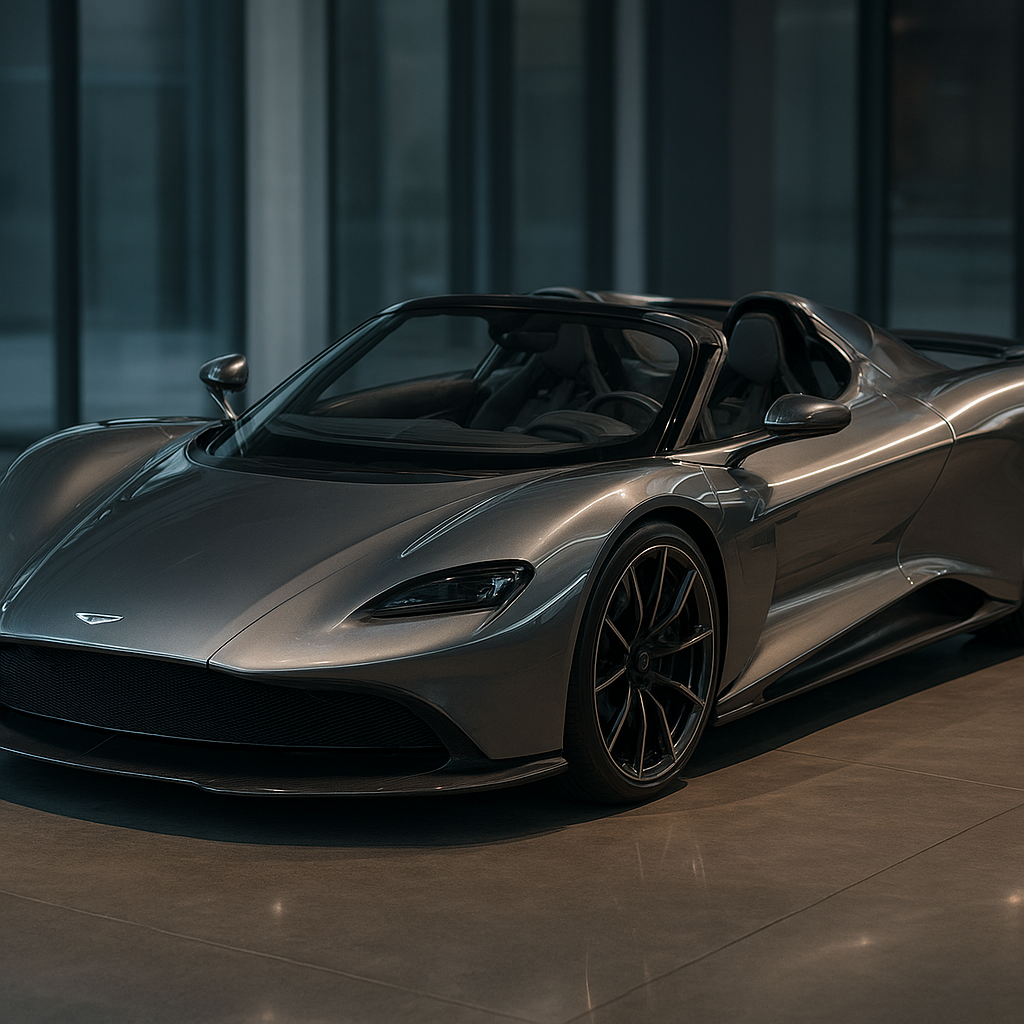
The Valhalla Spider is Aston Martin’s open-top variant of the Valhalla, a two-seat plug-in hybrid supercar. It retains the coupe’s stated powertrain: a 4.0-liter twin-turbocharged V-8 working with three electric motors, one positioned on the front axle. That arrangement gives the car all-wheel drive, while an eight-speed dual-clutch gearbox sends power through the transmission. Aston Martin quotes 1,064 horsepower and 811 lb-ft of torque for the combination.
The defining change is not merely the missing fixed roof. Aston Martin’s design team reworked the car’s aerodynamics for open-cockpit operation with help from the company’s racing division. A removable wind deflector directs air over the cockpit toward the rear intake snorkel, and the active aerodynamic elements have been recalibrated. Those details are important because airflow around an open cabin is not the same problem as airflow over a closed one. The car has to manage air around occupants and bodywork while still feeding the systems that depend on it.
There are two roof choices. A removable fabric roof comes as standard and is rated for speeds up to 124 mph when installed. Buyers can also choose an optional carbon-fiber roof; with that in place, Aston Martin says the Spider can reach the coupe’s 217-mph top speed. The company has not disclosed the carbon roof’s price. This distinction deserves attention: the open-top specification does not automatically mean the car has the same quoted maximum speed in every roof configuration.
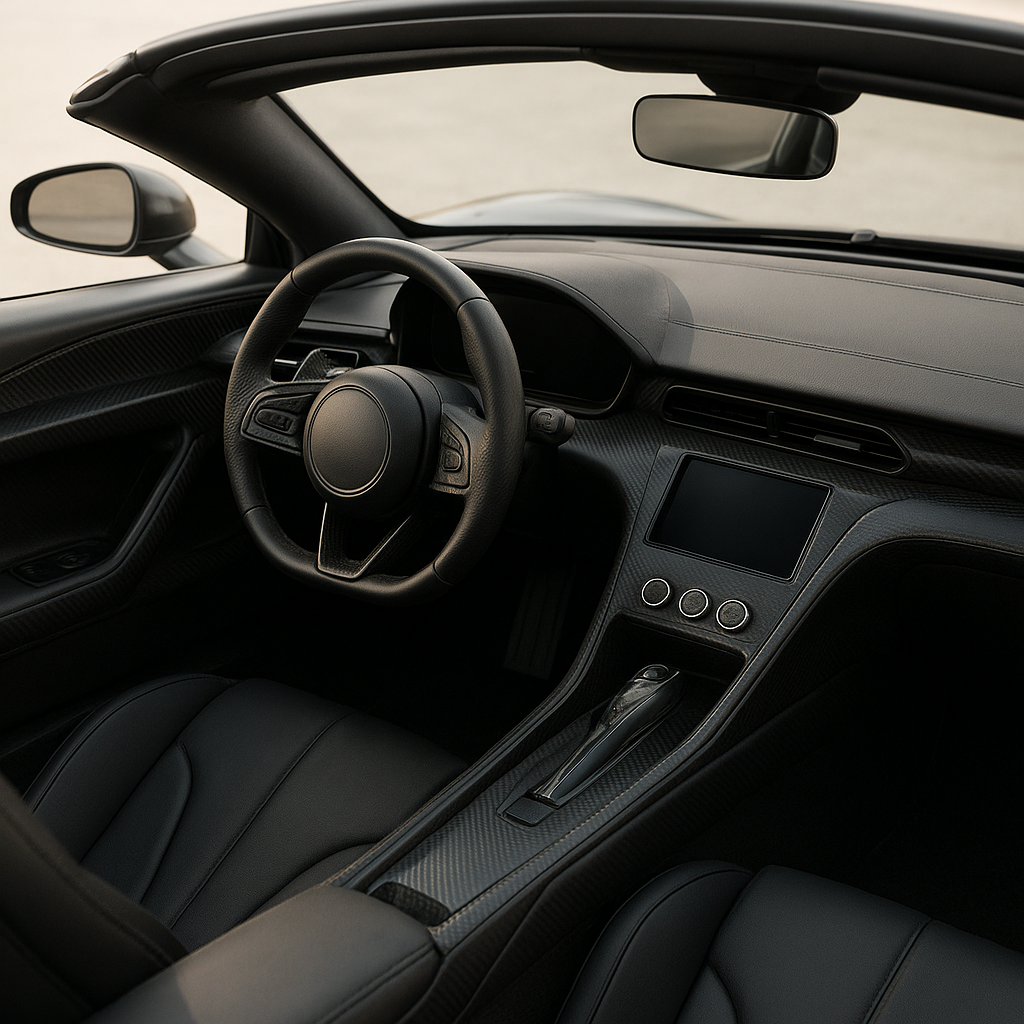
Inside, Aston Martin has added carbon-fiber touring seats intended to make the cabin more comfortable and easier to enter and exit. The roof can be stowed, adding headroom, and the Valhalla’s dihedral doors remain unchanged. That last point may sound like a styling footnote, but the doors are part of the car’s identity and also shape the experience of getting into a low two-seat cockpit.
Frankly, “Spider” can sound like a simple body-style label. Here, it describes a substantial piece of engineering work, though the published details are not yet a complete technical specification. For general model information, readers can consult Aston Martin’s Valhalla model page.
Core Benefits and Why the Spider Matters
The most obvious benefit is open-air driving without abandoning the car’s core hybrid hardware. The Spider keeps the same stated V-8-and-electric-motor arrangement as the coupe, so Aston Martin has not presented this version as a softer, less powerful alternative. The 1,064-hp output and 811 lb-ft of torque make the central proposition plain: this remains a high-performance machine first, with the ability to remove the roof as an added dimension.
That distinction is useful. Some buyers will want the sensation of an open cockpit on suitable roads and in favorable weather; others may value the Spider because it offers a different relationship with the car even when its roof is fitted. Neither preference makes the car objectively better. It simply identifies what a buyer wants from a very expensive, highly specialized vehicle. Let’s be real: a roofless supercar is not automatically more enjoyable in every climate, at every speed, or on every drive.
A second benefit is that Aston Martin says it has worked on the airflow rather than treating the roof as a cosmetic change. The wind deflector is designed to direct air over the cockpit and toward the rear intake snorkel, while the active aerodynamic elements have been recalibrated for open-top operation. The reported information does not provide detailed downforce figures or a technical comparison of those elements with the coupe, so it would be careless to claim that the Spider matches the hard-top’s aerodynamic performance in every condition. What can be said is that the company has identified airflow as a design problem and made specific changes to address it.
The roof options also make the car less dependent on fair weather. The fabric roof is standard and allows speeds up to 124 mph when installed. The optional carbon-fiber roof raises that stated ceiling to 217 mph, matching the coupe. That gives buyers a decision with practical consequences, not just a choice of trim material. The carbon option is the route for someone who wants the coupe’s published maximum speed, while the removable fabric roof supplies a standard cover without that same stated limit.
The cabin changes may matter more over ordinary ownership than the headline output. Carbon-fiber touring seats are intended to improve comfort and ease of entry and exit, and stowing the roof adds headroom. Those are concrete usability aims. The source does not give seat-adjustment details, cabin measurements, or long-distance comfort results, so the promise should not be confused with independent proof. Still, it is sensible for a roadster to address the practical business of getting in, getting out, and spending time in the cockpit.
There is also the appeal of scarcity. The Valhalla run is stated at 999 cars, with the Spider representing roughly one quarter of that total. Top Gear reports that nearly every roadster example has been spoken for. Rarity can add interest, but it is not a substitute for quality or a guarantee of future value. A well-made object can reflect skill and disciplined work; responsible appreciation means noticing that craft without treating every limited production number as an investment promise.
Step-by-Step Guide to Assessing the Valhalla Spider
- Decide whether open-air driving is genuinely important. Start with how and where the car will be used. If the roof will stay fitted almost all the time, the coupe may be the more straightforward choice. If an open cockpit is a central part of the appeal, the Spider has a clear purpose. I would begin with that honest distinction, not with a photograph or a production-count headline.
- Compare the roof configurations before discussing price. The standard removable fabric roof is rated for speeds up to 124 mph. The optional carbon-fiber roof allows the stated 217-mph top speed of the coupe. Aston Martin has not announced the option’s cost. Buyers should ask the company or its authorized retailers for current specifications, availability, and pricing rather than guessing at the premium. The roof choice has a real performance distinction, so it deserves a direct answer.
- Separate confirmed performance from expectation. The Spider’s published figures include 1,064 hp and 811 lb-ft of torque. Aston Martin has not announced Spider acceleration figures in the report. The Valhalla coupe is said to accelerate from zero to 62 mph in 2.5 seconds, but that is not an officially stated Spider result. It may be tempting to assume the numbers are identical; that is still an assumption, not a confirmed specification.
- Ask what the aerodynamic revisions do—and what has not been published. The reported changes include a removable wind deflector, air directed over the cockpit toward the rear intake snorkel, and recalibrated active aerodynamic elements. A serious buyer can ask for technical documentation explaining how the system behaves with the roof removed and with each roof fitted. Do not invent a downforce comparison where no figure has been disclosed. Precision beats showroom bravado.
- Evaluate the cabin as a physical space. The carbon-fiber touring seats are intended to improve comfort and make entry and exit easier. The stowed roof adds headroom, while the dihedral doors remain. Buyers should sit in the car, test the entry and exit, and consider whether the seating suits their body and driving habits. A specification sheet cannot tell you whether a seat fits well after an hour behind the wheel.
- Treat price and allocation as open questions. The Spider’s price has not been announced. The coupe starts at $1.05 million, so a higher Spider price is plausible, but the actual figure is not reported. Top Gear says nearly every Spider has been spoken for, which makes availability worth checking promptly. That report is not a substitute for confirmation from Aston Martin about a specific build slot, delivery timing, or final specification.
- Choose the car for its use, not for a resale story. A low production figure can make a model scarce, but scarcity alone cannot establish future value. Consider ownership costs, storage, local driving conditions, and the practical need for a roof. The most defensible purchase is one whose compromises and pleasures make sense to its owner, even if market speculation goes nowhere.
Comparison Table: Valhalla Spider vs. Valhalla Coupe
The closest comparison is the Valhalla coupe, not a rival model with figures absent from the reported information. The two share the stated powertrain, while the Spider adds open-top hardware and roof-dependent top-speed figures. Where Aston Martin has not reported a detail, it is marked as unannounced rather than filled in with guesswork.
| Detail | Valhalla Spider | Valhalla Coupe |
|---|
| Body style | Open-top two-seater | Fixed-roof two-seater |
| Powertrain | 4.0-liter twin-turbo V-8 and three electric motors | Same stated V-8 and three-motor plug-in hybrid system |
| Stated output | 1,064 hp and 811 lb-ft of torque | Same stated output |
| Transmission | Eight-speed dual-clutch gearbox | Eight-speed dual-clutch gearbox |
| Drive arrangement | One electric motor at the front axle; all-wheel drive | Same stated arrangement |
| Roof | Standard removable fabric roof; optional carbon-fiber roof | Fixed hard top |
| Stated top speed | Up to 124 mph with fabric roof; 217 mph with optional carbon-fiber roof | 217 mph |
| Zero-to-62-mph time | Not announced | 2.5 seconds |
| Starting price | Not announced; expected to exceed the coupe, but not confirmed | $1.05 million |
| Production context | About one quarter of the 999-car Valhalla run | Remaining production allocation, exact split not reported |
This comparison exposes the meaningful trade. The Spider offers roof removal and a revised airflow setup, but its standard fabric roof carries a lower stated maximum speed than either the carbon-roof Spider configuration or the coupe. The coupe’s published acceleration figure should not be silently transferred to the Spider. Likewise, the Spider’s price cannot be treated as settled merely because the coupe has a published starting price.
For a buyer who values the open cockpit more than the coupe’s simple, fixed-roof arrangement, the Spider has a distinct case. Someone who wants the stated 217-mph maximum without paying for an optional roof—or who does not care about roof removal—may find the coupe the cleaner proposition. The reported facts do not establish which one is faster in acceleration, more comfortable on a particular road, or more valuable later. Those judgments require information that has not been announced.
Common Mistakes to Avoid
Assuming the roof simply comes off. That misses the engineering work described for the Spider. Aston Martin has added a removable wind deflector, directed airflow toward the rear intake snorkel, and recalibrated active aerodynamic elements. An open-top conversion changes how air moves around the cockpit. It is not accurate to describe the Spider as a coupe with the roof deleted and nothing else altered.
Treating every roof configuration as equivalent. The standard fabric roof is associated with a stated maximum speed of 124 mph. The optional carbon-fiber roof allows 217 mph, matching the coupe. If maximum speed matters to a buyer, the distinction is essential. If it does not, the carbon option may be an unnecessary expense—but its price has not been disclosed, so the decision cannot be made on a published premium yet.
Repeating the coupe’s acceleration figure as a Spider fact. The coupe’s zero-to-62-mph time is reported as 2.5 seconds. Aston Martin has not announced a corresponding Spider figure. The cars share the stated powertrain, but that does not authorize an editor—or a prospective buyer—to turn an expectation into a confirmed number. Wait for a published Spider specification.
Reading the horsepower figure as a complete ownership review. Output is only one part of the experience. Seating, visibility, roof operation, cabin comfort, and how the car is used all matter. Aston Martin says the touring seats are designed to improve comfort and entry and exit, but buyers still need to judge those features in person. A very large number on a spec sheet cannot tell you whether a cockpit suits you.
Mistaking a limited run for a guaranteed investment. The Valhalla production run is 999 cars, and the Spider is expected to make up about a quarter. Top Gear reports that nearly every roadster has been spoken for. Those facts indicate limited availability; they do not prove that the car will appreciate, or that any particular build will be easy to resell. Collectability is a possibility, not a promise.
Assuming the price is known. The coupe’s starting price is $1.05 million. The Spider’s price has not been announced, though an increase is expected. “Likely to cost more” is not the same as a confirmed retail figure. Ask for written pricing and a clear account of specification before making a financial decision.
Confusing theatrical design with useful design. The dihedral doors and open cockpit help give the car its character, but daily usability still depends on the person using it. The unchanged doors may be a welcome continuity for fans; they do not remove the need to test entry and exit. Good craftsmanship should serve the object’s purpose, not merely photograph well.
Frequently Asked Questions
How much does the Aston Martin Valhalla Spider cost?
Aston Martin has not announced the Spider’s price. The Valhalla coupe starts at $1.05 million, and a higher price for the roadster is expected, but the amount is unconfirmed. The optional carbon-fiber roof also has no disclosed price. Buyers should request current figures from Aston Martin or an authorized retailer rather than rely on estimates.
How fast is the Valhalla Spider?
Aston Martin says the Spider can reach up to 124 mph with its standard removable fabric roof fitted. With the optional carbon-fiber roof, it can reach the coupe’s stated top speed of 217 mph. The company has not announced Spider acceleration figures in the reported information. The coupe’s stated zero-to-62-mph time is 2.5 seconds, but it should not be presented as a confirmed Spider time.
What engine and power does the Valhalla Spider have?
The Spider retains a 4.0-liter twin-turbocharged V-8 paired with three electric motors, one at the front axle. The system is connected to an eight-speed dual-clutch gearbox and produces a stated 1,064 hp and 811 lb-ft of torque. The front motor arrangement effectively gives the car all-wheel drive.
How many Valhalla Spiders will Aston Martin build?
The Valhalla’s total run is 999 cars, with the Spider expected to account for about one quarter. Top Gear reports that nearly every example of the roadster has been spoken for. Aston Martin has not provided an exact Spider production count in the reported information, so the quarter share should be treated as an approximate allocation, not an exact number of cars.
Final Thought
The Valhalla Spider makes its case through a particular mix: a potent hybrid powertrain, a genuinely open cockpit, and an aerodynamic package revised for that configuration. It retains the coupe’s stated output while adding a removable wind deflector, adjusted active elements, two roof choices, and touring seats intended to improve day-to-day contact with the cabin. Those are more substantial changes than a badge and a missing panel.
But the sensible buyer should keep the unknowns in view. The Spider’s price and acceleration figures have not been announced; its standard fabric roof and optional carbon-fiber roof carry different stated speed limits; and the coupe’s 2.5-second acceleration claim is not a Spider specification. Production scarcity may make allocation difficult, yet scarcity is not proof of future investment value. The facts are interesting enough without embellishment.
When I assess a car at this level, I look for the point where engineering serves use rather than just spectacle. The reported airflow work and the attention to cockpit access are encouraging because they address real consequences of removing a roof. Fine workmanship has value not only as display but as disciplined labor shaped into a useful, beautiful object. That appreciation need not become worship of price or status; stewardship still means choosing carefully and understanding what one is buying.
If the open-air experience is central to the owner’s idea of a supercar, the Spider offers a clear reason to exist. If it is not, the coupe remains a compelling reference point, with a known starting price and published acceleration figure. Before choosing, get the final specification, confirm the roof configuration and allocation, and drive the car if the opportunity arises. The roof may disappear. The need for clear judgment should not.