Geneva’s five-day watch extravaganza is not just a fair. It is the pulse of <strong>luxury horology</strong>, where launches, seminars, panel discussions...
Geneva’s Five-Day Luxury Watch Extravaganza: Launches, Seminars, Panels, and the Business of Prestige
Geneva’s five-day watch extravaganza is not just a fair. It is the pulse of luxury horology, where launches, seminars, panel discussions, and late-night parties all collide in one polished Swiss orbit. If you care about high-end watches, heritage brands, and the strange economics of prestige, Geneva is where the market shows its hand.
Key Takeaways
- Geneva remains the most important stage for luxury watches and collector attention.
- Launches matter, but so do seminars, panel discussions, and dealer relationships.
- Real value comes from craftsmanship, scarcity, complications, and service.
- Hype is cheap; heritage and execution are what hold value.
- Luxury is at its best when it reflects beauty, skill, and stewardship rather than vanity.
What is the Geneva Luxury Watch Extravaganza?
Geneva’s five-day extravaganza is a concentrated luxury watch event spread across the city, with major maisons, independents, collectors, journalists, and buyers all moving between launches, seminars, discussions, and social events. It is not one neat hall with a few booths. Frankly, that would be too easy. It is a citywide spectacle built to make the industry talk to itself.
The structure matters. New timepieces are unveiled in the morning, technical talks fill the afternoon, and evening receptions keep the relationship engine running. That mix is not accidental. Brands need more than a glossy product shot; they need a room full of people who can explain why a new calibre matters, why a case shape is sharper, and why one perpetual calendar earns attention while another gets ignored.
I’ve reviewed enough luxury products to know that most marketing is dressed-up fog. Here, the fog thins a bit. You can see the difference between real watchmaking and polished nonsense. A Geneva launch is where craftsmanship, materials, complications, and brand heritage are tested in public.
For a useful benchmark on the broader trade, see the reporting from Hodinkee, which tracks major launches and collector sentiment closely, and WatchPro, which covers industry movement and retail strategy. If you want the official tone, the fair and city ecosystem around Geneva also align with the precision and scale reflected by Geneva Tourism and the watch sector’s own institutional presence.
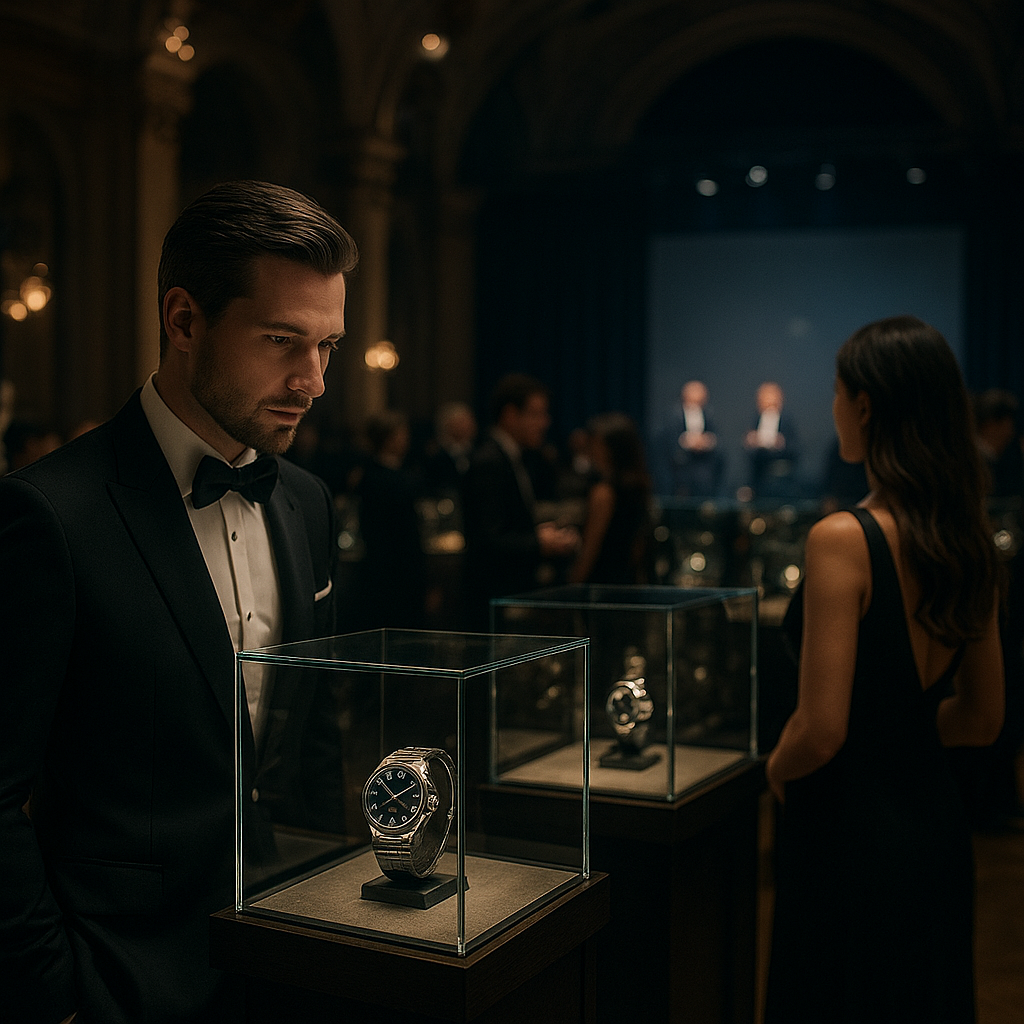
The real story is not just the product. It is the choreography. Launches create desire, seminars create credibility, and parties grease the social gears. That sounds cynical because it is. Still, the good houses understand something older than marketing: beauty invites attention, and excellence invites trust. That is not a branding trick. It is a moral fact, or at least as close as luxury gets to one.
Core Benefits and Importance
Geneva’s watch week matters because it concentrates influence. One city, five days, and the industry’s most important conversations happen in plain view. Here’s the kicker: most buyers never attend, yet the ripple effect touches boutiques, auction results, press coverage, and what ends up on wrists a year later.
- Market signaling: A flagship launch can shape demand for months.
- Technical credibility: Seminars and panels explain what the watch does, not just what it looks like.
- Dealer confidence: Retailers use Geneva to judge which references deserve floor space.
- Collector education: Complicated movements, finishing, and limited production are easier to assess when experts are in the room.
- Cultural cachet: Luxury is not only about price; it is about being recognized inside a narrow circle that cares about details.
Let’s be real. A lot of luxury content repeats the same nonsense: “timeless,” “iconic,” “disruptive,” and other words that ought to be taxed. Geneva is more useful because it exposes substance. If a brand has invested in hand-finished bridges, exceptional dials, or a movement architecture that solves a real mechanical problem, the crowd notices. If not, the champagne does the heavy lifting.
There is also a deeper reason collectors pay attention. Fine watchmaking is an art of ordered labor. Someone had to machine, polish, assemble, regulate, and test each piece. That dignity of work matters. Beauty without discipline is just decoration. The best watches remind us that excellence comes from patience, not noise.
The city itself reinforces that logic. Geneva is not loud luxury. It is restrained, precise, and expensive in the old European sense: disciplined, not flashy. That is part of why the event still carries weight. The setting matches the product.
For broader context on Swiss watch exports and industry health, the Federation of the Swiss Watch Industry remains the clearest source on export performance and category shifts. When I look at those numbers alongside what is launched in Geneva, the pattern is obvious: brands that invest in quality, service, and consistency win more trust than brands that merely shout.

Step-by-Step Guide to Evaluating a Geneva Launch
Buying or evaluating a watch presented in Geneva is not rocket science, but it does require discipline. Most people get distracted by celebrity attendance, clever copywriting, and the sort of polished nonsense that fills Instagram reels. I do not recommend that approach.
1. Start with the movement
Look first at the calibre. Is it new, modified, or merely renamed? Is the finishing visible and consistent? Does the movement solve a problem, or is it there because the press release needed a sentence?
A great movement should justify itself mechanically. That means reliable timekeeping, solid architecture, and, where relevant, genuine complications such as a tourbillon, minute repeater, chronograph, annual calendar, or perpetual calendar. If the complication adds nothing except cost, pass.
2. Check the case and proportions
A watch can be technically brilliant and still wear like a brick. Measure the diameter, thickness, lug-to-lug span, and water resistance. Geneva launches often feature ambitious design, but ambition can become clumsiness fast.
I’ve found that the best houses respect wrist comfort as much as case finishing. That is not glamorous, but it is what separates a watch you admire from a watch you actually wear.
3. Inspect the dial and hands
The dial is the face of the piece. It must have visual order. Texture, printing, lume, applied markers, and hand shape should all work together. If the dial is busy without purpose, it is usually trying too hard.
Good dials can be restrained and still memorable. That is harder than it looks.
4. Ask about materials
Gold, platinum, titanium, ceramic, sapphire, enamel, meteorite, forged carbon—fine. But materials should do a job. A noble metal case should feel substantial; a lightweight case should enhance wearability; a decorative dial should bring depth. Materials without function are just expensive props.
5. Examine finishing in daylight
Under harsh showroom lights, almost anything sparkles. Step into natural light. Look for beveling, brushing, polishing transitions, dial depth, and symmetry. I prefer a watch that survives daylight scrutiny, because reality is rude and lighting is often a liar.
6. Consider the brand’s aftercare
Service matters. Parts availability matters. Warranty matters. The most elegant complication in the world is useless if it becomes a paperweight in three years.
That is where serious maisons distinguish themselves. They treat ownership as a long relationship, not a one-time sale.
7. Compare against peers, not fantasies
A new Geneva release should be compared against watches in its category, not against a mythical ideal. If a perpetual calendar costs six figures, compare its finishing, movement architecture, and service network with others at that level. Otherwise you are just applauding a brochure.
For a broader sense of how top-tier launches and collector attention are covered, articles from Robb Report and Monochrome Watches provide useful category-specific analysis, especially on complications and limited editions.
Comparison Table: Geneva Luxury Watch Week vs. Baselworld
| Category | Geneva Luxury Watch Week | Baselworld (Peak Era) |
|---|
| Format | Citywide launches, seminars, panels, private events | Centralized trade fair format |
| Atmosphere | Intimate, appointment-driven, collector-focused | Large-scale, public-facing, dealer-heavy |
| Brand Strategy | Storytelling, exclusivity, direct relationships | Broad exposure, mass trade presence |
| Best For | High-end launches, networking, nuanced discussion | Industry visibility at scale |
| Weakness | Harder for casual visitors to access everything | Can feel impersonal and bloated |
| Collector Value | Strong for spotting serious references early | Strong historically, but less agile |
| Overall Tone | Refined, concentrated, modern | Traditional, expansive, increasingly dated |
The comparison is not sentimental. Baselworld had stature, and plenty of important watches passed through it. But Geneva’s current model is sharper. It matches the way luxury actually works now: private previews, targeted meetings, and controlled access. Everybody wants exclusivity until they have to deal with crowds.
Geneva also benefits from scale without sprawl. The city functions like a curated circuit. That matters because luxury is a discipline of limits. Too much access cheapens the thing. Too little and nobody buys. Geneva threads that needle better than most events ever did.
Common Mistakes to Avoid
The biggest mistake is confusing noise for importance. A loud launch is not a good watch. A crowded party is not industry relevance. Everyone talks about “momentum,” but momentum can be a marketing intern with a budget.
Mistake 1: Buying the story instead of the watch
A release can sound magical and still be mediocre. If the movement is standard, the case unremarkable, and the finishing average, the brand story will not rescue it.
Mistake 2: Ignoring wearability
People fixate on complications and forget the wrist. A watch should sit well, read clearly, and work in real life. If it only looks good in a glass box, what is the point?
Mistake 3: Overvaluing scarcity alone
Limited editions are not automatically desirable. Scarcity without design merit is just a smaller pile of average product. That’s it.
Mistake 4: Treating panels as theater
Seminars and panels can be useful, but some are just prestige karaoke. The useful ones explain technique, finishing, industry shifts, and materials. The useless ones repeat the same brand adjectives until everyone looks tired.
Mistake 5: Forgetting service and resale
The watch may be beautiful, but ownership continues after purchase. Service costs, part availability, and market demand all matter. If you cannot maintain it or move it later, your “investment” is wishful thinking.
Mistake 6: Confusing luxury with vanity
This is the one nobody likes to say. Luxury at its best is ordered, restrained, and made with care. It can honor skill, material truth, and the human desire for beauty. When it becomes mere display, it curdles. Frankly, that is why some of the best watches feel almost humble despite their price.
The sensible approach is simple. Buy what you understand. Choose work that is honest about its materials and labor. Appreciate excellence without worshipping status. That is closer to stewardship than spending for sport, and it keeps the whole affair from becoming a clown show in a gold case.
Frequently Asked Questions
What makes Geneva so important for luxury watches?
Geneva is a strategic center for launches, collectors, media, and retailers. The city concentrates attention, which helps brands build credibility and shape demand.
Are Geneva watch launches better than large trade fairs?
Usually, yes, if you value depth over spectacle. Geneva’s format allows for more private meetings, better technical discussion, and more focused brand storytelling.
What should I look for in a high-end watch presentation?
Start with the movement, then evaluate case proportions, dial execution, materials, finishing, and aftercare. Ignore the hype until the watch earns your attention.
Do luxury watches hold value?
Some do, many do not. Value retention usually depends on brand strength, rarity, condition, complication, materials, and long-term collector interest.
Final Thought
Geneva’s five-day watch extravaganza is not merely a social calendar for rich people. That would be too shallow, and luxury is most interesting when it reveals something about skill, order, and taste. The launches matter, yes. So do the seminars, the panels, and the parties. But the real value is in what all that activity exposes: which houses still care about precision, which ones respect craftsmanship, and which ones are just selling mirrors with a crown logo.
I’ve spent enough time around this world to know that the best luxury objects are not loud. They are exact. They carry evidence of labor, restraint, and an almost stubborn refusal to be ordinary. That is why the finest watches can feel quietly moving. They reflect human ingenuity, but also something beyond utility: a search for proportion, harmony, and beauty that does not need to shout.
If Geneva remains the center of that conversation, it is because the city understands the point. It does not confuse price with worth, and it does not pretend that every shiny thing is important. Buyers should do the same. Look closely, ask harder questions, and favor work that deserves its place. That is the only civilized way to approach luxury.