Her Place Supper Club’s Michelin Star: A Different Kind of Philadelphia Fine Dining
Her Place Supper Club is a Philadelphia restaurant recognized with a Michelin star in the city’s inaugural guide. Chef Amanda Shulman and chef Alex Kemp built its identity around an intimate dinner-party format, serving a set menu that blends French and Italian cooking with Jewish touches, rather than following the familiar template of formal fine dining. That difference matters.
The recognition fits a familiar pattern only in one respect: Michelin inspectors found cooking worthy of a star. The restaurant’s own account of its format is less conventional. Opened in 2021 near Rittenhouse Square, Her Place was conceived as less of a restaurant and more of a dinner party, with two seatings each night in an intimate space. Its menu is described as French and Italian, with Jewish touches worked through the cooking. That is a specific point of view, not a promise to perform fine dining by the old rulebook.
Shulman told the Michelin Guide, “I’m surprised, because I didn’t think we fit the standard mold at all.” Her remark gets at the real interest in this recognition: the award did not require the restaurant to sand away its personality. For diners, that makes Her Place worth considering not merely as a starred address, but as a case study in how ambitious hospitality can feel relaxed, personal, and rooted in a clear culinary voice. The star is important. It is not the whole story.
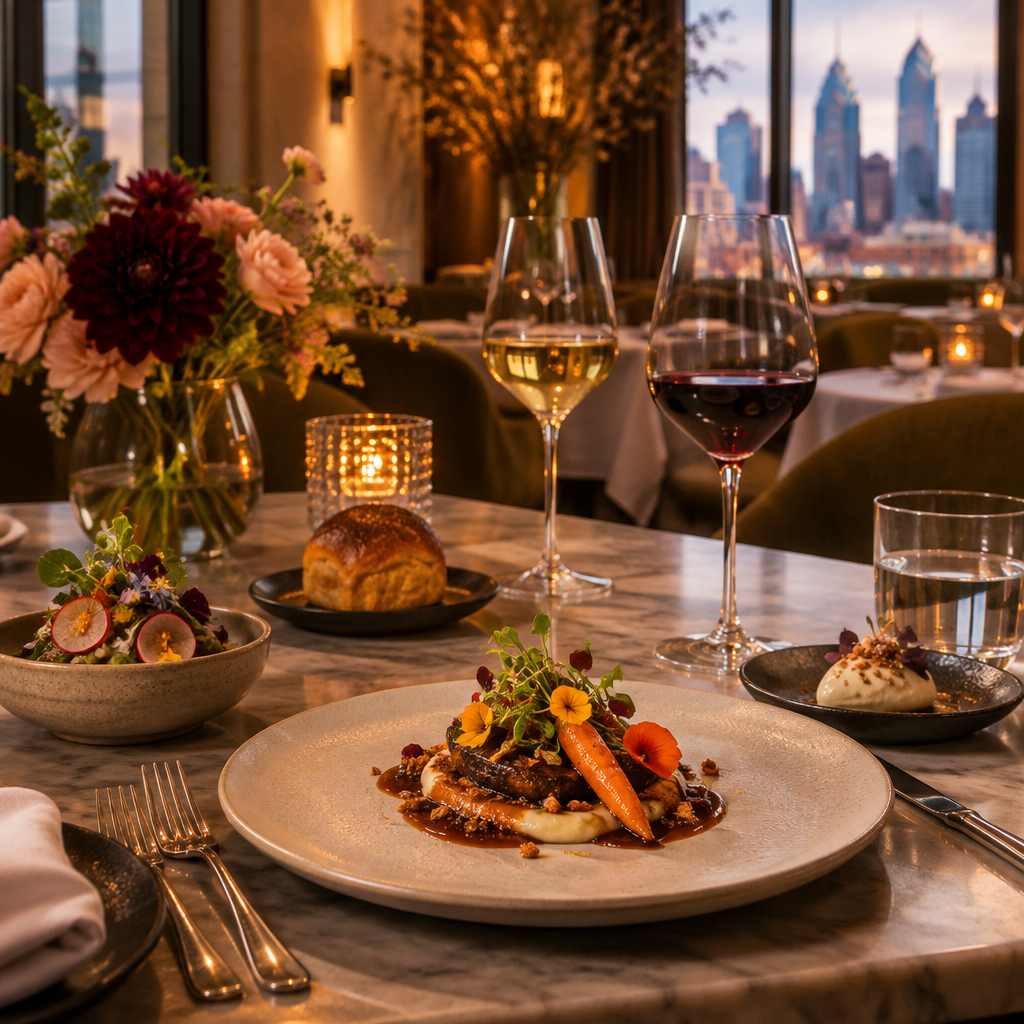
What Is Her Place Supper Club’s Michelin Distinction?
A Michelin star is a distinction for cooking, not a gold seal on every detail of a night out. The Michelin Guide describes one star as a mark of high-quality cooking, worth a stop, and explains that inspectors assess ingredients, technique, harmony of flavors, the chef’s personality as expressed through the cuisine, and consistency. Those criteria are useful because they separate the star from a general luxury rating. Décor, celebrity, and a grand entrance are not substitutes for what is on the plate.
Her Place received one of only three stars awarded to Philadelphia restaurants in the city’s first Michelin guide. That is the reported milestone; it does not mean the restaurant is the city’s only excellent dining room, nor does it rank every restaurant that was not awarded a star. Michelin recognition is selective by design, and the absence of a star is not a reliable verdict that a restaurant lacks merit. Frankly, award lists are more useful when read as guides than as final judgments.
The restaurant’s particular format helps explain why Shulman found the recognition surprising. Her Place opened in 2021 with the idea of a dinner party rather than a conventional restaurant, holding two seatings a night in an intimate space near Rittenhouse Square. Its set menu is described by the restaurant as “French and Italian with some Jewish touches swirled in.” That short description signals a mix of culinary traditions without reducing the cooking to a slogan. The actual dishes may change; specific current menus and prices should be checked directly with the restaurant.
The people behind the cooking matter, too. Shulman and Alex Kemp are fellow chefs and spouses, and they have since expanded their hospitality group. My Loup opened in 2023, followed by the more casual Pine Street Grill in 2025. That growth gives diners more than one expression of their work, but it does not make the three restaurants interchangeable. Her Place is the intimate supper-club experience; the group’s other venues have their own concepts and should be assessed on their own terms. The Her Place Supper Club website is the sensible place to verify its current details.
Why the Recognition Matters
A star can help diners find a restaurant. It can also invite them to make lazy assumptions. The useful question is not whether Her Place now looks like a stereotypical Michelin restaurant, but how its cooking and hospitality earned notice while holding on to an identity the chef says was outside the standard mold. That contrast gives the recognition more substance than a headline about prestige alone.
For guests, the award is a signal to investigate, not an instruction to book at any price. It points toward cooking that Michelin inspectors judged to meet the guide’s one-star standard, while leaving plenty of room for individual preference. A set menu may suit someone who enjoys being guided through a meal; someone who wants broad à la carte choice may prefer another format. Neither reaction settles the restaurant’s quality. It describes fit.
For Philadelphia, the first guide’s three starred restaurants put local dining on the Michelin map. That is a moment of visibility, not proof that a city’s food culture begins when an international guide arrives. The work of cooks, farmers, servers, and independent operators existed before the inspectors’ attention and will continue beyond any annual selection. A guide can help visitors find restaurants, but locals should not need an outside seal to recognize that a city eats well. Here’s the kicker: the best use of an award is to start a conversation, not end one.
There is also a meaningful point about craft. Fine dining can become a display of expense, with rare ingredients and elaborate service doing more to impress than to nourish. At its best, though, a carefully made meal honors the skill and labor behind it: a chef’s judgment, a cook’s repetition, a server’s attentiveness, and the ingredients themselves. Beauty can point beyond mere consumption when it is made with care and offered with generosity. That idea need not be announced with a sermon; it is visible in work done well.
Finally, the distinction is a useful reminder that hospitality can take multiple forms. A dinner party can be rigorous without feeling stiff, and an intimate room can be ambitious without relying on grand gestures. I find that more persuasive than luxury marketing built around exclusivity alone. A star may raise expectations, but a coherent point of view is what makes a restaurant memorable after the badge has faded from the conversation.

How to Decide Whether Her Place Is Right for You
- Start with the format. Her Place describes itself as a dinner-party-style restaurant, with two seatings a night and a set menu. If you like a meal that unfolds as a planned sequence, that format may appeal; if you want to order freely from a large menu, check the restaurant’s current offering before booking. I begin here because the format shapes the evening more than the star does.
- Read the restaurant’s own description. The menu is described as French and Italian with Jewish touches. Treat that as an invitation to understand the culinary point of view, not a guarantee that every course will feature all three influences. Menus change, and the restaurant’s current details are the authority on what it is serving now. A broad descriptor is a compass, not a plate-by-plate preview.
- Separate the star from your personal priorities. Michelin’s distinction concerns cooking. Consider what else matters to you: pace, room size, service style, accessibility, dietary needs, and the kind of occasion you are planning. Contact the restaurant directly about practical requirements; do not assume that an award tells you how every request will be handled. That is basic due diligence, not fussiness.
- Check the price and policies before committing. Current pricing, availability, cancellation rules, and menu arrangements are not reported here and can change. Confirm them through the restaurant’s official channels before making plans. A premium meal is easier to enjoy when the bill and logistics are no surprise. Frankly, prestige is a poor excuse for skipping the practical questions.
- Think about the experience you want to remember. Is it the cooking, a shared celebration, an intimate setting, or the opportunity to try a chef’s particular perspective? Her Place’s dinner-party idea may suit a guest looking for a personal, composed evening rather than theatrical spectacle. A Michelin star can help narrow the search, but it cannot decide what you value.
- Keep the group’s other restaurants in their own lanes. My Loup opened in 2023, and Pine Street Grill opened in 2025 as a casual option. Those facts show the group has broadened its work, not that each restaurant offers the same menu, price, or level of formality. Visit My Loup’s official site and the Pine Street Grill website for their current identities and details. Do not book one expecting it to be a replica of another.
When I assess a premium dining experience, I look for alignment: does the menu, setting, and service match the promise being made? That is a more practical test than asking whether the restaurant feels expensive enough or resembles a famous dining room elsewhere. Her Place’s stated concept gives a prospective guest something concrete to evaluate. Start there, then check the current details.
Her Place Compared With a Conventional Fine-Dining Template
The following is a comparison of formats, not a claim that a particular restaurant is Her Place’s direct competitor. The source information does not identify a competing restaurant, and inventing one would make the comparison less useful. The contrast is between the reported Her Place model and a broad, familiar image of formal fine dining. Real restaurants vary, often considerably.
| Feature | Her Place Supper Club | Conventional fine-dining template |
|---|
| Core idea | Conceived as more like a dinner party than a conventional restaurant | Often associated with formal restaurant rituals; individual venues vary |
| Menu approach | Set menu, described as French and Italian with Jewish touches | May offer a tasting menu, à la carte menu, or both; no single standard applies |
| Setting | Intimate space near Rittenhouse Square | Can range from intimate to grand; formality is not guaranteed by size |
| Service rhythm | Two seatings a night are reported | Service schedules vary by restaurant and are not established by Michelin stars |
| Michelin recognition | One of three Philadelphia restaurants awarded a star in the city’s first guide | A restaurant may or may not earn a star; the format alone does not determine it |
| What the star indicates | Michelin recognition of cooking under its criteria | It does not certify décor, price, or every part of the guest experience |
The clearest distinction is not that one model is superior. It is that Her Place’s stated idea puts intimacy and the feeling of a hosted meal at the center, while the familiar fine-dining image often emphasizes ritual and polish. Those traits can overlap; a dinner party can be technically exacting, and a formal restaurant can feel warm. The point is to avoid mistaking a style of service for a standard of cooking.
The menu description also deserves a careful reading. French and Italian references paired with Jewish touches suggest a layered identity, but the details belong to the kitchen’s actual dishes rather than a visitor’s assumptions. A good diner does not arrive expecting a checklist of cuisines. They arrive curious, with reasonable expectations and an understanding that a set menu gives the chef more control over the sequence.
Michelin recognition is the strongest measurable distinction reported here. By contrast, claims about a restaurant’s best dish, current menu, exact price, or service policies would need current verification. That is not a weakness in the story; it is a reminder to distinguish confirmed facts from attractive guesswork. The Michelin Guide’s explanation of its star system offers a useful reference for what the award does—and does not—say.
Common Mistakes to Avoid
Mistake one: assuming a Michelin-starred restaurant must look or feel formal. Michelin stars concern cooking, not an architectural style or a dress code. Her Place was designed around a dinner-party idea, and Shulman herself said she did not think the restaurant fit the standard mold. The star does not erase that choice. Let the restaurant’s own information describe the experience rather than relying on a mental picture of white tablecloths and hushed rooms.
Mistake two: treating the star as a guarantee of personal enjoyment. A guide’s judgment and a guest’s preferences are different things. You may prefer a more casual menu, a louder room, or a meal with more choice; none of those preferences invalidates the cooking. Conversely, a high price or prestigious award does not automatically make a restaurant right for a particular evening. Let’s be real: a badge cannot know your appetite, budget, or mood.
Mistake three: turning the menu’s cultural influences into a gimmick. The description of French and Italian cooking with Jewish touches is a brief account of the restaurant’s approach, not a license to invent dishes or make assumptions about how those traditions appear on the plate. Look at the current menu, if available, and allow the kitchen to speak through the food. Cultural references deserve more than a decorative label.
Mistake four: confusing Michelin’s scope with a full luxury rating. The star recognizes cooking. It does not independently certify the room, service, accessibility, wine list, value, or the handling of every guest request. These parts still matter to a diner, but they require separate attention. Check practical details directly, especially if your plans depend on dietary accommodations or particular access needs.
Mistake five: reading the award as a verdict on every other Philadelphia restaurant. The inaugural guide awarded stars to three Philadelphia restaurants, according to the reported account. That is a selection, not a complete census of good cooking in the city. Some worthy restaurants will not appear in a guide’s starred list, and some guests will prefer them. Recognition is a useful signal; it is not the whole measure of a food city.
Mistake six: treating the hospitality group as one product. Her Place, My Loup, and Pine Street Grill are connected through Shulman and Kemp’s growing group, but their concepts differ. The latter two openings mark expansion, not evidence that the same menu, atmosphere, or price applies across all three. Check the restaurant you actually intend to visit. Familiar ownership is context, not a substitute for reading the details.
Frequently Asked Questions
What did Her Place Supper Club receive?
Her Place Supper Club received a Michelin star in Philadelphia’s first Michelin guide. It was one of three restaurants in the city to earn a star in that guide, according to the reported account. The distinction recognizes cooking under Michelin’s standards; it should not be treated as a rating of every aspect of the restaurant.
What kind of food does Her Place serve?
The restaurant describes its set menu as French and Italian with Jewish touches. Its specific dishes can change, so that broad description should not be treated as a current menu. Check Her Place’s official channels for what is being served and for practical information before planning a visit.
Is Her Place a traditional fine-dining restaurant?
Not according to the idea behind its opening. Shulman and Kemp conceived Her Place as more of a dinner party than a conventional restaurant, with two seatings a night in an intimate space near Rittenhouse Square. Shulman later said she had not expected the restaurant to fit the standard mold. The Michelin star does not change the format the chefs set out to create.
What other restaurants have Shulman and Kemp opened?
The couple opened My Loup in 2023 and the more casual Pine Street Grill in 2025. These are separate restaurant concepts within their hospitality group, not extensions of Her Place’s exact format. For current details, consult each restaurant’s own website.
Final Thought
Her Place’s Michelin star is compelling because the restaurant’s own story resists a tidy stereotype. It was conceived as a dinner party, not a monument to formality; its menu is described through a blend of French and Italian cooking with Jewish touches; and its chef said she did not expect the restaurant to fit the standard mold. The award recognizes the cooking without requiring the restaurant to abandon the character that made it distinct.
That is a healthy way to think about luxury dining. The price, the guide, and the room may shape expectations, but they cannot replace the human work at the center of a meal. A carefully prepared dinner can express skill, memory, hospitality, and respect for ingredients. When those things come together, the pleasure is more than a show of spending. It is appreciation for work done with care and shared generously.
So treat the star as a reason to pay attention, not an order to be impressed. Read the current menu, understand the format, check the details, and decide whether that particular evening is what you want. If it is, Her Place offers a distinctive Philadelphia experience with serious recognition behind its cooking. If it is not, the award has still done its job: it has introduced a restaurant worth considering, without making the decision for you.