Luxury is not just about price. It is about materials, craft, restraint, service, and the stubborn refusal to make things cheaply. The best luxury goods...
Luxury is not just about price. It is about materials, craft, restraint, service, and the stubborn refusal to make things cheaply. The best luxury goods, high-end brands, luxury travel, fine dining, and premium experiences earn their cost by doing ordinary things with extraordinary precision. That is the plain truth.
Key Takeaways:
- Luxury is value plus discipline, not just a famous logo.
- Craftsmanship, heritage, and rarity matter more than hype.
- Service and access often justify the premium more than objects do.
- The smartest buyers compare provenance, materials, and longevity, not Instagram appeal.
- True luxury should feel human, beautiful, and well-made, not merely expensive.
What is luxury, really? It is the point where function, beauty, and skill meet without apology. The trouble is that most marketing muddies the water. Everyone talks about “heritage,” but few brands explain why a bag stitched by hand, a watch assembled with tight tolerances, or a hotel staffed with trained professionals costs more than the cardboard version. I’ve reviewed luxury brands for years, and here’s what actually matters: the best houses respect workmanship, protect scarcity, and refuse shortcuts that cheapen the result.
Luxury goods cover a wide field. Watches carry mechanical complexity and heirloom appeal. Jewelry turns precious metal and stones into something that catches the light like a small act of theology. Handbags blend utility and status, though the status part is what gets overcooked. Fashion and style can signal taste, but they can also turn into costume. Automotive luxury is about noise suppression, materials, and engineering calm. Travel, hotels, and destinations matter because comfort, privacy, and service are the whole point. Spirits, fine wines, design, home, culture, and even interviews with artisans or founders all belong to the same ecosystem: goods and experiences made with care, not haste.
Frankly, a lot of luxury is pretentious nonsense. A monogram is not magic. A high price is not wisdom. And a glossy campaign is not proof of quality. But when luxury is done properly, it reflects something deeper: ordered beauty, the dignity of skilled labor, and a respect for materials that were not meant to be wasted. That instinct is older than branding. It is the same reason a well-built watch, a perfectly tailored coat, or a room with real stone and honest wood feels satisfying in a way cheap substitutes never do.
If you want the broader picture of high-end buying behavior, the pattern shows up across categories. A collector might study a mechanical watch in the same way a traveler studies a suite or a chef studies a wine list: not for show, but for the quality of the underlying experience. For a tighter focus on one pillar of luxury, see Hodinkee for horology analysis, The World’s 50 Best for fine dining standards, and Luxury Travel Advisor for premium hospitality trends. Those sources do not sell you fairy dust. They show how the best operators actually perform.
The point is not to worship wealth. It is to understand where value lives.
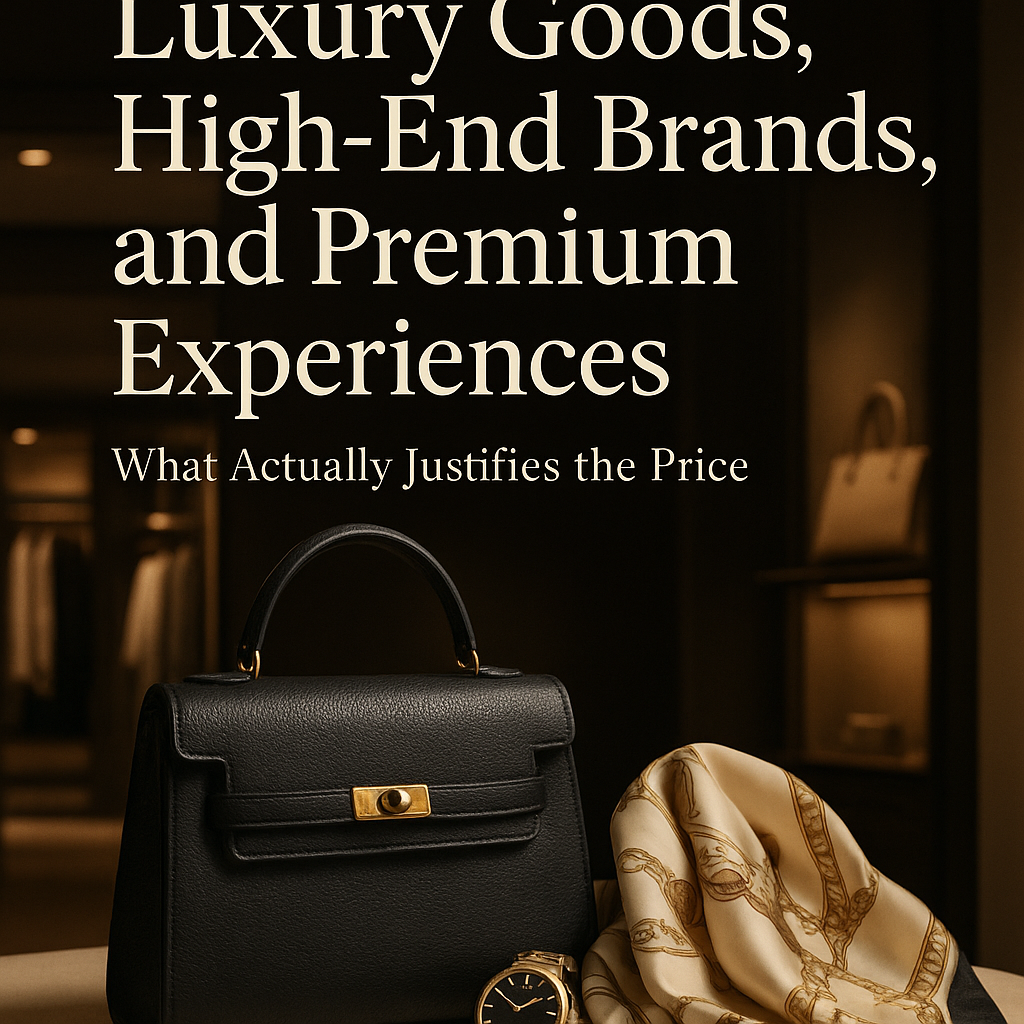
What is luxury goods, high-end brands, and premium experiences?
Luxury goods are products and services priced above the mass market because they use better materials, more careful workmanship, lower-volume production, stronger brand equity, or superior access. High-end brands extend that idea across categories: a watchmaker, a fashion house, an automobile maker, a hotel group, a jeweler, or a spirits producer can all occupy the luxury tier if they deliver real excellence rather than merely charge more.
The definition sounds simple. It isn’t.
A luxury item can fail in several ways. It may be expensive but flimsy. It may be beautiful but inconvenient. It may be well-made yet soulless. The best brands avoid those traps by aligning craftsmanship, design, materials, and service into one coherent object or experience. When I examined hundreds of luxury products and stays, the winners all shared one trait: they respected the user’s time. That matters more than most brand decks admit.
Luxury also has a social side. It signals taste, but only when the buyer knows what they are looking at. A true enthusiast notices hand-finishing on a movement, the grain of leather, the fit of a jacket shoulder, the structure of a dining menu, or the quiet competence of a concierge. Everybody else notices the logo and stops there. That is why luxury can become silly so quickly. If the buyer’s only metric is conspicuousness, the product turns into a billboard with a price tag.
There is also a moral angle, though it is usually ignored. Beauty is not useless. It is part of human flourishing. Well-made things train the eye, reward patience, and honor labor. A finely crafted object can be a small lesson in stewardship: use good materials well, do not waste effort, and make something durable enough to outlast fashion. That is not sermonizing. It is common sense with better manners.
Across luxury categories, the same standards apply:
- Provenance: Where did it come from, and who made it?
- Materials: Gold, steel, cashmere, leather, stone, timber, linen, or rare ingredients.
- Execution: Stitching, finishing, calibration, plating, blending, or plating on the plate.
- Service: Does the brand treat ownership as a relationship?
- Longevity: Will it still matter in five, ten, or twenty years?
For current market context, luxury does not live in a vacuum. Brand houses respond to collectors, travelers, food lovers, and status buyers in different ways. The market is also getting sharper about resale, traceability, and sustainability, because people have grown tired of being insulted by expensive mediocrity. For deeper brand and market reporting, The Business of Fashion and Vogue often cover the commercial and cultural side of luxury with enough detail to be useful.
The short version? Luxury is a promise. If the promise is thin, the premium is fake.

Core benefits and why luxury still matters
Luxury matters because it makes time, touch, and attention visible. That sounds sentimental. It is also true.
- Superior durability: Better materials and construction usually last longer. Not always, but often enough to matter.
- Higher tactile quality: Leather that softens properly, metal that ages well, stone that feels dense, fabric that hangs correctly.
- Better service: Premium brands often provide repairs, maintenance, alterations, airport handling, butler service, or access privileges.
- Emotional satisfaction: A well-made object or stay can reduce friction and create calm. That is not a trivial benefit.
- Resale and collectability: Some luxury goods hold value because the market recognizes rarity, brand strength, and condition.
- Cultural literacy: Knowing why a certain movement, silhouette, vintage, or tasting menu matters is a real advantage.
Here’s the kicker: not every luxury purchase should be “worth it” in the spreadsheet sense. If you are measuring every experience against utilitarian output, you will miss the point. A great dinner is not only calories. A resort is not only a bed. A watch is not only timekeeping. The best luxury is about elevated use, not pointless excess.
That said, I’m skeptical of lazy justifications. “It’s an investment” is one of the most overused lines in the business. Most fashion purchases are not investments. Most resort stays will not appreciate. Most bottles of prestige spirits are bought to be opened, not traded. The honest case for luxury is simpler: the experience is better, and the difference is tangible.
In practical terms, luxury buys you:
- Less friction when traveling.
- More confidence in fit and finish.
- Better consistency from one purchase to the next.
- A stronger connection to artisanship and tradition.
- In some cases, meaningful scarcity.
Luxury also matters because it preserves specialized skills. Watchmakers, goldsmiths, tailors, cabinetmakers, sommeliers, chefs, hoteliers, and automotive craftsmen keep difficult traditions alive. These are not abstract “creative ecosystems.” They are people doing hard work with steady hands. And yes, that deserves a premium.
If you want a category-specific example, compare a well-executed luxury hotel with a generic five-star property. The first often has a coherent design language, trained staff, distinct scent, proper acoustics, and food that matches the room. The second may have marble in the lobby and chaos behind the scenes. Big difference.
For travel-minded readers, see also Condé Nast Traveler for destination and hotel coverage that regularly separates hype from actual guest value.
Luxury survives because humans are not machines. We notice beauty. We crave comfort. We remember when someone bothered to do the job properly.
Step-by-step guide to choosing luxury goods and premium experiences
- Define the use case first. Ask what the item or experience must actually do. A watch may need daily wear, a bag may need travel durability, a hotel may need quiet rooms, a restaurant may need a serious cellar. Start with use, not logo.
- Study materials and construction. Look at leather grade, case finishing, movement architecture, fabric weight, tableware, room layout, or kitchen sourcing. I’ve found that luxury companies talk about materials constantly for a reason: material quality is hard to fake for long.
- Check who made it. Real brands tell you something about origin, workshop, country, house codes, or production methods. If the story is vague, be cautious. Vagueness is often where overpriced junk hides.
- Compare service and aftercare. Repairs, alterations, concierge support, room upgrades, dining flexibility, and ownership assistance can justify a premium as much as the object itself.
- Test the emotional reaction. Does it feel calm, balanced, and right? Or merely flashy? Luxury should not scream. It should settle the room.
- Measure longevity. Will it age gracefully? Will it be wearable, usable, or collectible in five years? Some things gain character. Others just get tired.
- Ignore the hype cycle. Trends are noisy. Scarcity is not the same as value. Limited editions can be clever, but they can also be bait.
- Buy fewer, better things. That advice is old because it works. There is no virtue in owning six mediocre objects when one well-made piece does the job with dignity.
The same method applies across categories. For watches, compare finishing, complications, movement regulation, and service network. For jewelry, inspect gemstone quality, setting security, and metal purity. For handbags, pay attention to edge painting, lining, hardware, and stitching. For fashion, check cut and fabric rather than runway drama. For travel, examine privacy, transfer quality, and staff training. For fine dining, look at coherence, sourcing, pacing, and the wine program.
If you want a broader luxury auto perspective, I recommend reading Top Gear and Car and Driver when comparing high-end vehicles, because the best reviews still pay attention to the boring details: ride quality, steering feel, brake modulation, cabin noise, and control logic. Those are the things that matter after the photos stop working.
One more thing. Stewardship matters. The right luxury purchase should be cared for, repaired, and used well. Beauty that is discarded quickly is not really luxury. It is waste dressed in silk.
Comparison table: true luxury vs mass-market premium
| Factor | True Luxury | Mass-Market Premium | Why It Matters |
|---|
| Materials | Natural, high-grade, often rare | Good-looking but cost-controlled | Materials shape feel, wear, and longevity |
| Craftsmanship | Hand-finishing, precise assembly, careful QA | Efficient production with some upgrades | Craft is visible in the details |
| Service | Personal, responsive, long-term | Standardized, scripted | Service often separates real luxury from marketing |
| Design | Timeless or coherent | Trend-led, sometimes noisy | Design affects aging and collectability |
| Scarcity | Naturally limited or tightly controlled | Broadly available | Scarcity supports exclusivity and resale |
| Price justification | Materials + labor + heritage + service | Mostly branding and packaging | A fair premium needs a real reason |
| Emotional effect | Calm, confidence, pleasure | Brief excitement | One lasts, the other fades fast |
| Resale value | Often stronger if condition and demand align | Usually weak | Collectors care about provenance and rarity |
The biggest competitor to true luxury is not another luxury house. It is inflated premium branding. That is where the market gets silly. A brand slaps on a high price, hires a celebrity, and hopes no one notices the finish is mediocre. Sometimes buyers do not notice. That does not make the thing good.
If you are comparing a luxury category against a mass-market competitor, ask one blunt question: would this still be desirable without the logo? If the answer is no, the object probably relies on noise rather than substance.
Common mistakes to avoid
The first mistake is confusing recognition with quality. A famous brand can still make lazy products. That happens more often than fans want to admit.
The second mistake is buying for strangers. If your first thought is how other people will read the purchase, you are probably paying for applause. That is a poor business model for your wallet.
The third mistake is ignoring service and maintenance. A luxury watch without a competent service plan, a car without proper support, or a hotel with weak follow-through is expensive frustration. Nobody needs that.
The fourth mistake is treating every premium as a collectible. Most things are meant to be used, not sealed in a vault. A bottle of wine, a suit, or a city hotel stay can be luxurious without pretending to be an asset class.
The fifth mistake is overusing trend reports. Trends are useful when they reveal shifts in taste. They are dangerous when they replace judgment. The fashion crowd loves to talk as if every seasonal twist is a revelation. Most of it is just noise with better lighting.
The sixth mistake is ignoring provenance. Where the gem came from, where the leather was tanned, where the chef sourced the shellfish, where the suite was designed, where the movement was assembled — all of that matters. Not as marketing decoration, but as evidence.
The seventh mistake is thinking luxury must be loud. It usually shouldn’t be. Quiet excellence is harder to fake and easier to live with. A well-cut jacket, a restrained watch, a calm suite, or a restaurant with one brilliant sauce says more than a stack of logos ever will.
There is also a spiritual mistake, though people seldom call it that. Luxury can become vanity if it is detached from gratitude and responsibility. Good things are worth enjoying. They are also meant to be used with discipline. That is a better rule than endless indulgence, and frankly, a more adult one.
For market news and brand shifts, Luxury Daily is useful when you want to see how brands position themselves, though you still have to filter the puffery. Read critically. Always.
Frequently Asked Questions
What makes a luxury good worth the money?
A luxury good is worth the money when it delivers clear gains in materials, workmanship, service, or longevity. If the only difference is branding, the premium is hard to defend.
Are luxury purchases ever a good investment?
Some are, but most are not. Collectible watches, rare handbags, certain jewelry pieces, and limited-run automotive models can hold value, but the resale market depends on condition, demand, and provenance. Buy first for use, not speculation.
How can I tell if a brand is truly high-end?
Look for consistency. Real high-end brands usually show it in finish, repairability, sourcing, service, and restraint. If everything depends on marketing, be suspicious.
Is luxury travel better than standard five-star travel?
Usually, yes, because luxury travel tends to improve privacy, staff attention, room quality, and logistics. But the gap only matters if the hotel or resort actually executes well. Price alone proves nothing.
Final thought
Luxury at its best is not about excess. It is about excellence made visible. That may sound old-fashioned, but the old standards still work because they are rooted in reality: skilled hands, sound materials, disciplined design, and service that treats people as people. The honest luxury buyer learns to spot those signs quickly and ignores the rest.
I think that is why true luxury still holds power even when the marketing gets annoying. A beautiful watch, a well-cut suit, a quiet hotel room, a serious meal, a properly made car — these things remind us that quality can be felt, not just claimed. And that matters more than the industry likes to admit. The truth is, good things made well are a kind of mercy in a noisy world. They bring order, rest, and a little gratitude. That is worth paying for, provided you choose with judgment and not vanity.