Luxury Over the Last 50 Years: The Icons, Ideas, and Experiences That Changed Everything
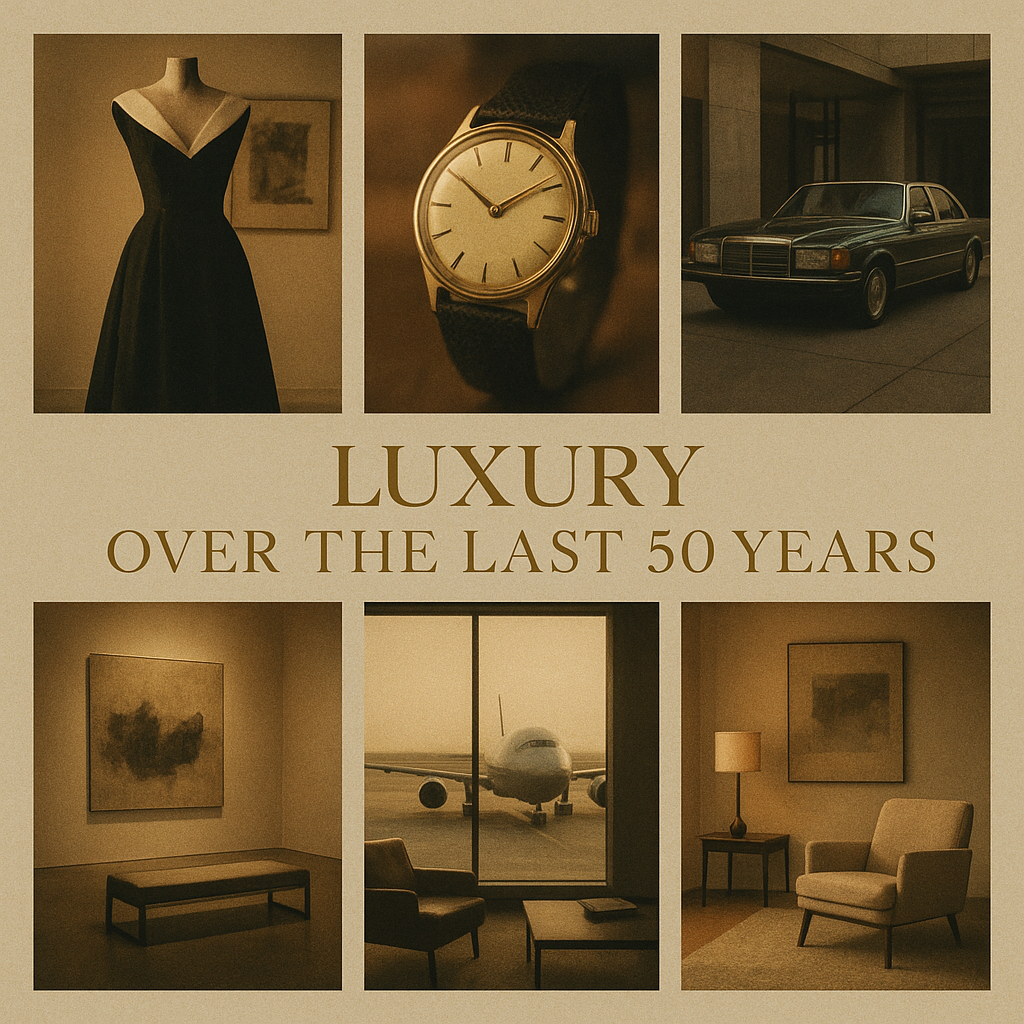
Luxury over the last 50 years has shifted from conspicuous ownership toward a more personal mix of craftsmanship, cultural meaning, access, and experience. Watches, fashion, cars, hotels, fine dining, and travel still signal quality, but their strongest appeal now rests on how they are made, how they are used, and whether they deserve a place in someone’s life.
A 50th anniversary offers a useful vantage point. It lets us look back at objects and ideas that once seemed new, then ask which ones lasted beyond the launch campaign. Some did: the mechanical watch as a piece of engineering and personal history, the hotel as a finely run refuge, the fashion house as a guardian of technique, the restaurant as a meeting place for skill and hospitality. Others were mostly noise with a nice logo.
The biggest change is not that people stopped valuing objects. It is that luxury now has to prove its value in more ways. A beautiful bag still matters, but so do its construction and repair options. A grand hotel still dazzles, but a polished welcome and a good night’s sleep beat a marble lobby that feels like an airport terminal. Frankly, price alone has never been an argument. The real question is whether an item or experience offers substance, pleasure, and staying power.
What Is Luxury Over the Last 50 Years?
Luxury is a deliberately broad word. At its best, it describes an unusually high standard of material, workmanship, design, service, or access. It can mean a watch assembled with care, a jacket cut to fit its wearer, a dinner prepared with exceptional ingredients, or a trip planned around a place rather than a checklist. Price often accompanies those qualities. It does not create them.
The past half-century has changed how luxury is made visible. In the 1970s and 1980s, an expensive car, a recognizable handbag, or a watch with a famous name could function as a clear signal of success. Branding grew more conspicuous, fashion became a sharper public language, and international travel opened new stages for showing taste. That visibility did not make every product better. It did make luxury easier to recognize—and easier to imitate.
In the decades that followed, global distribution and large luxury groups expanded the reach of established labels. Their scale brought wider availability, sophisticated retail, and substantial investment in marketing. It also raised an awkward question: can a house sell much more without weakening the rarity and attention that gave its work authority? The answer varies. Some businesses protect expertise and quality; others appear to sell the legend first and the object second.
More recently, customers have put greater weight on experiences and individual relevance. A private guide, a small hotel with attentive staff, or a meal shaped by a chef’s particular sense of place may feel more valuable than another conspicuous purchase. That does not make products obsolete. It changes the standard they must meet. A well-made object can carry memory, become part of daily life, and earn affection through use. A trend item that stays in its box has a less compelling case.
I have examined luxury categories through a practical lens: what is made, how it performs, who stands behind it, and whether the pleasure survives the first impression. Heritage can help explain a brand’s approach, but history is not a quality-control certificate. Craftsmanship is meaningful when skill is visible in the finish, fit, movement, durability, or service—not merely printed in a brochure.
The cultural value of fine work deserves respect, too. A master craftsperson’s patience and judgment are part of the object’s worth. Beauty can point beyond mere display, reminding us that human skill and imagination are gifts worth cultivating. That appreciation works best alongside stewardship: buy thoughtfully, maintain what you own, and avoid confusing abundance with discernment.
Why Luxury Still Matters
Luxury has practical, cultural, and emotional value when it earns those claims. It is not automatically virtuous, and it is not automatically foolish. The useful question is what the extra money buys—and whether that benefit matters to the buyer.
- Better materials and construction. A carefully finished case, a sound leather lining, a properly balanced knife, or a garment with considered seams can improve both function and feel. But premium materials only help when they are suited to the job and handled well.
- Specialist knowledge. Horology, gem setting, tailoring, restoration, wine service, and hotel operations all depend on accumulated skills. The finest work often involves decisions a customer never sees. That hidden labor is a stronger reason to value an item than a celebrity campaign.
- Service that reduces friction. A capable concierge, a thoughtful fitting, or an accessible repair service can make a premium purchase easier to live with. Good service is attentive, not theatrical. No one needs a staff member to call a simple reservation an “immersive moment.”
- Cultural continuity. Long-running houses and regional traditions preserve techniques, visual languages, and ways of making. Their influence can outlast a particular product. The UNESCO overview of traditional craftsmanship is a useful reminder that skilled making is cultural knowledge, not just decoration.
- Pleasure and memory. A view from a quiet terrace, a meal shared with friends, or the steady feel of a watch worn for years can become part of a personal story. Experiences often leave a deeper impression than possessions, though they are not automatically better value.
- Longevity and repair. A product that can be serviced or repaired may stay useful far longer than one designed for rapid replacement. Ask what happens after the sale: spare parts, cleaning, maintenance, and aftercare are part of the product’s real-life quality.
Here’s the kicker: luxury can be a good purchase and still be a bad investment. Most objects should be bought for use and enjoyment, not as financial assets. Resale markets fluctuate, condition matters, and the spread between retail and resale prices can be painful. A watch, bag, or collectible may retain value; that possibility is not a promise.
For travel and dining, the measure is different. An exceptional hotel stay may have no resale value at all, yet deliver rest, hospitality, and a strong sense of place. Michelin’s explanation of its star system, in its guide to what a Michelin star means, describes recognition tied to the cooking rather than a guarantee that every diner will prefer a restaurant. That distinction matters. Awards can help narrow choices; they cannot decide your taste.
The sensible case for luxury is therefore specific. Spend more when the improvement is real, relevant, and lasting. Spend less when the premium is mainly a logo, a queue, or the promise that other people will notice. No shame in liking beautiful things. Just insist that they be worth liking.
A Step-by-Step Guide to Choosing Luxury Well
Buying or booking well is less about knowing every label than about asking better questions. I use the same basic test for a watch, a hotel, a car, a jacket, or a tasting menu: what is the thing, what does it do for me, and what will it require later?
- Name the purpose. Decide whether you need daily reliability, a formal occasion piece, an easy family holiday, an adventurous itinerary, or an unforgettable dinner. “I want something luxurious” is too vague to guide a sensible choice. Specific needs make comparison easier and reduce the temptation to buy a status symbol by default.
- Separate quality from reputation. Research construction, materials, performance, service terms, and the maker’s track record. A storied name can be a useful clue, but inspect the actual product. For a hotel, look beyond the suite photographs to location, noise, staff attentiveness, food, and the policies that affect your stay.
- Check the person behind the work. A credible brand should be able to explain how its products are made and maintained. For a restaurant, consider the cooking, hospitality, and menu’s coherence. For a car, evaluate comfort and ownership costs as well as acceleration. For fashion, examine fit and fabric before counting runway appearances.
- Work out the full cost. Add maintenance, insurance, alterations, transport, tips where applicable, and the cost of not using the purchase. A premium watch may need regular servicing. A remote resort may require expensive transfers. A beautiful car can be costly to insure and maintain. The sticker price is the opening number, not the whole bill.
- Look for evidence of lasting usefulness. Ask whether the item suits your routines and whether the experience will feel worthwhile after the novelty fades. Can the bag carry what you actually bring? Is the hotel’s location right for your trip? Would you wear the coat in the weather where you live? Practical questions are not unromantic; they protect the romance from regret.
- Inspect the details in person when possible. Handle the object, try on the garment, test the seat, read the room description carefully, or speak with the restaurant about dietary needs. Photos are flattering by profession. If an in-person visit is impossible, ask specific questions and request clear policies in writing.
- Consider provenance and care. For collectible goods, check documentation, condition, service history, and reputable sellers. For jewelry, understand the stones and any grading documents. For travel, verify cancellation terms and what is actually included. Provenance is not clerical fuss; it protects both value and trust.
- Sleep on the decision. A high-pressure sales moment is a poor substitute for judgment. If the offer only works before midnight, perhaps it was not such a remarkable offer. Take time to compare alternatives and make sure the purchase fits your budget.
- Choose stewardship, not accumulation. Buy fewer things if fewer will serve you better. Maintain them. Repair them. Share or pass them on when appropriate. Luxury becomes more convincing when it respects the labor and resources that made it possible.
When I compare options, I write down three non-negotiables and three nice-to-haves. That little exercise cuts through a surprising amount of glossy persuasion. For a hotel, my non-negotiables might be good sleep, a useful location, and gracious service; a dramatic pool can stay in the “nice” column. For a watch, legibility, fit, and serviceability may matter more than a complicated movement I will never use.
There is no universal ranking of what counts as worth the money. The right choice depends on priorities, finances, and the life into which the purchase must fit. Discerning taste is not the same as buying the most expensive option. Often it means knowing exactly what you do not need.
Traditional Luxury and Experience-Led Luxury: A Comparison
The biggest competitor to traditional, product-led luxury is not one rival brand. It is experience-led spending: travel, dining, wellness, and access that create a moment rather than an object. The two overlap, of course. A fine hotel sells both a place to stay and a carefully designed experience; a watch can be both a tool and a personal keepsake. Still, the comparison clarifies what each does well.
| Measure | Traditional product-led luxury | Experience-led luxury |
|---|
| Main purchase | A lasting object: watch, jewelry, clothing, bag, or car | A service or occasion: hotel stay, trip, fine dining, or private access |
| Primary reward | Daily use, design, ownership, and personal attachment | Memory, service, discovery, and a change of setting |
| Quality signals | Materials, workmanship, performance, fit, provenance, and repair | Staff judgment, location, timing, food, privacy, and consistency |
| Longevity | Can last years or decades if maintained | Usually brief, though memories and relationships can endure |
| Common hidden cost | Servicing, insurance, storage, repairs, and depreciation | Transfers, taxes, gratuities, add-ons, and cancellation terms |
| Main risk | Paying chiefly for a logo or assuming resale value | Paying for staging or exclusivity while overlooking actual comfort |
| Best for | People who value useful beauty and repeated contact with an object | People who value time, discovery, hospitality, and shared memories |
| Sensible test | Will I use it, enjoy it, and care for it? | Will the experience suit the people, place, and purpose? |
Neither column wins outright. A beautifully made object can bring daily pleasure, while a carefully planned trip can widen a person’s sense of the world. The mistake is treating one as inherently more refined than the other. Some people would rather own a watch that accompanies them for decades; others would rather spend the same money on a week exploring a new region. Both can be sound choices if made with clear eyes.
The value equation also differs. An object has a physical afterlife, but that does not mean it will retain its retail price. An experience ends, but its effect can extend through shared stories and renewed attention to a place or cuisine. Neither outcome is easy to price. That is exactly why personal fit matters more than a generic ranking.
For a good baseline, the Bain luxury goods market study offers market context, while McKinsey’s State of Fashion report examines the forces affecting the fashion business. Industry reports can explain supply, demand, and commercial pressures. They cannot tell you whether a particular jacket fits, a restaurant suits your palate, or a hotel is right for your family. Use data to frame a choice, not to outsource it.

Common Mistakes to Avoid
Luxury advice often comes dressed as certainty. “Buy this because it is iconic.” “Book that because everyone wants it.” “A higher price means better quality.” These lines are easy to repeat and often wrong. A few basic checks can spare buyers from expensive disappointment.
- Confusing fame with excellence. A famous name may have a strong record, but individual products vary. Inspect the item and assess the service. The same rule applies to restaurants: a celebrated address can still serve a meal that does not suit you.
- Treating heritage as proof. A long history is interesting, not conclusive. Ask what the brand still makes well and whether its current standards are clear. A company’s archive cannot stitch a sleeve or regulate a watch movement today.
- Buying for imagined resale. Secondary-market prices can change with fashion, condition, authenticity, and supply. Unless you understand that market and can afford a loss, buy for ownership rather than speculation. “Investment piece” is often a sales phrase with a very optimistic haircut.
- Mistaking expense for exclusivity. A high bill may reflect location, labor, scarcity, or costly service—or simply a powerful brand. Find out which. Private access can be valuable, but paying extra to avoid a queue is not automatically a meaningful experience.
- Overplanning a trip. Packing every day with acclaimed restaurants, private tours, and reservations can leave no room to enjoy the place. Leave time for a slow breakfast or a walk with no agenda. Luxury travel should feel considered, not like a calendar wearing a cashmere coat.
- Ignoring upkeep. Leather needs care, mechanical objects need service, fine clothes need proper cleaning, and cars need maintenance. Before purchasing, check whether suitable repairs are available and what they cost. Neglect is a poor way to test durability.
- Paying for spectacle over comfort. A dramatic lobby, an elaborate tasting-menu presentation, or a car with impressive numbers can distract from basic performance. Is the room quiet? Is the food good? Is the seating comfortable? Ask the unglamorous questions first.
- Believing every “limited” claim. Scarcity can be real, but marketing can make ordinary supply sound once-in-a-lifetime. Verify what is limited and why. If a purchase depends on panic, pause.
- Buying beyond your means. Luxury should add pleasure, not financial strain. No possession or weekend away is worth undermining essential savings or taking on debt you cannot comfortably manage.
Let’s be real: plenty of luxury marketing sells an identity more than a product. That does not make every premium brand hollow. It does mean buyers should separate the object’s qualities from the story wrapped around it. Look at the seams, service terms, staff knowledge, menu, engineering, or provenance. If all the case rests on a famous name, the case is thin.
The better habit is to make the purchase answerable to ordinary life. Does it fit your wardrobe, schedule, taste, and budget? Will someone maintain it? Would you still want it without an audience? A “yes” to those questions is more useful than a hundred glossy endorsements.
Frequently Asked Questions
What makes a brand a luxury brand?
There is no single official test. A luxury brand generally combines strong design, quality materials, specialist workmanship, controlled presentation, and a level of service or access above the ordinary. Reputation and scarcity may add value, but neither can replace a good product. Look for evidence in construction, performance, aftercare, and consistency. If the only proof is a high price and a polished campaign, be cautious.
Are luxury goods a good investment?
Usually, they should be treated as purchases, not investments. Some watches, jewelry, art, and other collectibles may retain or increase in value, but outcomes depend on condition, authenticity, demand, provenance, fees, and timing. Retail price is not a resale guarantee. Buy because you value owning and using the item; consider any future resale value a possibility, not the plan.
Is luxury travel worth the extra cost?
It can be, if the added cost buys something you genuinely value: reliable service, a better location, privacy, comfort, knowledgeable guides, or access to experiences you could not arrange as easily yourself. Compare the full price, including transfers and add-ons. A costly room is not automatically a good room, and a thoughtful smaller property may serve you better than a famous resort.
How can I choose a fine-dining restaurant?
Start with your preferences and the occasion, then assess the menu, cooking style, location, price, and dietary flexibility. Awards and reviews can help, but they are not instructions. Ask what is included and whether the format suits your group. The best meal is not necessarily the longest or most expensive one; it is the one where the cooking and hospitality feel right to you.
Final Thought
The last 50 years did not produce one final definition of luxury. They produced more choices—and more ways to confuse cost with worth. The strongest ideas and icons endure because they connect skill with use, beauty with proportion, and reputation with real performance. That is true of a watch with an excellent movement, a coat that fits properly, a hotel where people notice what guests need, or a meal whose ingredients and technique make sense together.
Looking ahead, the most convincing premium businesses will have to answer questions that advertising cannot settle. Who made this? Can it be maintained? What does the price include? Does the experience respect the guest, the worker, and the place? Does the object bring pleasure after the first photograph? These questions are not hostile to luxury. They are how customers distinguish lasting value from expensive theatre.
There is room for delight in the answer. Fine materials, gracious hospitality, beautiful design, and skilled work can lift ordinary routines. They can also remind us that excellence is built by people, not slogans. A purchase made with gratitude and care is different from an impulse driven by status; a trip that invites attention is different from a performance staged for an audience.
So celebrate the icons, certainly—but examine what made them worthy of attention. Keep the craft, the curiosity, the generous welcome, the meal worth remembering. Leave the empty posturing behind. A luxury that lasts should make life richer, not merely more expensive.