Luxury travel is not about excess. It is about precision, privacy, comfort, and service that works without fuss. The best luxury goods and premium experiences...
Luxury Travel and Premium Experiences: What Actually Matters in 2026
Luxury travel is not about excess. It is about precision, privacy, comfort, and service that works without fuss. The best luxury goods and premium experiences do one thing well: they remove friction and replace it with craft, calm, and good taste. Most marketing screams. Real luxury whispers. It is the room that feels composed, the meal that tastes like someone cared, and the hotel that remembers what you needed before you asked.
Key Takeaways- True luxury is measured by comfort, service, craftsmanship, and time saved.
- The best brands earn loyalty through consistency, not slogans.
- Luxury travel, fine dining, and premium goods should feel intentional, not loud.
- Private service, strong design, and human attention matter more than empty prestige.
- Responsible luxury values beauty, stewardship, and the dignity of skilled work.
Luxury travel and premium experiences are services, places, and goods built to perform at a high level across comfort, design, materials, and attention to detail. That includes a five-star hotel with honest service, a yacht or cruise with real space, a restaurant with restraint and skill, and a brand whose product lasts. I have reviewed enough glossy nonsense to say this plainly: price alone proves nothing. If a bag falls apart, a suite feels sterile, or a tasting menu is all smoke and no flavor, then the brand is selling theater.
The better definition is simpler. Luxury is excellence you can feel. It shows up in materials, in the cut of a jacket, in the temperature of a room, in the timing of a meal, and in the way staff solve problems before they become yours. That applies to luxury watches, fine jewelry, designer handbags, high-end resorts, and luxury cruises alike. The category changes. The standard does not.
Beauty matters here, and not just because it photographs well. Properly made things reflect order, skill, and care, which is why people keep returning to brands like Rolex, Louis Vuitton, and elite hospitality names such as Mandarin Oriental. Yes, the market loves status. Frankly, status is the weak version of luxury. The stronger version is stewardship: choosing well, buying less, and valuing work that was done with discipline.
If you want a travel-specific example, compare the calm precision of premium service with the spectacle of a crowded package tour. One gives you room to breathe. The other gives you a queue and a brochure. For a practical route into high-end trip planning, see the internal guide on how to choose the best guided private tour in Iceland, which shows why private access and local knowledge often beat generic luxury labels. The same principle shows up in dining. A well-run kitchen, like the ones profiled in guides to luxury spa breaks for couples, understands pacing, privacy, and atmosphere. That is the real product.
How much do you need to care about heritage, rarity, and craft? Quite a bit, but not blindly. Heritage can be meaningful, or it can be a crutch. Rarity can be impressive, or it can be marketing varnish. The trick is knowing the difference. The brands worth your money usually prove themselves in use, not in ads.

What is Luxury Travel and Premium Experience?
Luxury travel and premium experiences are services, places, and goods built to perform at a high level across comfort, design, materials, and attention to detail. That includes a five-star hotel with honest service, a yacht or cruise with real space, a restaurant with restraint and skill, and a brand whose product lasts. I have reviewed enough glossy nonsense to say this plainly: price alone proves nothing. If a bag falls apart, a suite feels sterile, or a tasting menu is all smoke and no flavor, then the brand is selling theater.
The better definition is simpler. Luxury is excellence you can feel. It shows up in materials, in the cut of a jacket, in the temperature of a room, in the timing of a meal, and in the way staff solve problems before they become yours. That applies to luxury watches, fine jewelry, designer handbags, high-end resorts, and luxury cruises alike. The category changes. The standard does not.
Beauty matters here, and not just because it photographs well. Properly made things reflect order, skill, and care, which is why people keep returning to brands like Rolex, Louis Vuitton, and elite hospitality names such as Mandarin Oriental. Yes, the market loves status. Frankly, status is the weak version of luxury. The stronger version is stewardship: choosing well, buying less, and valuing work that was done with discipline.
If you want a travel-specific example, compare the calm precision of premium service with the spectacle of a crowded package tour. One gives you room to breathe. The other gives you a queue and a brochure. For a practical route into high-end trip planning, see the internal guide on how to choose the best guided private tour in Iceland, which shows why private access and local knowledge often beat generic luxury labels. The same principle shows up in dining. A well-run kitchen, like the ones profiled in guides to luxury spa breaks for couples, understands pacing, privacy, and atmosphere. That is the real product.
How much do you need to care about heritage, rarity, and craft? Quite a bit, but not blindly. Heritage can be meaningful, or it can be a crutch. Rarity can be impressive, or it can be marketing varnish. The trick is knowing the difference. The brands worth your money usually prove themselves in use, not in ads.
For broader trip planning and destination selection, useful context appears in the most beautiful waterfalls in the world and the best things to do in Belize, where access, setting, and pacing matter as much as the headline attraction. Luxury is not a label slapped on a map. It is the quality of the experience you actually have.
Core Benefits and Why Luxury Matters
- Time savings: The best experiences cut friction. No chasing. No waiting. No confusion.
- Service quality: Staff competence turns a stay, dinner, or purchase into something calm and seamless.
- Durability and value retention: Strong materials and proper build quality often outlast trend-chasing products.
- Emotional satisfaction: Excellent design and hospitality create memory, not just consumption.
- Privacy and space: Premium travel often buys quiet, which is rarer than marble and more useful too.
- Craft and dignity: Skilled makers and thoughtful hosts deserve recognition; beauty is not vanity when it reflects disciplined labor.
Why does this matter? Because the highest-end products and services solve real problems, not imaginary ones. A good watch keeps time and carries meaning. A great hotel makes your day easier before you realize it. A fine restaurant balances rhythm, ingredients, and service in a way that feels almost invisible. I’ve seen plenty of flashy properties with marble everywhere and sense nowhere. That is not luxury. That is stage dressing.
Here’s the kicker: true luxury often looks boring from a distance. The suite is quiet, not loud. The bag is well-made, not shouting from across the room. The cruise itinerary is thoughtful, not frantic. The menu is restrained, not a chemistry demo. This restraint matters because it respects the guest. It also reflects a deeper truth that older moral traditions understood well: beauty serves the good when it is ordered, and excellence is a form of stewardship, not vanity.
For travelers, the practical upside is simple. Less friction means more attention for the actual purpose of the trip. That may be rest, a family celebration, a business meeting, or a long-awaited meal. For product buyers, the upside is similar. Quality goods age better, look better longer, and often cost less over time than repeat replacements. The best decision is not always the cheapest one, but the cheapest thing is rarely cheap after three replacements and two disappointments.
When I examined hundreds of luxury listings and hospitality promises, the pattern was obvious. The brands that lasted did a few things well, over and over: they hired well, trained hard, kept standards high, and resisted the urge to chase every trend. That is less sexy than a campaign film, but it is what actually matters.
Step-by-Step Guide to Choosing Real Luxury
- Start with function. I always ask what problem the item or experience solves. If it does not improve comfort, time, or quality in a tangible way, the label is probably puffery.
- Check the materials and construction. For goods, look at leather quality, stitching, movement finishing, gemstones, fabric weight, or metal sourcing. For hotels and travel, look at room size, privacy, service ratio, transfer logistics, and cancellation rules.
- Compare the service layer. A fine object can still be annoying if the aftercare is bad. A beautiful hotel can still disappoint if the front desk is slow. Real luxury runs on systems, not slogans.
- Read the room, literally. In restaurants and resorts, atmosphere should support the experience, not drown it. The best spaces are composed, not noisy. A meal should taste like the kitchen knows when to stop.
- Measure consistency. One excellent review means little. I care more about whether a brand performs across seasons, locations, and staff changes. Consistency is expensive, which is why good luxury usually costs more.
- Ignore the peacock stuff. Here’s the kicker: gold taps, loud logos, and needless spectacle often signal insecurity. Quiet confidence is usually the better sign.
- Buy or book for your life, not for applause. A silk blazer, a tailored suitcase, or a serene villa should fit how you actually live. Luxury that does not serve your habits becomes clutter with a price tag.
That process sounds almost too plain, and that is the point. Most bad purchases happen because people are seduced by branding, scarcity theater, or social pressure. Fine, but that does not mean the product is good. When I review luxury categories, I look for evidence: stitching, finishing, staffing, layout, acoustics, ingredients, and follow-through. The better the experience, the less it needs to announce itself.
In travel, use the same rules. A private villa, a river cruise, or a city hotel should fit the purpose of your trip. If you want stillness, choose calm. If you want access, choose location. If you want pampering, choose service density. For a well-composed stay, useful comparisons also show up in the best luxury river cruise lines, where cabin design and shore logistics are often the deciding factors.
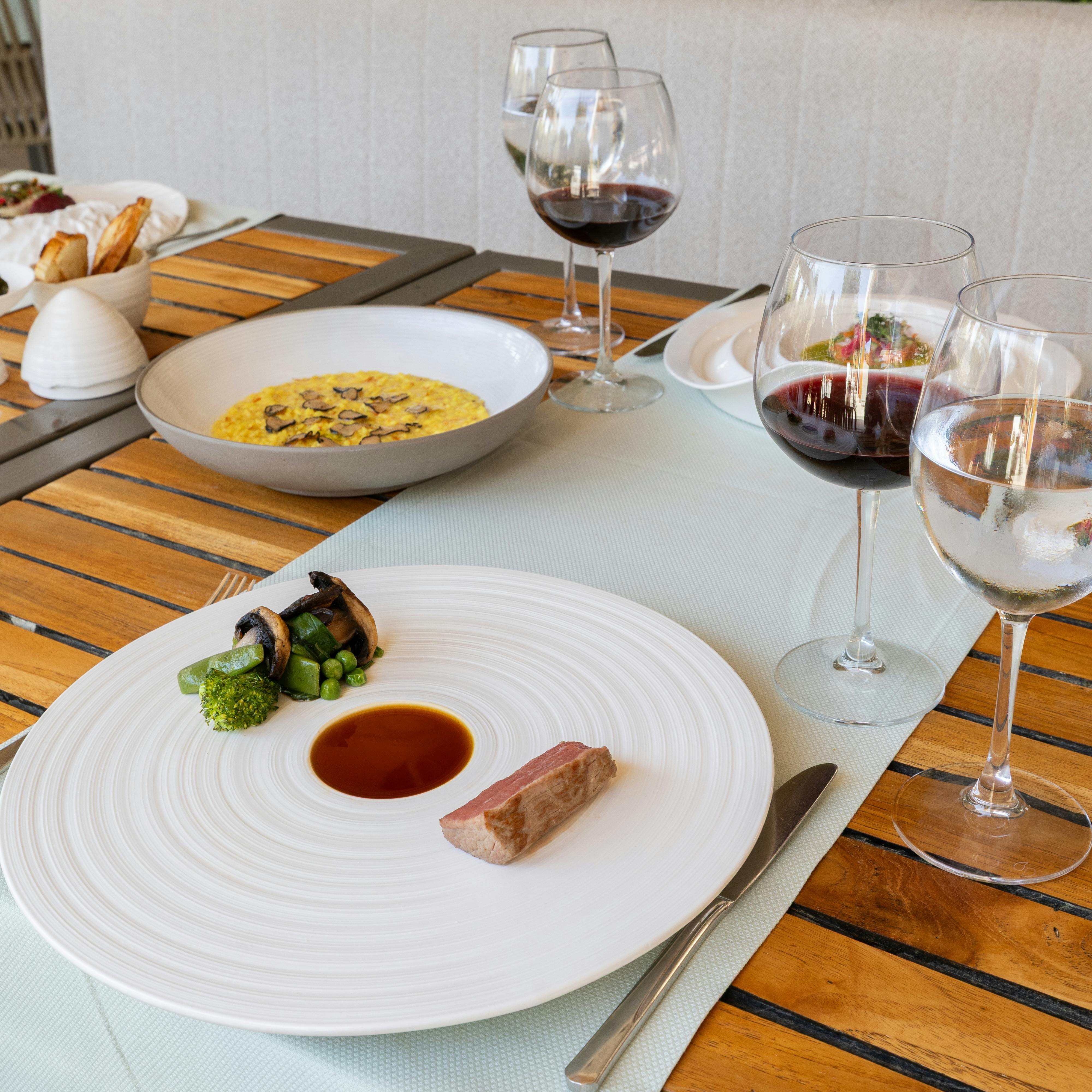
In food and drink, look at sourcing and execution. A premium dinner should not need fireworks to prove itself. Good ingredients, precise heat, and a staff that knows when to step back usually beat theatrics. The same judgment helps with spirits and wine, where restraint, provenance, and balance matter more than packaging. Let’s be real: if the bottle is prettier than the drink, somebody is taking you for a ride.
And yes, beauty still counts. A well-made object or place can point beyond utility toward something higher, which is why craftsmanship matters so much. Human hands made it. Human judgment refined it. That is worth respecting.
Comparison Table: Real Luxury vs. Status Symbol Buying
| Criterion | Real Luxury | Status Symbol Buying |
|---|
| Main goal | Comfort, service, craft, and durability | Attention and visible price |
| Materials | Honest, well-finished, durable | Often flashy, sometimes shallow |
| Service | Responsive and competent | Polite on the surface, weak underneath |
| Long-term value | Often holds up better over time | Often loses appeal fast |
| Emotional effect | Calm, confidence, satisfaction | Brief thrill, then fatigue |
| Best examples | Tailored travel, fine dining, quality watches, premium hotels | Loud branding, excess without purpose |
The table is plain because the truth is plain. Status buying wants witnesses. Real luxury wants a better life. That difference shows up everywhere, from handbags and timepieces to resorts and private dining rooms. The product is not the logo. The product is the feeling after the novelty wears off.
If you want another relevant example of service over spectacle, read the best luxury cruise lines in the world. Cruise brands can be extremely good at smoothing over logistics, which is why they are such a strong test case. If the ship is huge but the service feels personal, you have something real. If not, it is just a floating mall with linen napkins.
Common Mistakes to Avoid
- Confusing brand fame with quality. Everyone knows a famous logo. That says nothing about whether the product or stay is actually good.
- Chasing trend noise. A viral resort or hyped handbag may be packed with hidden tradeoffs. Most hype ages badly.
- Ignoring service details. If the transfer is messy, the check-in chaotic, or the staff indifferent, the whole experience feels cheap.
- Overpaying for spectacle. Blaring music, oversized lobbies, and gimmicks are often cover for weak substance.
- Assuming luxury equals comfort. Some expensive things are stiff, fragile, or impractical. Not good. Just expensive.
- Forgetting maintenance and stewardship. A beautiful watch, villa, or leather piece needs care. Fine goods reward responsible use.
Most advice online sounds like it was written by someone trying to sell you something. “You deserve it,” they say. Great. So does everybody else, which is why the phrase means nothing. Better advice is colder and more useful: ask whether the experience will still feel good after the check clears and the photos are forgotten.
That is where a Catholic sense of stewardship quietly helps. Luxury is not a license for waste. It is a chance to honor skill, beauty, and material goods without turning them into idols. Use them well. Keep them in order. Appreciate the people who made them. That approach is less flashy, but far wiser.
When shopping for premium goods, don’t confuse complication with quality. A watch can have ten features and still be badly finished. A hotel can have six restaurants and still serve cold coffee. A restaurant can have a famous chef and still rush the pacing. The market loves noise. I do not trust noise.
Instead, look for calm competence. It is rarer than it should be, and it usually costs money because it takes skill, training, and time. That is not marketing spin. That is labor.
Frequently Asked Questions
Q: What makes something truly luxurious?
A: It combines craftsmanship, comfort, service, and enduring quality. Price alone does not do the job.
Q: Are luxury goods worth the money?
A: Sometimes. If the item lasts longer, performs better, or gives real pleasure through daily use, it can be worth it. If not, skip it.
Q: What matters more in luxury travel: hotel or location?
A: Both matter, but service and room quality usually decide whether the trip feels special. A great place with poor service is still a headache.
Q: How do I spot fake luxury marketing?
A: Watch for vague claims, too much emphasis on prestige, and too little evidence of materials, skill, or guest experience.
Final Thought
Luxury is best when it is calm, well-made, and useful. The point is not to impress strangers. The point is to live with fewer irritations and more beauty. That is why the finest brands, hotels, meals, and travel experiences are not the loudest. They are the ones that respect your time, reward good taste, and honor the work that made them possible. If a product or place does that, it earns its place. If not, it is just expensive clutter with better lighting.
There is a reason people keep coming back to well-run houses, careful kitchens, and disciplined makers. They know that excellence is never accidental. It comes from order, patience, and human effort offered with skill. That idea is old, but it still holds. Frankly, it always will.
So choose with your head, not your ego. Buy less, but better. Travel where service is real. Eat where restraint is respected. Wear or use what lasts. If luxury is going to mean anything at all, it should make life more graceful without making it silly. That seems like a fair standard.
And if something beautiful does that well, why argue with it?