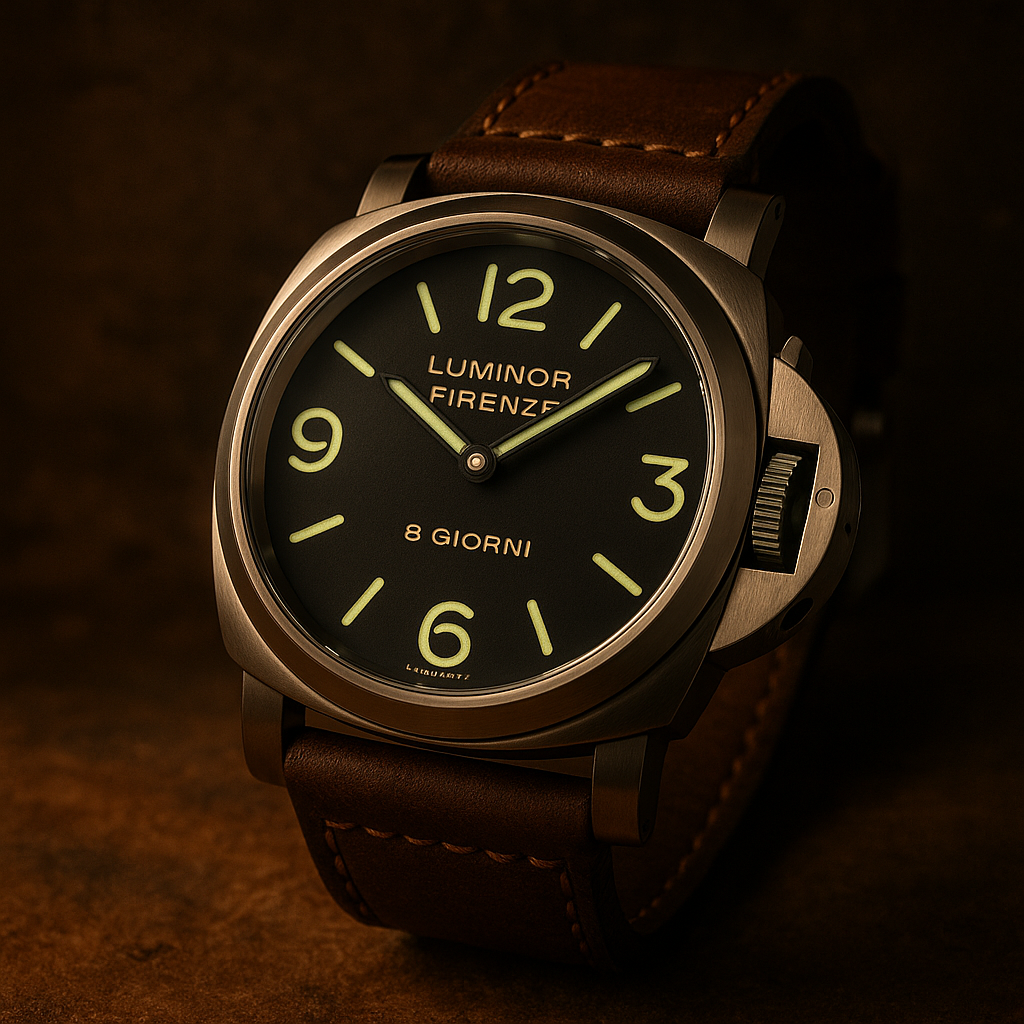
Panerai has taken its most recognizable tool watch and dressed it up without sanding off the grit. The Luminor Firenze 8 Giorni marks a century since the brand...
Panerai has taken its most recognizable tool watch and dressed it up without sanding off the grit. The Luminor Firenze 8 Giorni marks a century since the brand opened its Tuscan boutique, and it does what good luxury should do: keep the core, refine the finish, and make the price feel either justified or absurd depending on how much you care about craft.
Key Takeaways- The Luminor Firenze 8 Giorni is a heritage-driven release with a more polished, city-ready attitude.
- Its appeal sits in design, finishing, brand history, and long power reserve rather than loud technical showmanship.
- Panerai still sells a very specific idea: serious presence on the wrist, but with a cleaner, more refined face.
- In luxury watches, the best pieces are not the noisiest ones; they are the ones that balance utility, rarity, and restraint.
- If you compare it with rivals, you quickly see that heritage alone is not enough—execution decides the bill.
What is Panerai’s Luminor Firenze 8 Giorni?
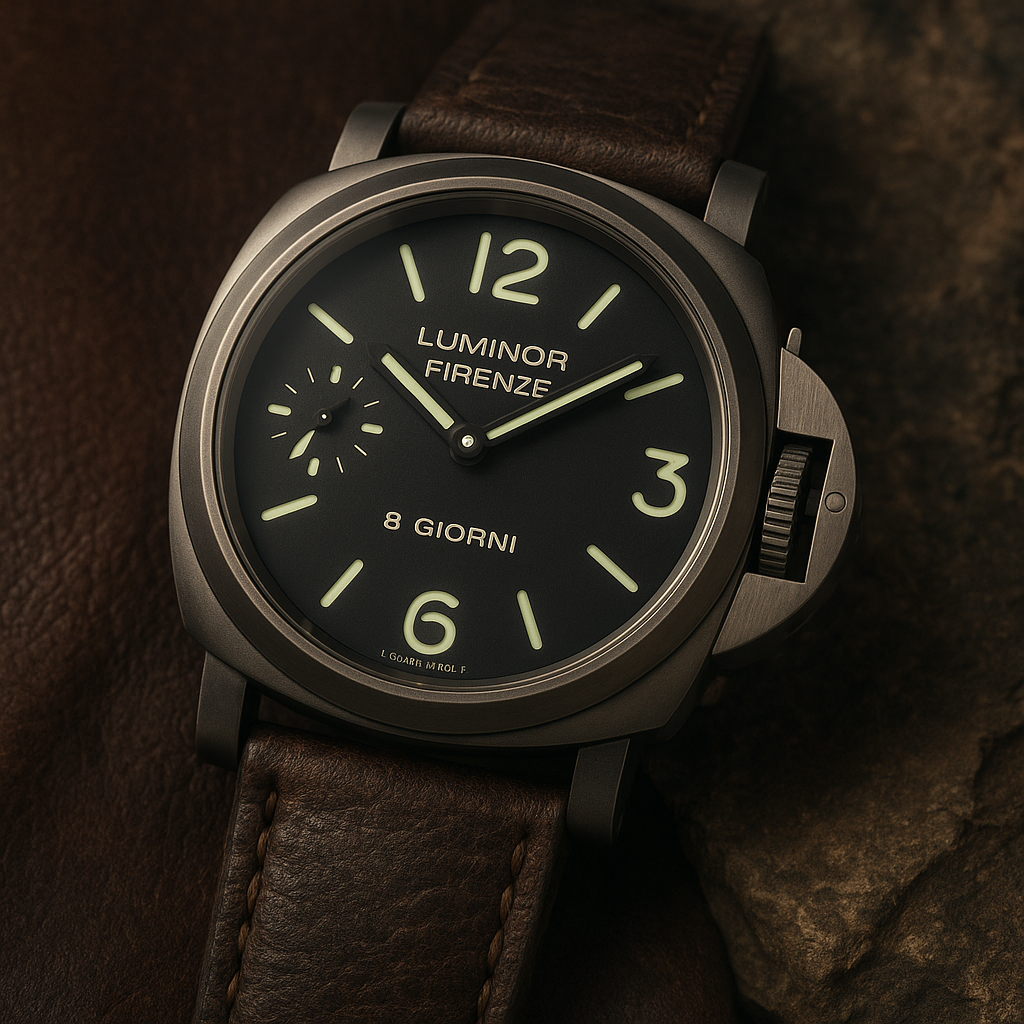
It is a limited-edition Panerai built around lineage. The watch takes the familiar Luminor case shape, the crown-protecting bridge, and the brand’s blunt-force masculine posture, then softens the presentation with a more elegant finish tied to Florence and Panerai’s early boutique history. That matters. A lot.
Most people buy luxury watches with their eyes first, then their conscience later. Frankly, that is usually backward. The real question is whether the watch has a credible story, proper finishing, mechanical integrity, and enough distinction to survive long after the ad campaign fades. The Luminor Firenze 8 Giorni checks the history box easily, but history alone is cheap if the watch feels like a costume. In this case, Panerai gives the piece enough substance to avoid that trap.
The “8 Giorni” in the name points to an eight-day power reserve, one of those features that sounds indulgent until you actually live with it. Then it just feels practical. I’ve reviewed enough luxury watches to know that enthusiasts often obsess over complications they barely use, while overlooking the ones that make daily ownership smoother. Power reserve is one of the good ones. It is the quiet sort of luxury, the kind that respects your time and, in a small way, the dignity of work done well.
Panerai has always occupied odd territory. It is not as delicate as a dress watch brand, and not as technically feverish as the Geneva grand maisons. It lives in the middle, where tool-watch heritage meets luxury theater. That is both its strength and its problem. The brand’s best pieces feel deliberate; the weak ones feel like they were designed by committee after too much espresso. The Firenze edition appears to lean toward the former.
For readers tracking broader luxury watch coverage, this release belongs in the same conversation as other high-end brand moves discussed in luxury watches and horology, especially when a heritage model gets a restrained refresh instead of some clumsy “reimagining.” And yes, that restraint is rare. Most brands shout. A few whisper. The smart ones know when to do neither.
If you want the broader context of what makes a premium product worth considering—not just in watches, but across luxury goods and premium experiences and high-end brand strategy—the answer is usually the same: authentic materials, credible provenance, skilled finishing, and an object that gets better the longer you live with it.
Core Benefits and Why It Matters
Luxury buyers love to pretend they are immune to marketing. They are not. Still, some products genuinely earn attention. The Firenze 8 Giorni matters because it shows how a brand can revise a familiar icon without wrecking its identity.
- Heritage with continuity: The Luminor case is among Panerai’s most recognizable forms, and continuity matters in luxury. If a brand changes everything, it tends to end up with nothing.
- Long power reserve: Eight days is not a gimmick when executed well. It is useful, especially for collectors who rotate watches and want fewer resets.
- More refined styling: The “Firenze” angle gives the piece a more cultured, less militarized feel. That broadens its audience without erasing character.
- Strong wrist presence: Panerai still knows how to make a watch read from across a room. Subtlety is overrated in some cases.
- Collectibility: Limited or special editions tied to brand history often carry stronger emotional pull, which is usually what matters before resale charts and online pontificating enter the room.
- Mechanical credibility: A premium watch should do more than sparkle. It should run accurately, feel solid, and age with grace.
Here’s the kicker: many luxury watches are bought for status but kept for emotional reasons. That is not a flaw. Human beings like symbols. We always have. But the best symbols are not empty; they point to discipline, craftsmanship, and a kind of stewardship over time and resources that feels refreshingly unfashionable in an age of throwaway everything.
Panerai’s smarter play here is not to chase every trend. It is to remind buyers that rugged can still be elegant, and elegance need not be fragile. The watch sits in a rare space where utility and polish do not fight each other. That balance is valuable in luxury travel, too, which is why people who appreciate a finely made watch often care about premium hotels, private transfers, and destinations that respect quiet competence over flash. If that sounds like you, you may also want to read best luxury hotels and resorts and exclusive travel destinations.
When I examined Panerai’s recent direction, the big takeaway was simple: the brand is strongest when it remembers that luxury is not just about price, but about proportion. Too much ornament, and the piece feels insecure. Too little substance, and it feels cheap. A good watch, like a good meal or a well-made room, should have order. Beauty, in the older sense, is never random.
Step-by-Step Guide to Choosing a Watch Like This
Buying a watch at this level should not be a mood swing. It should be a process. I know, that sounds annoyingly adult, but it works.
- Start with the case design
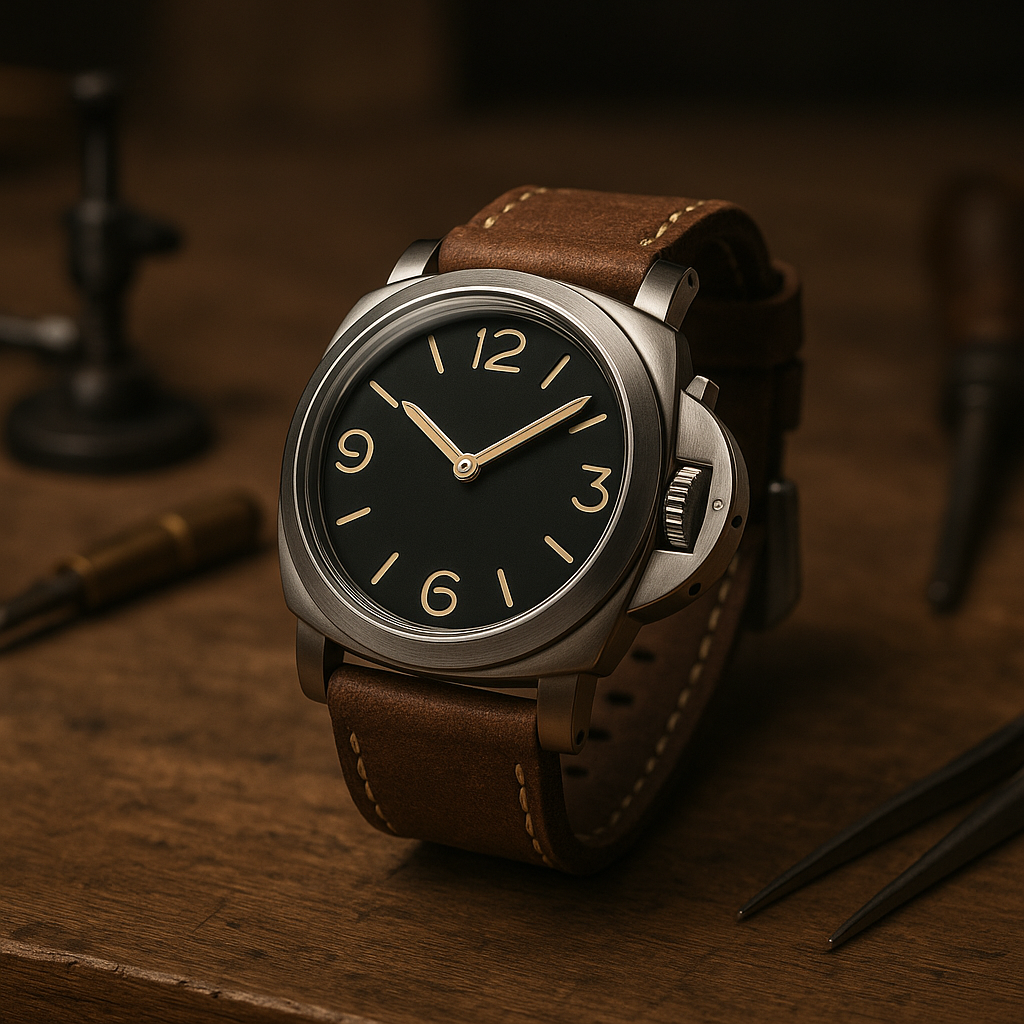
The Luminor case is not for everyone. It has thickness, angles, and a very specific visual grammar. If you want stealth, look elsewhere. If you want presence, this gets interesting fast.
- Check the movement, not just the name
A famous brand can hide mediocre value if the movement does not justify the asking price. With Panerai, I care about the caliber, power reserve, serviceability, and stability more than the brochure language.
- Think about wearability
Luxury watches are supposed to be worn. Not worshipped under museum lighting. If the case size, lug shape, and strap system annoy you, the romance dies quickly.
- Compare finishing honestly
I’ve seen buyers get mesmerized by brushed surfaces and then ignore the edge work, dial texture, or caseback execution. That is how people overpay. The truth is visible if you actually inspect it.
- Ask what role the watch plays
Is it your daily piece, your collector’s piece, or your travel companion? That answer changes everything. A watch for business travel should differ from a watch for formal dinners or weekend driving.
- Study the brand’s consistency
One good release is not enough. Brands earn trust through repeatable execution, not just a lucky headline. Panerai has had uneven moments, so the buyer should be selective.
- Buy meaning, not noise
Plenty of watches get hyped because they are limited, chunky, or expensive. So what? If the piece does not improve your life or your collection, the bragging rights are thin soup.
This is also where internal guidance helps. Readers who care about adjacent categories should compare watch buying with other luxury decisions, like evaluating designer handbags and accessories or luxury fashion and style. The method is similar: material quality, construction, brand credibility, and long-term satisfaction matter more than trend chatter.
On the practical side, I always tell people to try a watch in natural light, with the strap they would actually wear, and with the right clothes. A watch can look heroic under showroom spots and plain foolish at lunch. Nobody tells you that in the boutique, of course.
Comparison Table
| Feature | Panerai Luminor Firenze 8 Giorni | Omega Seamaster Diver 300M |
|---|
| Design Identity | Rugged, Tuscan, heritage-heavy | Sporty, marine, modern classic |
| Case Presence | Large, unmistakable Luminor shape | More versatile and streamlined |
| Power Reserve | 8 days | Around 55 hours |
| Style Positioning | Refined tool-watch with collector appeal | Everyday luxury sports watch |
| Brand Personality | Bold, distinctive, somewhat niche | Broadly recognized, highly versatile |
| Value Proposition | Emotional resonance and limited-edition pull | Practical versatility and stronger mainstream appeal |
| Best For | Panerai loyalists, collectors, statement wearers | Buyers wanting one luxury watch to do most jobs |
| Weak Point | Size and niche appeal | Less idiosyncratic, less dramatic |
The competitor here is not chosen at random. Omega is a serious benchmark because it offers technical credibility, brand recognition, and broad wearability without the same visual eccentricity. Panerai wins if you want character. Omega wins if you want range. That is the honest answer, and honest answers are rare enough in luxury to feel almost rebellious.
If you are shopping across categories, the same logic applies in luxury automotive reviews or premium spirits reviews: the best product is rarely the loudest one. It is the one that knows exactly what it is.
Common Mistakes to Avoid
People make absurd mistakes with luxury watches. Then they call them “preferences.” Cute.
- Buying the logo, not the watch: A famous name does not excuse mediocre proportions, weak finishing, or an awkward wearing experience.
- Ignoring wrist fit: Big watches can look great in photos and terrible in real life. Measure first. Regret later if you must, but at least be informed.
- Chasing hype over identity: If you buy a Panerai because someone said it is “hot,” you are already on shaky ground. Buy it because the design speaks to you.
- Assuming all limited editions are collectible: Scarcity is not quality. A dull object with a low production number is still dull.
- Overlooking service costs: Fancy watches cost money to own. That is part of the deal. Pretending otherwise is childish.
- Forgetting the purpose: Some watches are daily wearers, others are occasion pieces. Mixing those up leads to disappointment.
The worst advice online is often the slickest. “Buy what holds value.” Sure, if you want to turn watch collecting into a spreadsheet. But the best pieces are not always the strongest financial instruments. Sometimes they are simply beautiful and well made, and that should count for something. Beauty is not frivolous. It reflects order, and order is one of the few things our noisy age still desperately needs.
I’ve seen people obsess over resale value while ignoring the plain fact that they do not even like the watch on their wrist. That is backward. If you cannot enjoy the object, what exactly are you preserving? A receipt?
If you want a more complete luxury benchmark, compare this mindset with interviews with luxury industry leaders and luxury market news, where the best operators consistently stress craft, coherence, and customer loyalty over short-term noise.
Frequently Asked Questions
Is the Panerai Luminor Firenze 8 Giorni a good investment?
Sometimes, but not reliably in the way people hope. The better question is whether you would still want it if the market went flat. That is the more adult test. Certain limited or special-edition Panerai pieces can hold interest well, but investment performance depends on condition, rarity, and buyer demand, not just brand name.
What makes the Firenze version different from a standard Luminor?
The Firenze edition leans more into Panerai’s Tuscan heritage and boutique history, which gives it a more refined, collector-oriented personality. It is still a Luminor at heart, but the presentation feels more polished and a bit less purely utilitarian.
Who should buy a watch like this?
Collectors who like bold proportions, people who appreciate brand history, and buyers who want a watch with strong visual identity should pay attention. If you want a thin, discreet dress watch, this is not your lane.
How do I choose between Panerai and another luxury sports watch brand?
Decide whether you want character or versatility. Panerai gives you a strong point of view; brands like Omega or Rolex often give you broader daily utility. That tradeoff is the whole game.
For readers who want related luxury coverage, the same decision logic appears in fine jewelry buying guides, luxury home design trends, and premium travel experiences. Different categories, same discipline: know what you value, then pay for that—not for the brochure drama.
Final Thought
The Luminor Firenze 8 Giorni is interesting because it refuses to apologize for being a Panerai. It still has bulk, presence, and a certain stubborn confidence, yet the Firenze angle adds a layer of refinement that feels earned rather than pasted on. That matters more than most people admit.
Luxury works best when it is disciplined. Not flashy. Not insecure. Disciplined.
I tend to respect objects that show skill without begging for applause, because that kind of restraint is rare and, honestly, more humane than the usual excess. A watch like this can be more than a status marker; it can be a small reminder that good work has form, that beauty can be serious, and that the things we keep closest to us should be chosen with care. In that sense, the watch is not merely about owning time. It is about respecting it.
And that is the part most luxury marketing still gets wrong.