Patek Philippe’s Milan exhibition matters because scarcity still works. The brand has unveiled seven new watches at its Grand Exhibition in Milan, and they...
Patek Philippe’s Milan exhibition matters because scarcity still works. The brand has unveiled seven new watches at its Grand Exhibition in Milan, and they are available only in Italy, which is exactly the sort of move that turns collectors from calm to irrational. That is the game here: not mass reach, but controlled desire, backed by serious watchmaking, rare references, and the stubborn fact that true luxury still rewards restraint.
| Key Takeaways |
|---|
| Seven new Patek Philippe watches debuted at the Milan Grand Exhibition. |
| Italy-only availability adds real scarcity, not the fake kind brands love to fake. |
| The move strengthens collector demand, regional exclusivity, and resale interest. |
| Patek’s appeal still rests on craftsmanship, heritage, complications, and finishing. |
| Luxury works best when it respects stewardship, beauty, and human skill. |
Frankly, most luxury marketing talks too much. Patek Philippe does not need to shout. When a brand with this much history chooses to release seven new watches in one city, and only for one country, it is sending a clear signal: the object matters, the audience matters, and not everyone gets a seat at the table. You can call that snobbery if you like. I call it discipline.
And yes, there is a spiritual note hiding under the gold leaf. Fine watchmaking is one of those rare modern crafts that still treats time as something worthy of reverence, not just measurement. A well-made watch says someone spent hours, sometimes years, making sure the invisible parts were done right. That sounds old-fashioned because it is. It also sounds right.
Patek Philippe’s Milan release fits neatly into the wider world of luxury goods, where scarcity, craftsmanship, provenance, and emotional value matter more than sheer volume. The same logic shows up in fine dining, private travel, and premium hotels: people pay for rarity, competence, and atmosphere. They pay to feel that something was made with intent. They pay, in other words, for the difference between a product and a promise. If you want the broader playbook, see our guide to luxury watches and horology and our analysis of luxury brand heritage, both of which explain why collectors keep chasing names that refuse to behave like ordinary businesses.
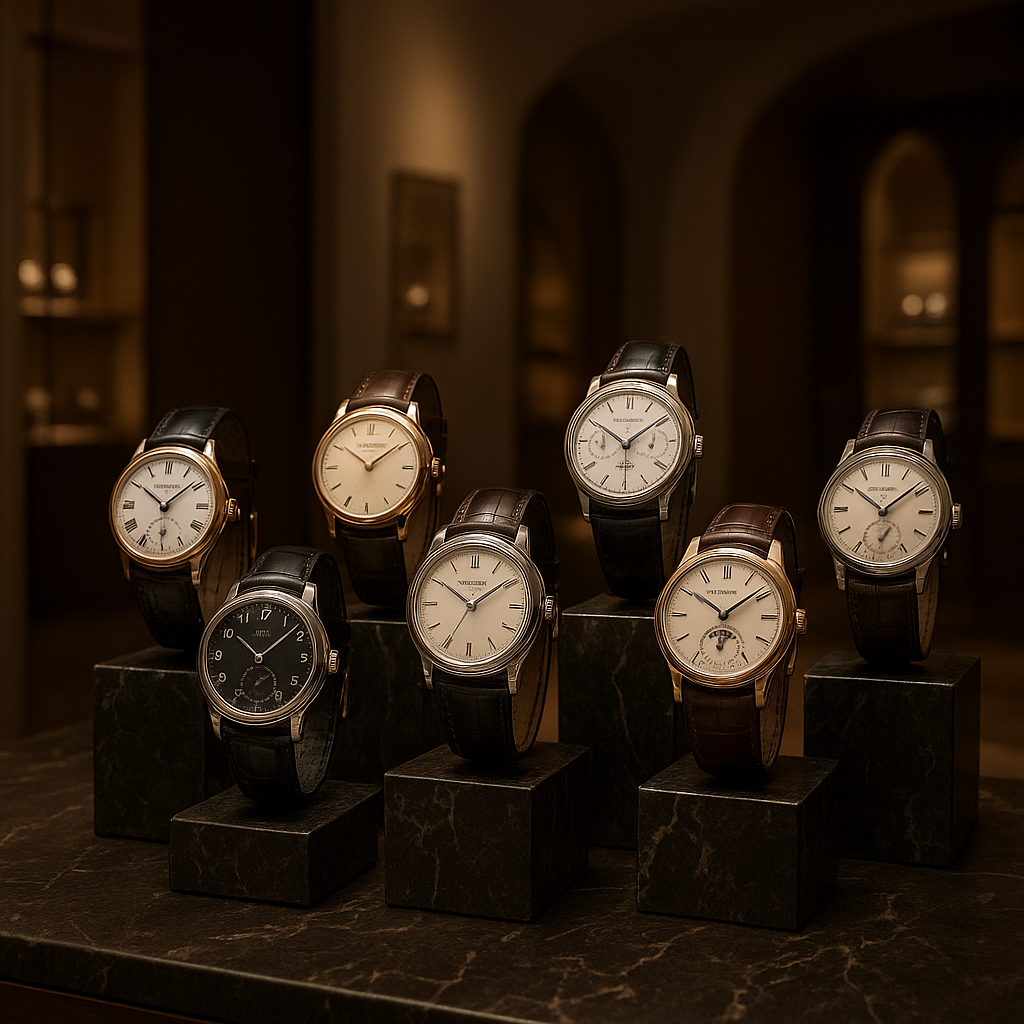
What is Patek Philippe’s Milan Grand Exhibition release?
It is a tightly controlled product drop. The seven new watches unveiled at Patek Philippe’s Grand Exhibition in Milan are special references tied to the event, and the key fact is simple: they are available only in Italy, which makes them regional exclusives rather than global catalog pieces.
Why does that matter? Because Patek Philippe has never competed on novelty alone. It competes on heritage, finishing, complication work, and long memory. A new launch from Patek is never just a new case shape and a press release padded with adjectives. It is usually a careful adjustment to an existing language: a dial treatment, a case metal, a limited distribution decision, or a complication framed in a way that rewards collectors who actually pay attention.
I’ve reviewed enough luxury products to know the difference between real scarcity and cheap theater. Real scarcity has consequences. It changes where a watch can be bought, who can buy it, how quickly it moves, and whether collectors begin calling boutiques instead of waiting for emails. The Milan-only angle does all of that. It also creates a geographic story, which luxury brands love because story sells, but in this case the story is backed by an actual barrier to entry.
The exhibition format matters too. Grand exhibitions are not random showroom events. They are part brand museum, part sales channel, part public sermon on what craftsmanship still looks like when it has not been flattened by mass production. That is why these releases resonate even with people who will never own one. You are looking at a standard for the category, not just a product line.
If you want the blunt version: Patek Philippe is telling the market that some watches should be rare, some should be local, and some should be hard to get because hard-to-get things still feel meaningful. That is not a gimmick. It is the oldest rule in luxury. For a broader look at how exclusivity shapes demand across premium sectors, read our pieces on exclusive luxury destinations and luxury resorts and premium accommodations. Same principle, different packaging.
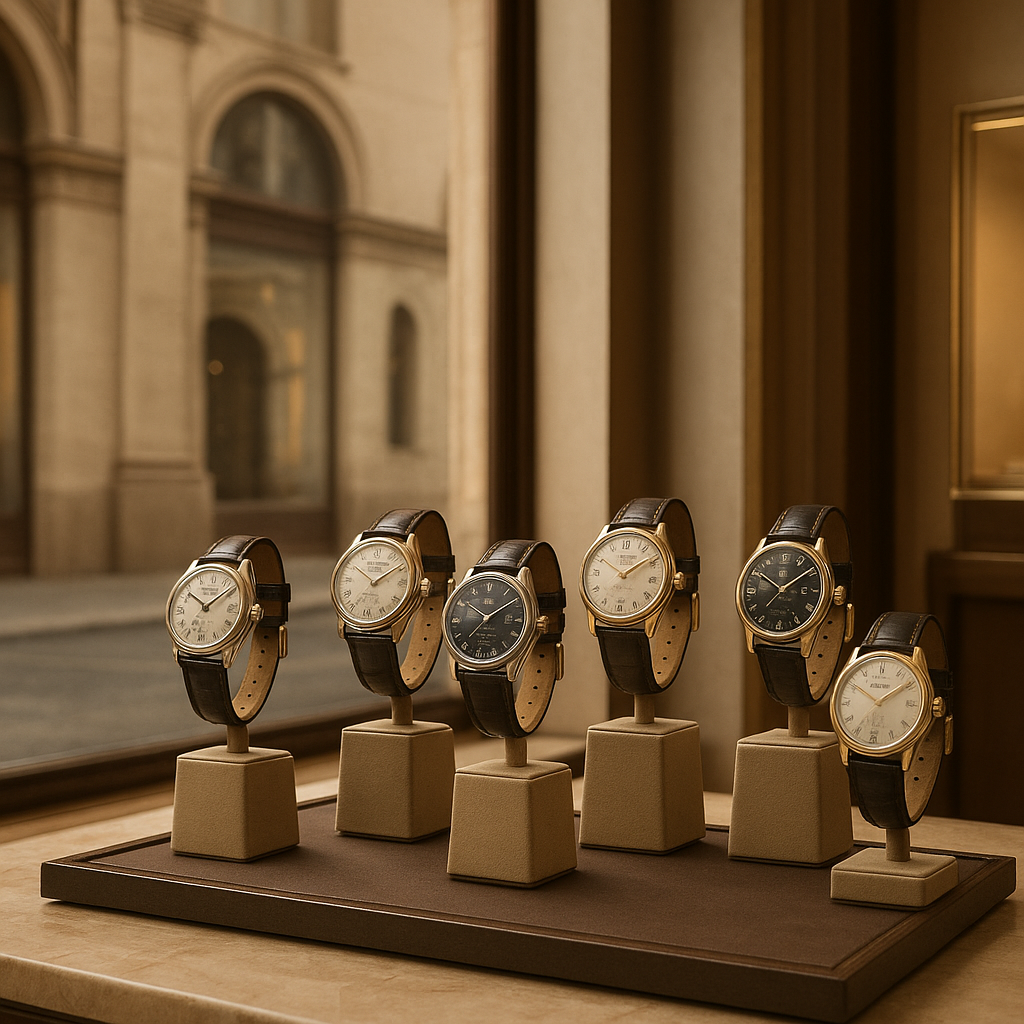
The brand’s move also sits inside a larger market truth. Luxury buyers do not just pay for materials. They pay for access, context, and the feeling that the object belongs to a narrower circle than ordinary commerce allows. That is why Patek’s Milan watches matter beyond the watch case. They are a lesson in how premium brands maintain heat without cheapening themselves.
Core benefits and why this matters
Scarcity creates leverage. It does not guarantee quality, but it amplifies whatever quality exists. In the case of Patek Philippe, the quality is already there, so the scarcity simply concentrates attention. Here’s the kicker: attention is a form of value in luxury, and brands that waste it by overproducing usually end up chasing the market they diluted.
- Collector urgency: Regional exclusives force serious buyers to act fast, and that often moves the conversation from casual interest to real acquisition behavior.
- Stronger brand aura: Limiting the watches to Italy reinforces Patek Philippe’s image as a house that controls distribution rather than begging for it.
- Potential secondary-market premium: Rare references often command extra interest among collectors, though anyone pretending this is guaranteed is selling fantasy with a straight face.
- Event-driven storytelling: A Grand Exhibition turns product launches into cultural events, which helps the brand position itself above ordinary retail.
- Proof of craftsmanship: The watches matter because Patek still frames its work around finishing, complications, and execution, not just hype.
- Luxury as stewardship: Good luxury uses rare materials and skilled labor responsibly; it does not simply burn resources to look expensive.
Most people miss the first-order effect. They focus on price and forget the real currency: trust. Patek Philippe’s buyers trust the brand to preserve value, respect design language, and keep the watchmaking serious. That trust is hard won. It cannot be printed. It cannot be staged for a quarter and then corrected with a campaign.
There is also the plain fact that craftsmanship still calms the eye. A watch with proper finishing, balanced proportions, and thoughtful mechanics does something modern life rarely does: it slows you down in a good way. That is not sentimentality. It is a response to ordered work. Catholic tradition has always had room for that idea, even if modern marketing people would rather talk about “experience” until everyone falls asleep.
For buyers interested in other categories where scarcity and workmanship matter, our coverage of fine jewelry and precious gems and luxury fashion and designer clothing shows the same logic in different materials. The objects change. The buying psychology does not.
And yes, the Milan-only restriction matters more than a lot of brands would like to admit. If everything is available everywhere, then nothing feels special. Simple as that.
Step-by-step: how to evaluate these watches properly
Start with the watch, not the headline. Then move outward.
- Check the reference, not the rumor.
A lot of luxury chatter is just recycled speculation in a nicer jacket. I always start with the exact reference number, case material, movement family, and any event-specific notes from official brand information and credible coverage such as Hodinkee or Europa Star. Without that, you are arguing about fog. - Assess the movement first.
A pretty dial can hide mediocrity. Patek lives or dies by movement quality, architecture, finishing, and mechanical coherence. If the movement is ordinary, the watch is ordinary, no matter how elegant the press photos look. - Judge the case and dial in natural light.
The good stuff has presence without noise. Look for proportion, symmetry, texture, and whether the dial reads cleanly from a normal distance. A watch should not need stage lighting to make sense. - Ask why the piece is Italy-only.
Is it connected to the exhibition, a distribution strategy, or a collector incentive? The answer matters because exclusivity with no story is just a sales trick. Exclusivity with a reason is strategy. - Compare against the closest Patek alternative.
Do not compare a Milan exclusive to a random watch from another brand. Compare it to the nearest reference in Patek’s own catalog, because that is where the real differences show up. - Consider long-term service and ownership.
Luxury is not just purchase day. It is maintenance, authorized service, parts availability, and whether the brand will still stand behind the piece in twenty years. Patek’s reputation is strong here, and that matters. - Decide whether you want utility or significance.
Not every purchase needs to be rational in the strict accountant sense. But be honest. If you want daily wear, buy for durability and legibility. If you want collecting significance, buy for rarity and design importance.
I’ve learned that the best luxury purchases feel obvious after the fact. Before the purchase, they are usually annoying, expensive, and difficult to justify to people who think a watch is just a phone-less clock. Those people are, of course, missing the point.
The point is that a great luxury object carries labor you can feel, even if you cannot name every technical detail. That is why people keep returning to Patek, Rolex, Cartier, and a handful of others. The craft survives the noise. The rest is paperwork.
For more on how to think about premium acquisition decisions, see our guides to luxury market trends and luxury home products and premium decor, where the same principles of quality and durability apply.
Comparison table: Patek Philippe exclusives vs Rolex limited releases
| Category | Patek Philippe Milan Exclusives | Rolex Limited Releases |
|---|
| Exclusivity model | Italy-only availability tied to a specific exhibition | Usually broader scarcity through production limits and dealer allocation |
| Brand positioning | Ultra-high horology, collectors, heritage | Mass prestige with stronger mainstream visibility |
| Craft emphasis | Movement finishing, complications, artisanal detail | Robust design, reliability, iconic case shapes |
| Collector psychology | Quiet, informed, and highly specific | Broader appeal, more public recognition |
| Resale behavior | Can be strong when rarity and story align | Often very strong on popular steel sports models |
| Buyer experience | More intimate, more niche, more insider-driven | More visible, more widely chased |
| Main weakness | Very narrow access and limited liquidity | Hype can distort buying decisions |
Let’s be real: the comparison is not about which brand is “better” in the abstract. That is club talk, and club talk gets silly fast. It is about what kind of luxury each brand sells. Patek sells patience, permanence, and precision. Rolex sells durability, recognizability, and cultural reach. Both are excellent at what they do. They are just not doing the same job.
And if you are the sort of buyer who confuses popularity with depth, you will miss the whole point of the Patek release. These Milan watches are not meant to dominate street conversation. They are meant to satisfy people who notice case curvature, dial proportion, and the labor hiding under the bezel.
That said, Rolex wins on instant recognition, and there is no shame in admitting it. Many collectors own both families for that exact reason. One is the public face. The other is the private indulgence. Luxury has room for both, provided you know what you are buying.
Common mistakes to avoid
The first mistake is treating scarcity as proof of merit. It is not. A bad watch in a small batch is still a bad watch. People fall for this constantly because they confuse access friction with quality. That is lazy thinking dressed up as taste.
- Mistaking exclusivity for excellence: A watch being hard to buy does not mean it is well made. Read the specs, study the finishing, and compare it to the brand’s stronger references.
- Ignoring the movement: Buyers get seduced by dial color or event hype, then discover the engine underneath is the actual story. It usually is.
- Buying for resale only: Secondary-market thinking can be useful, but if that is your only motive, you are basically speculating with a bracelet.
- Skipping authorized channels: With Patek, provenance matters. If the source is murky, the risk is not worth the drama.
- Overpaying because of buzz: Milan release, exhibition release, city-exclusive release—fine. But hype fades. Quality remains.
- Forgetting service costs: Ownership continues long after the applause dies down.
One more thing. Stop relying on social media “reviewers” who can identify a ceramic bezel but not a finished bridge. Most luxury commentary online is a noise machine. Useful sometimes, yes. Reliable? Often not. I trust documents, direct brand data, and serious specialist reporting far more than someone filming a wrist in a hotel lobby.
There is a deeper mistake too: forgetting that beautiful objects should be treated as gifts to be respected, not trophies to be waved around. Good stewardship is part of good taste. That is true for watches, homes, art, and even wine. If you buy something rare, care for it. Otherwise you are just a temporary holder of expensive metal.
For broader context on how prestige can be misread, our coverage of art and collectibles and fine wines and premium beverages shows how easily status can crowd out judgment.
Frequently Asked Questions
Why are the new Patek Philippe watches available only in Italy?
They are tied to the Milan Grand Exhibition and positioned as regional exclusives. That creates scarcity, rewards event attendance, and gives the launch a clear geographic identity.
Are the Milan-exclusive Patek watches a good investment?
Potentially, but not automatically. Strong provenance, limited availability, collector demand, and long-term desirability matter more than the headline. Buy the watch first. Speculation should stay in the background.
What makes Patek Philippe different from other luxury watch brands?
Patek Philippe is defined by finishing quality, mechanical complexity, restrained design, and a long-standing collector culture. It is less about flash and more about depth.
Should buyers prioritize scarcity or wearability?
If you plan to wear the watch often, wearability matters more. If you collect for rarity and significance, scarcity matters more. Best case, both line up. That’s the sweet spot.
Final thought
Patek Philippe’s Milan release is a reminder that luxury still works best when it refuses to be ordinary. The seven watches are not just products. They are a controlled statement about craft, restraint, and the value of making something difficult to obtain without making it silly.
That distinction matters. A lot.
In a market flooded with loud launches and fake urgency, Patek Philippe’s Italy-only strategy feels almost refreshing. Not because exclusivity is inherently noble, but because it is honest when used well. It tells you that the brand believes in place, timing, and the dignity of limited production. It respects the fact that not every object should be everywhere at once.
I think that is why serious collectors keep paying attention. They are not chasing novelty for its own sake. They are chasing proof that real craftsmanship still exists in a world that often mistakes speed for value. The watches may be hard to get, but that is part of the point. Good things often are.
And maybe that is the quiet lesson behind all of this. Beauty is not endless availability. Beauty is order, skill, and intention made visible. When a watch carries that much care, it stops being merely an accessory and becomes a small piece of disciplined human work. That is worth noticing, even if you never buy one.
FAQPage Schema
{
  "@context": "https://schema.org",
  "@type": "FAQPage",
  "mainEntity": [
    {
      "@type": "Question",
      "name": "Why are the new Patek Philippe watches available only in Italy?",
      "acceptedAnswer": {
        "@type": "Answer",
        "text": "They are tied to the Milan Grand Exhibition and positioned as regional exclusives, which creates scarcity and gives the launch a clear geographic identity."
      }
    },
    {
      "@type": "Question",
      "name": "Are the Milan-exclusive Patek watches a good investment?",
      "acceptedAnswer": {
        "@type": "Answer",
        "text": "They can be, but not automatically. Provenance, collector demand, rarity, and long-term desirability matter more than hype."
      }
    },
    {
      "@type": "Question",
      "name": "What makes Patek Philippe different from other luxury watch brands?",
      "acceptedAnswer": {
        "@type": "Answer",
        "text": "Patek Philippe is known for high finishing standards, mechanical complexity, restrained design, and strong collector appeal rooted in heritage."
      }
    },
    {
      "@type": "Question",
      "name": "Should buyers prioritize scarcity or wearability?",
      "acceptedAnswer": {
        "@type": "Answer",
        "text": "Buyers should choose based on how they plan to use the watch. Wearability matters for daily wear, while scarcity matters more for collectors seeking significance."
      }
    }
  ]
}