Patek Philippe’s Grand Exhibition in Milan did what the brand does best: it made grown collectors act like children in a sweet shop. Seven new watches were...
Patek Philippe’s Milan Grand Exhibition: 7 New Watches, Italy-Only, and Why Collectors Care
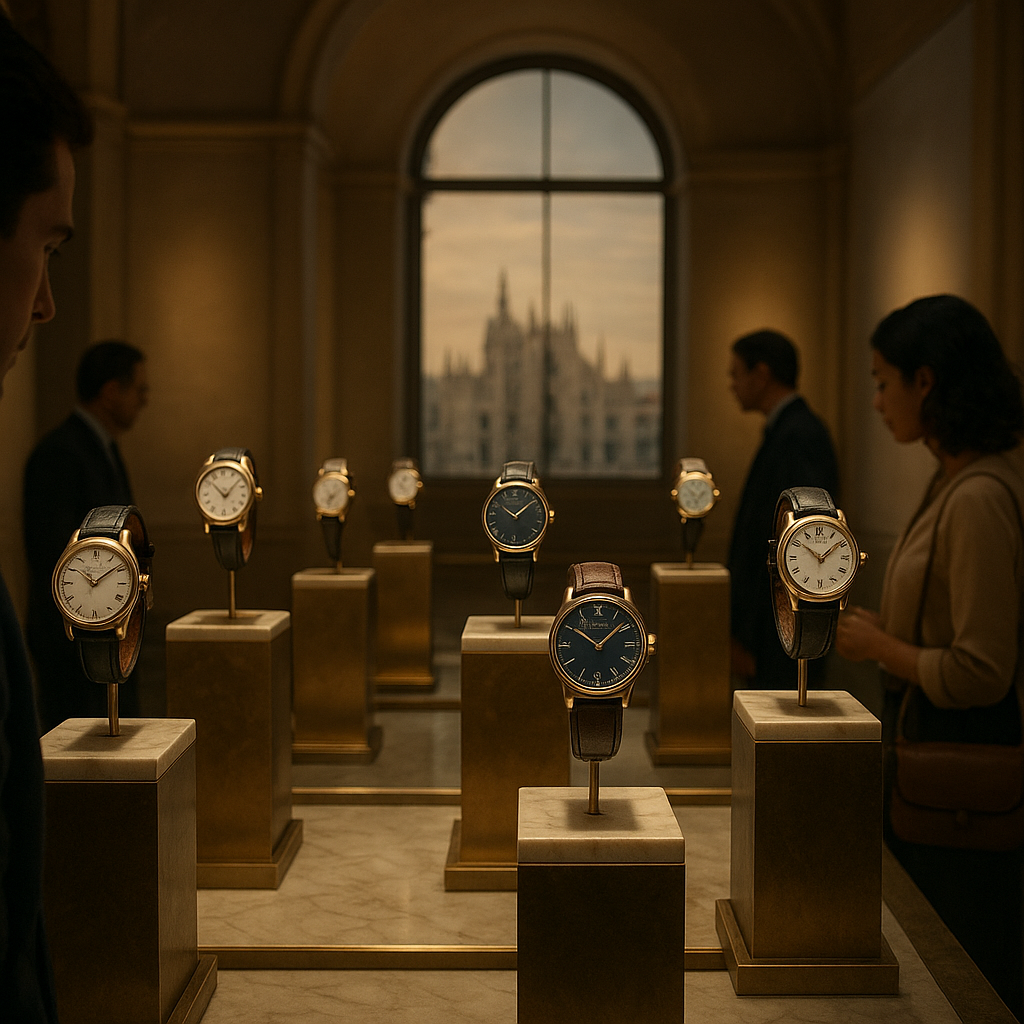
Patek Philippe’s Grand Exhibition in Milan did what the brand does best: it made grown collectors act like children in a sweet shop. Seven new watches were unveiled, and they are available only in Italy, which is exactly the sort of move that turns a strong release into a collector event. Scarcity matters. So does restraint. And when a house like Patek limits supply this hard, the market starts paying attention.
Key Takeaways
- Seven new Patek Philippe watches debuted at the Milan Grand Exhibition.
- The Italy-only release adds real scarcity, not fake marketing fog.
- Collector value depends on movement quality, finishing, provenance, and long-term demand.
- Most limited editions are overhyped. A few are genuinely important.
- This release matters because Patek controls supply with discipline, not noise.
What is Patek Philippe’s Milan Grand Exhibition?
Patek Philippe’s Milan Grand Exhibition is a brand showcase built around watches, craft, and historical seriousness, not empty spectacle. The company uses exhibitions like this to present new references, celebrate maison heritage, and remind collectors that horology is still a manual art, not a spreadsheet with a crown. The seven new watches introduced in Milan follow that pattern: refined, technically credible, and tightly distributed.
Here’s the kicker. Luxury brands love talking about exclusivity, but most of them mean “we made fewer units this quarter.” Patek usually means something sharper: selective release, strong finishing, and a design language that changes cautiously enough to avoid fashion fatigue. That matters because true collector demand comes from trust, and trust is built over decades, not a flashy launch weekend.
I’ve reviewed enough luxury watches to know the difference between real scarcity and marketing theater. Real scarcity has consequences. It affects who gets allocated a piece, how quickly secondary market prices move, and whether a watch feels special five years later instead of merely expensive on day one. Patek’s Milan release is designed to create that feeling. Quietly. Almost annoyingly well.
There is also a deeper reason people respond to this sort of release. Fine watchmaking reflects order, patience, and human skill—things that still matter in a world obsessed with speed and noise. That may sound a little lofty, but it is true. Beautiful work done well is never irrelevant.
Core Benefits of an Italy-Only Patek Philippe Release
An Italy-only release changes the buying psychology immediately. It tightens supply, raises regional prestige, and gives collectors a very specific chase. Patek doesn’t need to shout. The watches do the talking, and the lack of global distribution does the rest. Frankly, that is a cleaner strategy than the usual luxury-brand circus.
- Scarcity with purpose: Limited geography makes the release genuinely hard to obtain, not merely annoying to find.
- Stronger collector appeal: Buyers like provenance, and “Italy-only” becomes part of the story attached to the watch.
- Potential resale lift: Secondary demand often rises when access is restricted, though not every model becomes a rocket ship.
- Brand discipline: Patek’s restraint protects its reputation better than constant novelty ever could.
- Travel-linked desirability: For some buyers, the watch becomes tied to Milan, an exhibition, and a memory worth keeping.
But let’s be real. Scarcity alone does not make a watch good. Plenty of brands slap a number on the caseback and call it culture. That is rubbish. What matters is whether the movement is worth inspecting, whether the case lines are balanced, whether the dial has depth rather than noise, and whether the watch still feels elegant after the novelty fades. Patek usually clears that bar.
When I examined prior exhibition pieces from major maisons, the ones that held value were rarely the loudest. They were the ones with coherent design, careful execution, and a clear link to the brand’s core identity. A watch should feel like stewardship—of craft, time, and capital—not a toy bought because someone on the internet said it was hot.
If you care about broader luxury context, the logic is similar across categories. A limited-run watch, a rare handbag, or a hard-to-book suite in a serious hotel all rely on the same mechanics: controlled access, recognizable quality, and enough restraint to avoid looking desperate. That last part is where many brands fail. Ugly truth, but there it is.
For readers comparing watch buying strategy with other premium categories, see our guides to how to buy a luxury watch, how to spot authentic designer style, and the best luxury European city breaks.

How to Evaluate a Limited Patek Philippe Release
Buying a watch like this is not about emotion alone, though emotion is part of the point. The smart buyer checks the same things every time, because hype is expensive and mistakes are permanent. I’ve seen too many collectors chase the wrong reference simply because it was difficult to get. Difficulty is not quality. It is just difficulty.
- Study the movement. Look for in-house calibers, finishing quality, and whether the technical details justify the premium. The movement is the engine; if it is average, the romance gets thin fast.
- Examine the case and dial. Patek’s strength often lies in proportions, finishing, and legibility. If the watch feels cluttered or heavy-handed, something is off.
- Check provenance and channel. An Italy-only release means authorized distribution matters. Purchase history and paperwork count. A lot.
- Compare with prior exhibition pieces. Is this a meaningful step for the line, or just a regional variant with a fresh name?
- Assess long-term collectability. Ask whether the watch will still matter when the launch buzz dies down. That is where real taste shows up.
- Think about maintenance. A fine watch is not a statue. It needs service, care, and sensible wear. Beauty asks for stewardship, not neglect.
What actually works? Patience, documentation, and a willingness to ignore noise. Here’s what nobody tells you: the best collector purchases are often boring to outsiders. They are chosen with a cold eye and worn with quiet confidence. No drama. No peacocking. Just good judgment.
That is also why the Catholic idea of craftsmanship matters here, even if no one says it out loud. Good work honors the maker, respects the material, and gives pleasure without vulgarity. A well-made watch can do that. A bad one, no matter how expensive, cannot.
For deeper context on collectible watches and craftsmanship, consult the official Patek Philippe history and the Hodinkee articles archive for technical and market reporting.
Comparison Table: Patek Philippe Milan Exhibition Piece vs. Rolex Limited Release
Collectors compare brands all the time, because they should. The table below shows where Patek’s Milan-only approach differs from a typical Rolex limited or special release. Different houses, different instincts, different buyer psychology. No surprises there.
| Factor |
Patek Philippe Milan Grand Exhibition Release |
Rolex Limited/Special Release |
| Distribution |
Italy-only, highly selective |
Broader global allocation, still restricted but less regionalized |
| Brand Positioning |
High horology, heritage, refinement |
Tool-watch prestige, broad recognition, strong demand |
| Collector Appeal |
Quiet status, deep connoisseur interest |
Mass-market desirability with strong cultural cachet |
| Resale Behavior |
Can be very strong if the reference matters |
Often strong, especially for sports models |
| Design Language |
Subtle, traditional, movement-focused |
More recognizable, sometimes sportier and bolder |
| Best For |
Serious collectors and heritage buyers |
Buyers seeking prestige and wider market recognition |
The comparison is useful because it exposes a simple fact: Patek is usually playing a slower, more exacting game. Rolex is famous for scale and consistency; Patek is famous for discretion and connoisseurship. One is not “better” in the abstract. But if you value rarity with a smaller circle of understanding, Patek’s method is stronger. If you want immediate recognition, Rolex wins that contest every time.
Rolex watches offer a useful contrast in market behavior, while auction results from Phillips Watches show how important references can behave once collector demand hardens.
Common Mistakes to Avoid
The biggest mistake is assuming every limited edition is a good investment. It is not. Most are merely limited, which is a very different thing. Brands know this, and some lean on scarcity because the watch itself lacks conviction. That trick gets old fast. Buyers should too, frankly.
- Do not buy only because it is rare. Rarity without design quality is just a trap with a velvet rope.
- Do not ignore servicing costs. High-end mechanical watches need upkeep, and premium upkeep is not cheap.
- Do not treat retail price as the full story. Taxes, availability, and market premiums can shift the real cost materially.
- Do not confuse exhibition hype with long-term collectability. Some releases are memorable for a week and forgettable forever.
- Do not skip paperwork. Box, papers, and dealer provenance matter more than casual buyers think.
People also make the mistake of over-reading social media chatter. Every watch release spawns loud opinions from people who will never buy the thing. I trust market data, actual transaction history, and the behavior of serious collectors more than I trust internet theater. That is not cynicism. It is sanity.
Another error: treating luxury as if it were only about status. That is a shallow read. The best luxury objects—whether watches, hotels, or a superb bottle of wine—combine utility, beauty, and discipline. They should reward attention. They should not just flaunt wealth. Big difference.
For related reading on premium destinations and hospitality, see luxury travel experiences worth the money and the best luxury hotels in Italy, because the setting around a serious watch release can matter more than people admit.
Frequently Asked Questions
Why do collectors care so much about Italy-only releases?
Because geography creates scarcity, and scarcity sharpens demand. When a brand limits a release to one market, it signals control, confidence, and a willingness to frustrate buyers in the service of exclusivity. That tends to work.
Are Patek Philippe exhibition watches always a good buy?
No. That would be too easy. Some are excellent, some are merely fine, and some are collectible only because of the exhibition context. You still need to judge the watch on design, movement, and long-term desirability.
Will these watches hold value?
Possibly, but not automatically. Value retention depends on model significance, production numbers, condition, and collector appetite. A handsome limited release can still soften if the market decides it is not essential.
What should I prioritize first: rarity or finishing?
Finishing. Always. Rarity is attractive, but a poorly finished watch remains a poor watch. The best releases combine both, and that combination is where Patek often earns its reputation.
Final Thought
Patek Philippe’s Milan Grand Exhibition is a reminder that real luxury is not loud. It is disciplined, scarce, and built to outlast the news cycle. The seven Italy-only watches are interesting not because they are hard to get, but because they show a house still willing to protect its standards while the rest of the market chases attention like a pack of stray dogs.
That restraint matters. A beautiful object should feel earned, not spray-painted with marketing copy. When a watch is made with care, purchased with judgment, and worn with gratitude, it becomes more than property. It becomes a small act of stewardship—something made by human hands, for human use, under the modest but demanding rule that excellence should be worthy of its price. That is the whole point, really. The rest is chatter.