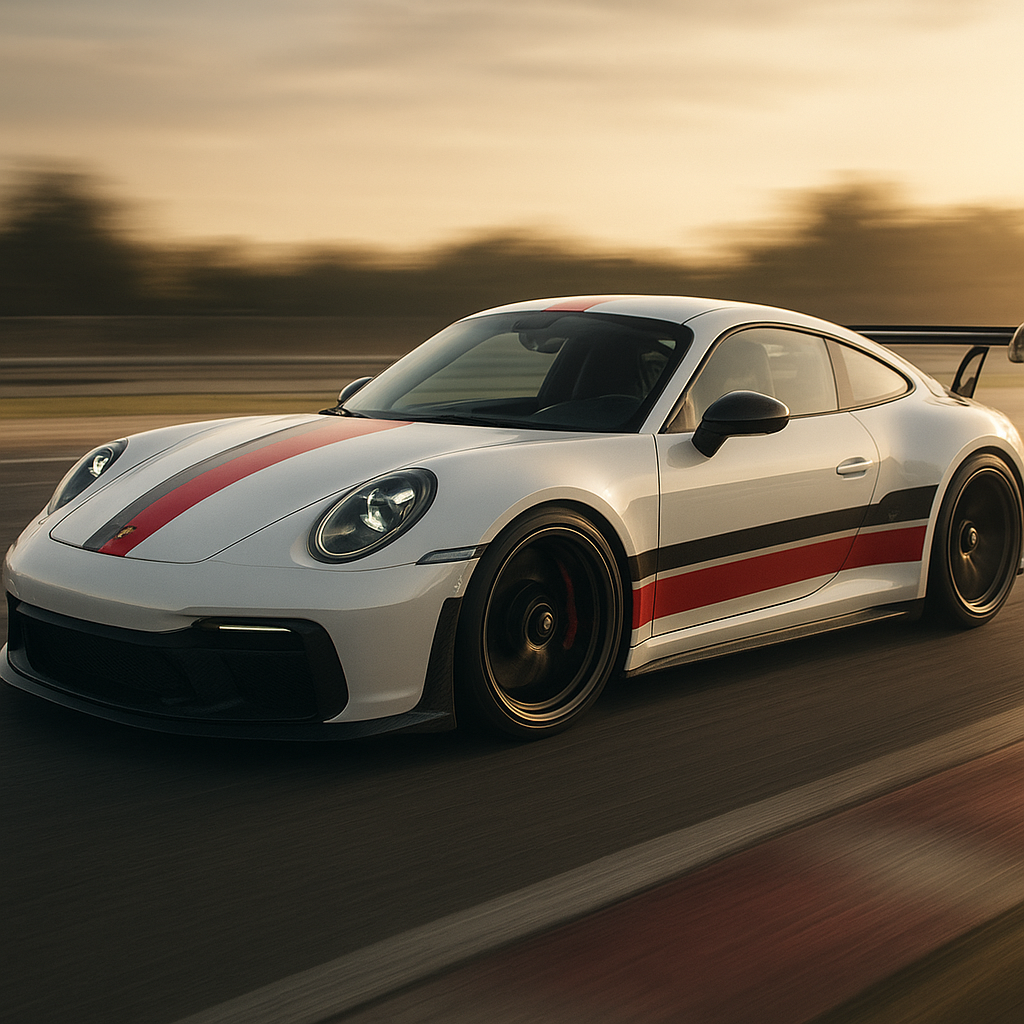
Porsche’s new <strong>911 Challenge</strong> is not cheap, and calling it “entry-level” is a bit of marketing theater. It is a stripped, track-focused...
Porsche’s new 911 Challenge is not cheap, and calling it “entry-level” is a bit of marketing theater. It is a stripped, track-focused 911 meant to give serious drivers a factory-built race car feel without the full circus of a GT3 Cup machine, and it arrives to replace the much-loved 718 Cayman GT4 RS in Porsche’s track hierarchy.
Key Takeaways
- The 911 Challenge is Porsche’s new track-oriented race car for buyers who want more edge than a road car but less commitment than a full Cup racer.
- It fills the gap left by the 718 Cayman GT4 RS, which had become a favorite for club racing and driver training.
- Porsche is betting on heritage, balance, durability, and service support rather than flash.
- The car matters because factory race cars are about more than lap times; they teach discipline, precision, and respect for machinery.
- If you care about luxury performance, the real value is in craftsmanship and repeatable performance, not just horsepower bragging rights.
What is the Porsche 911 Challenge?
The 911 Challenge is Porsche’s latest purpose-built competition car, aimed at drivers, teams, and privateers who want a standardized platform with real speed and predictable costs. It is built from the 911 family, which matters because the rear-engine layout gives the car a distinct character—quirky to some, brilliant to others, and still one of the most recognizable engineering signatures in motorsport.
Most brand copy says this sort of car is about “accessibility.” Fine. That word gets tossed around like confetti. In reality, the car is about controlled performance: a machine tuned to be quick, durable, and easier to run than a full-blown professional race car. I’ve reviewed enough Porsche products to know that the company rarely sells fantasy; it sells finely calibrated competence, and that is what makes this car significant.
The 911 Challenge fills a very specific void. When the 718 Cayman GT4 RS became the darling of track-day crowds and one-make racers, it offered a mid-engine balance and a relatively approachable cost structure. But Porsche’s motorsport ladder always needs a next rung, and the 911 Challenge gives customers a route into something with more visual drama, more brand cachet, and more of that old-school 911 mystique. Frankly, that mystique still sells.
What also matters is that a factory race car is never just about raw specs. It is about engineering consistency, parts support, and the confidence that every component has been chosen for abuse, not brochure value. That is the unglamorous truth. The car has to survive curbs, heat cycles, and driver mistakes, because track cars exist in a world where polish gets stripped off very quickly.
Porsche has always understood that excellence should be useful. There is a quiet, almost moral logic to that. Beauty in a machine is not merely decoration; it is ordered function, the kind of work that reflects care, discipline, and human skill in the service of something worthy. That is why people keep coming back to Porsche, even when the price tags make them wince.
If you want the broader context of how Porsche positions its performance cars, its official motorsport pages and product releases are worth reading alongside reporting from Porsche Motorsport, Porsche Newsroom, and coverage from Car and Driver.
Core Benefits and Importance
The 911 Challenge matters for reasons that go beyond simple speed. It gives Porsche a fresh customer-racing tool, and it gives buyers a machine with a known quantity of parts, setup, and support. That sounds boring. It is not. In motorsport, boring can mean dependable, and dependable usually means expensive mistakes get avoided.
- Factory support matters. A Porsche race car is not just metal and software. It is an ecosystem of service, spares, setup expertise, and trackside knowledge. That is worth real money.
- Driver development improves. The 911 platform teaches weight transfer, throttle discipline, and patience under load. It punishes bad habits. Good.
- Residual interest stays strong. Porsche track cars often retain demand better than obscure rivals because there is a deep used-market audience, a club-racing culture, and brand trust.
- The car has identity. Not every track car needs to look like a melted wind tunnel experiment. The 911 shape still means something.
- Precision beats spectacle. Most people overrate horsepower and underrate chassis tuning. The smarter buyers know lap time is built in corners, not press releases.
Here’s the kicker: for wealthy buyers, a race car is often an object lesson in restraint. You do not buy one to show off in traffic. You buy it to work, to learn, and to sweat a little. That squares with a old, Catholic instinct about rightly ordered goods—fine things are meant to be used well, not worshipped like idols. There is dignity in proper use.
The 911 Challenge also sits in the wider luxury-performance market, where brands compete on authenticity as much as output. Ferrari, McLaren, and Mercedes-AMG all sell glamour. Porsche sells competence with enough drama to keep the heart rate up. That formula remains stubbornly effective.
For readers who care about the larger performance ecosystem, see also related coverage on luxury watches and motorsport culture, high-end automobiles, and style and performance identity. Yes, the watch world matters here too; racers and collectors often buy both because timing, mechanism, and status all orbit the same instinct for precision.
Step-by-Step Guide to Choosing a Porsche Track Car
If you are considering a car like the 911 Challenge, do not let the badges hypnotize you. I’ve seen too many buyers confuse prestige with suitability. That is expensive nonsense. Use a clean process.
- Define your real use case.
Decide whether you want club racing, track days, coaching, or collection value. If you only want bragging rights, save the money and buy a nice road car.
- Compare running costs, not just purchase price.
Tires, brake wear, fuel, transport, consumables, and crash parts matter more than the headline figure. Ask about support packages and parts availability.
- Evaluate setup simplicity.
A car that is easy to adjust and repeat is better than one that demands a full-time engineer. Unless you have a crew, complexity becomes a tax.
- Study the driver community.
The best track cars have people around them—forums, coaches, setups, data logs, and repair knowledge. That reduces ownership pain.
- Test for seat time, not ego.
The right question is: will this car make me a better driver? If not, it is probably too much car, or the wrong car entirely.
- Check the support network.
Porsche’s motorsport ecosystem is one of its biggest advantages. A race car without support is just an expensive sculpture with race belts.
I usually tell people to think like stewards, not buyers. That sounds old-fashioned because it is. A well-made machine asks for responsibility. Use it poorly and it becomes a very costly reminder that talent, like wealth, is not merely possession—it is a trust.
For perspective on broader luxury ownership habits, you may also want luxury travel experiences and design and architecture pieces, because the same judgment applies: the best purchases are the ones that age well in use.
Comparison Table
| Category | Porsche 911 Challenge | Typical Competitor: Ferrari Challenge / McLaren Trophy-style race car |
|---|
| Main appeal | Factory-backed precision, Porsche heritage | High drama, brand prestige, sharp styling |
| Driving character | Rear-engine balance, disciplined handling | Often mid-engine balance, more theatrical response |
| Support network | Strong global Porsche motorsport ecosystem | Strong, but varies by series and region |
| Ownership culture | Deep club-racing and track-day community | More exclusive, sometimes less accessible |
| Cost predictability | Generally clearer due to standardized Porsche support | Can be higher and less predictable depending on platform |
| Residual demand | Typically strong among enthusiasts | Strong, but more dependent on brand and series visibility |
| Best for | Drivers who value repeatable performance | Buyers who want spectacle and marquee cachet |
Common Mistakes to Avoid
The first mistake is buying a race car for social-media theater. That is weak tea. A proper track machine is a tool, and tools should be judged by fit and function, not by how many strangers stare at your trailer.
The second mistake is trusting brochure language. I have heard every manufacturer say “accessible,” “usable,” and “customer-focused.” Sometimes those words are true. Often they mean “we reduced the pain just enough to make the invoice easier to swallow.” Ask hard questions about maintenance intervals, crash parts, and consumable costs.
The third mistake is ignoring driver skill. Most people think faster cars solve mediocre technique. They do not. A better driver in a slower car will usually have more fun, learn more, and spend less. That is plain common sense, but common sense is in short supply when horsepower is whispering in your ear.
The fourth mistake is underestimating the emotional side of ownership. A Porsche 911 carries cultural weight. It feels serious because it is serious. But seriousness is not the same as happiness. If you want a race car only because the market says it is desirable, you are shopping with your vanity, and vanity always overpays.
Porsche’s own reporting on customer racing, along with industry coverage from Autoblog Porsche coverage and Top Gear Porsche news, makes one thing clear: these cars are engineered for repeat use, not just one heroic lap. That distinction matters.
Frequently Asked Questions
Q1: Is the Porsche 911 Challenge a road car?
A1: No. It is a track-focused race car intended for competition and serious driving, not daily use.
Q2: Why replace the 718 Cayman GT4 RS?
A2: Porsche often refreshes its customer-racing ladder to keep products aligned with demand, class rules, and performance goals.
Q3: Is a Porsche race car a good investment?
A3: Sometimes, but only if you understand maintenance, usage, and market demand. Most people should buy one to drive, not to speculate.
Q4: What makes Porsche race cars special?
A4: A mix of engineering consistency, strong support, deep heritage, and a driving feel that rewards skill instead of just brute force.

The 911 Challenge is not for everyone, and that is exactly the point. The luxury performance world is stuffed with loud objects that confuse attention with value. Porsche, at its best, builds something harder to fake: a machine that respects the driver, rewards discipline, and wears its cost in honest mechanical work.
That is why these cars matter. They are not toys, and they are certainly not excuses. They are finely made instruments, shaped by people who still believe craftsmanship should produce utility as well as pleasure. In a culture that often prizes noise over substance, that feels almost radical.
If you buy one, buy it for what it does. If you admire it, admire the engineering first. The shine is the least interesting part.