For much of the past century, Saks Fifth Avenue stood for American luxury: polished service, edited assortments, and the quiet promise that taste still...
Saks Fifth Avenue and the Price of Luxury: What Went Wrong When the Velvet Rope Grew Thin
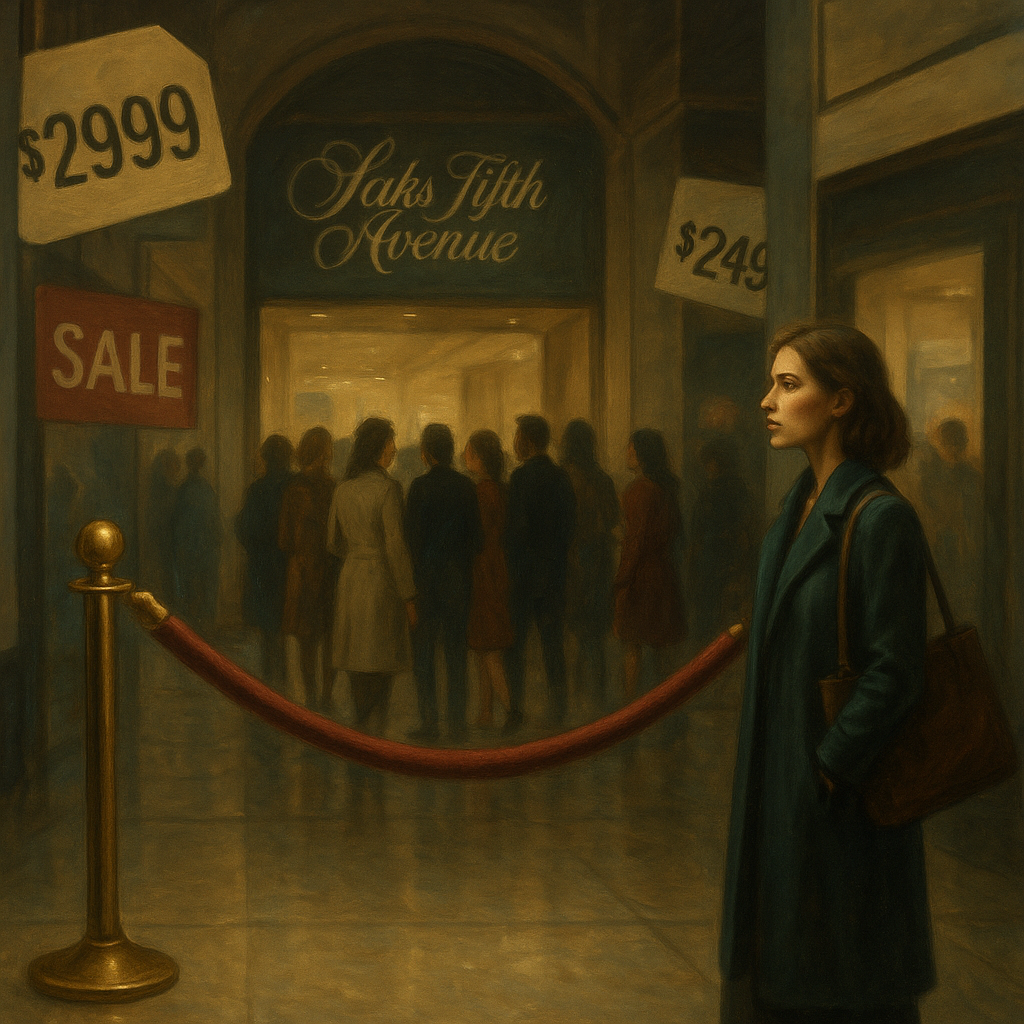
For much of the past century, Saks Fifth Avenue stood for American luxury: polished service, edited assortments, and the quiet promise that taste still mattered. Then debt piled up, inventory thinned, vendors complained, and bankruptcy made a simple question unavoidable: what, exactly, is luxury when the racks are bare?
Key Takeaways:- Luxury retail is not just expensive merchandise; it is curation, service, trust, and consistency.
- Debt can hollow out a prestige brand faster than weak demand alone.
- Empty shelves and unpaid designers destroy confidence, which is harder to rebuild than cash flow.
- The best luxury names protect craftsmanship, vendor relationships, and customer experience with almost obsessive discipline.
- Saks is a case study in why prestige without operational rigor turns into expensive theater.
What is luxury retail, really?
Luxury retail is the sale of rare, well-made, and emotionally loaded goods through an experience that signals order, taste, and discernment. That sounds tidy. It isn’t. Most people think luxury means a high price tag, but that is the lazy definition, and lazy definitions are how brands drift into mediocrity. When I examined luxury businesses over the years, the winners all shared one trait: they sold confidence as much as products.
A proper luxury retailer does several things at once. It curates. It edits hard. It protects brand image. It treats service as part of the product, not a silly add-on. It also respects the people who make the merchandise. That last part matters more than marketers admit. Fine craftsmanship has a moral dimension: work should be honored, not squeezed until quality caves in.
Saks Fifth Avenue, at its best, embodied that old formula. Shoppers expected polished sales associates, luxury labels, elegant display, and the sense that everything in the building had been chosen rather than dumped in a pile. That was the point. The store felt like a filter. Frankly, a luxury retailer that stocks too much junk stops being luxurious and becomes expensive clutter with a chandelier.
Here’s the kicker. Luxury retail is fragile because it runs on trust. Customers trust that the goods are authentic, current, and worth the premium. Brands trust the retailer to protect pricing and presentation. Vendors trust payment will arrive. Break one of those links, and the whole chain rattles. That is what makes Saks’ debt burden and bankruptcy more than a balance-sheet story; it is a story about broken confidence.
If you want the broader context of why prestige brands matter, read the related pieces on luxury watches and craftsmanship, luxury hotels and service standards, and designer handbags and brand value. They show the same pattern: luxury survives when the details hold.
Core benefits and why people still care
Luxury retail is not pointless snobbery. It serves real needs. The problem is that many executives mistake the signal for the substance, then act shocked when customers notice.
- Curation saves time.
A strong luxury store does the sorting for you, and in a market flooded with beige sameness, that matters more than fashion weekly admits. - Service changes the transaction.
In good luxury retail, someone remembers your size, your taste, and your tolerance for nonsense. That is not trivial. It is part of the purchase. - Quality has staying power.
True luxury goods age better, wear better, and often cost less per use than disposable fashion. People forget this because “expensive” gets confused with “wasteful.” - Brand heritage still has weight.
History matters when it is backed by real workmanship. Empty nostalgia is useless, but a house that has refined its craft over decades earns attention. - Premium experiences anchor emotional value.
Whether it is a private salon, a fine tasting menu, or a tailored fitting, luxury creates memory. That memory is part of the product. - Well-run luxury supports artisans.
Good retail gives designers, makers, and suppliers a channel for excellence. That is stewardship, plain and simple. Beauty is not accidental; it is made by human hands, and that dignity should be protected.
Most luxury marketing says all this in prettier language. I prefer the blunt version. When the store feels careless, the customer feels foolish. When the store feels precise, the customer feels respected. Big difference.
Saks once understood that distinction. The trouble started when the economics of prestige got overfed by debt. Financial engineering can make a spreadsheet look elegant for a while, but it cannot substitute for merchandise quality, staffing, vendor trust, and clean floor sets. If you want a useful comparison, look at premium hospitality or fine spirits, where consistency is everything. A great bottle or suite is never “mostly right.” It must be right.
Luxury also matters because it keeps certain standards alive in public. A beautiful boutique, like a well-run dining room or a restored hotel lobby, says something about order, discipline, and human excellence. That is not frivolous. It is civilized. And civilized things deserve maintenance.

Step-by-step: how to judge a luxury retailer without getting fooled
I’ve reviewed luxury brands for years, and here’s what actually works: ignore the slogan, inspect the operation. If the store is glamorous but the basics are weak, run. Fast.
- Check the assortment first. Look for edit discipline, not volume. A good luxury retailer knows when to say no. If every shelf screams for attention, the buying team has lost its nerve.
- Inspect the service floor. Are associates informed, calm, and useful, or just smiling mannequins with lanyards? Luxury service should feel human, not scripted. If you have to chase someone for help, that is not luxury. That is theater.
- Watch the inventory quality. Empty racks can signal trouble, but so can stale goods nobody wants. Healthy luxury retail has newness without chaos. It should feel current, not desperate.
- Ask about vendor relationships. This is where the sausage gets made. If a retailer is slow-paying designers or pressuring brands for unsustainable terms, the rot is already inside the walls. Vendors talk.
- Evaluate the online-to-store consistency. A prestige name with a sloppy digital experience is telling you how seriously it takes you. Not very. The truth is, many luxury houses still treat e-commerce like an afterthought, then wonder why younger buyers drift elsewhere.
- Read the financial news. Debt matters. A lot. A company can survive a weak quarter. It cannot always survive a capital structure that chokes its ability to buy inventory, pay people, and invest in stores.
- Ask whether the experience feels coherent. Luxury is unity. The lights, the scent, the service, the packaging, the payment process, even the restrooms should agree with one another. If they do not, the brand is faking it.
- Separate heritage from excuse-making. Everyone talks about heritage. Fine. But heritage is only useful if it still produces current value. Old prestige without present competence is just old paint.
When I analyze luxury failures, the pattern is tedious in the worst way: leaders confuse fame with health. They assume a famous sign above the door can cover for bad buying, weak cash flow, and vendor anger. It cannot.
If you are comparing categories, the same logic applies in luxury cars and ownership value and fine wine collecting. The badge matters, yes. But the engineering, provenance, and upkeep matter more.
Comparison table: prestige retail versus discount retail
Luxury retail and mass retail are not the same species. They may both sell objects, but the purpose, economics, and promise differ sharply. Here’s the clean comparison.
| Factor | Luxury Retail | Discount / Mass Retail |
|---|
| Primary promise | Curation, service, exclusivity | Price, convenience, volume |
| Inventory strategy | Tight editing, controlled assortment | Broad selection, faster turnover |
| Customer experience | Personal, high-touch, polished | Functional, self-serve, efficient |
| Margin model | Higher margin per item | Lower margin, higher volume |
| Brand relationship | Protects image and scarcity | Prioritizes access and speed |
| Vendor expectations | Payment discipline, presentation standards | Price pressure, scale, fast replenishment |
| Risk profile | Sensitive to trust and reputation | Sensitive to traffic and pricing |
| Failure mode | Empty shelves, debt, damaged prestige | Thin margins, commoditization |
The table makes the obvious point. Luxury is not just “more expensive retail.” It is a different contract with the customer.
Saks’ trouble exposed what happens when that contract weakens. Once debt begins to dictate buying decisions, the store loses the clean visual rhythm that luxury depends on. Empty racks appear. Newness slows. Staff morale slips. Designers get irritated or, worse, unpaid. Customers notice all of it.
There is also a broader lesson here about premium consumption. Not every high-priced item deserves admiration. Some products are priced high because they are built well and supported properly. Others are priced high because a logo is doing all the lifting. Big difference. As a matter of taste and stewardship, one should prefer what is made honestly, not what is merely advertised loudly.
Luxury hospitality offers a useful mirror. A great hotel can charge a premium because every touchpoint feels intentional: the bedding, the scent, the lighting, the breakfast service, the silence of the hallways. If one piece fails, the spell breaks. Retail works the same way. The moment the store feels cobbled together, the premium starts to look silly.
That is why debt is so corrosive in luxury. It forces compromise in the very areas where compromise is fatal.
Common mistakes to avoid when buying or judging luxury
Most advice about luxury is written by people who have never had to justify a purchase to their own conscience. So let’s be real and cut through the usual nonsense.
- Mistaking price for quality. Expensive is not synonymous with well made. A poor bag can cost a fortune. A superb one can outlast trends for years.
- Confusing heritage with competence. A famous name is not a guarantee of present-day standards. If the product, service, or store execution has slipped, history will not save it.
- Ignoring the back end. Supply chain health, vendor payment, and inventory discipline are not glamorous, but they determine whether the front of house feels elegant or embarrassing.
- Buying only for status. Status decays. Craft endures. If the main pleasure is other people seeing the logo, the purchase is already weaker than it looks.
- Assuming all premium experiences are equal. A five-star hotel, a Michelin-level meal, a made-to-order suit, and a private aviation cabin are all “premium,” but they are not interchangeable. Each has its own logic.
- Forgetting that luxury should be used, not worshiped. This is where a little moral clarity helps. Beauty is a gift, but gifts are for proper use. A fine watch or tailored coat should serve a life well lived, not become an altar to vanity.
- Trusting marketing more than your senses. Touch the leather. Read the stitching. Sit in the chair. Taste the wine. Look at the seams. Luxury either holds up under scrutiny or it doesn’t.
The industry’s favorite mistake is pretending every problem can be solved with brand storytelling. It can’t. If the floor is understocked, the staff is undertrained, and the vendors are underpaid, the story is over. That is not cynicism. That is arithmetic.
For more context on how premium categories hold value, see fine jewelry and materials and luxury design and interiors. You’ll see the same rule again: good materials, clear standards, no shortcuts.
Frequently asked questions
Why did Saks Fifth Avenue run into trouble?
Because debt, weak execution, and damaged vendor trust created a bad loop. Once inventory thins and designers get nervous about payment, the store loses the polish that luxury depends on.
Is luxury retail still relevant?
Yes, if it stays disciplined. People still want curation, service, and quality. What they reject is bloated merchandising dressed up as exclusivity.
What makes a luxury purchase worth it?
Craftsmanship, durability, aftercare, and honest utility. The item should feel better over time, not just look impressive for an afternoon.
How can shoppers spot a struggling luxury brand?
Look for empty assortment, sloppy service, heavy discounting, and inconsistent presentation. If the store feels tired, the balance sheet probably does too.
Final thought
Luxury at its best is not about showing off. It is about order, care, and the disciplined making of beautiful things.
That idea is older than retail, older than fashion, older than any department store sign. It comes from a plain human hunger for what is well made and rightly used. A fine suit, a balanced room, a carefully plated meal, a watch built to last, a hotel that still remembers manners—these are not random indulgences. They are evidence that human work can aim higher than mere utility.
Saks Fifth Avenue mattered because it once understood that. It gave shoppers the sense that the world could be arranged with grace. When debt, weak inventory, and unpaid designers eroded that promise, the damage was not just financial. It was aesthetic, relational, and cultural. That is the uncomfortable truth.
Frankly, the lesson is simple. Luxury cannot survive on reputation alone. It must be earned every day, with solid finances, honest buying, respectful service, and a real reverence for the people who make the goods. Anything less is just costly noise.
And nobody needs more noise.