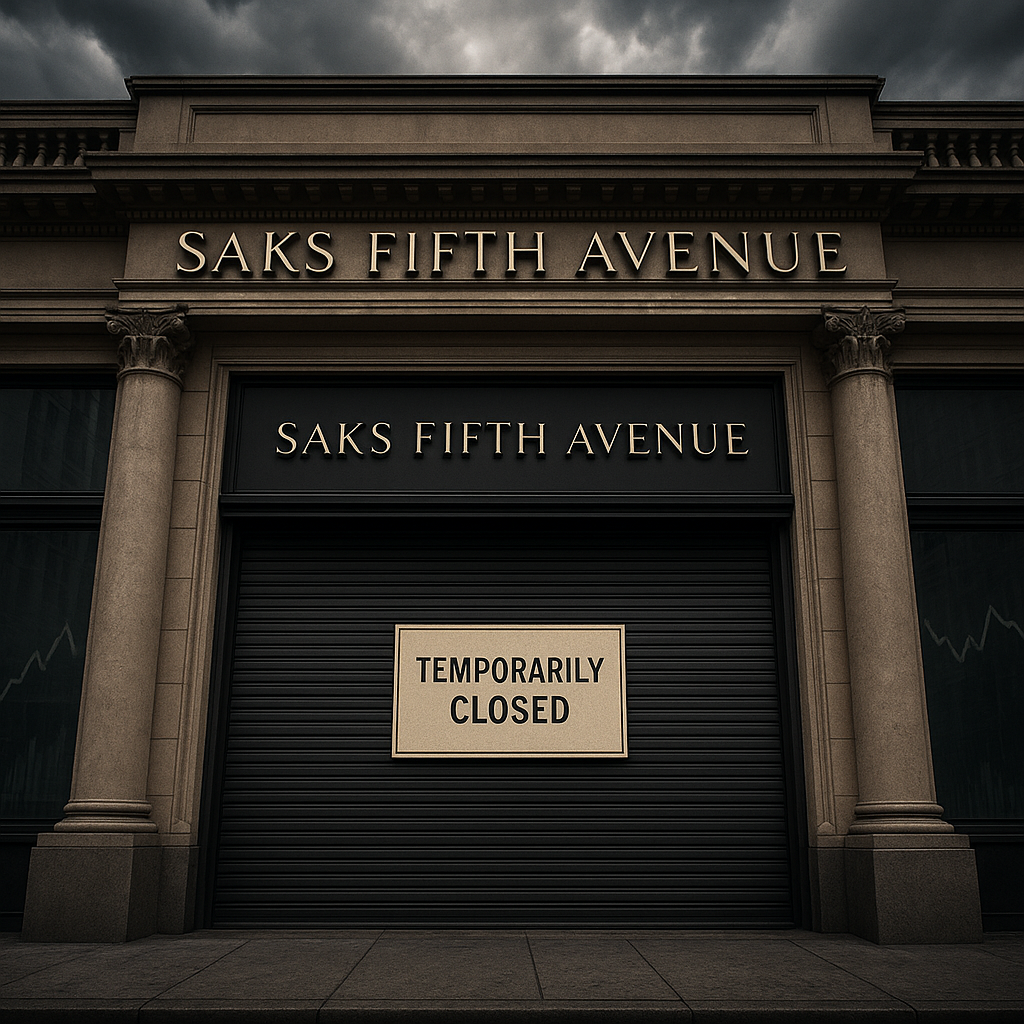
Saks Fifth Avenue helped define American luxury retail, selling fashion, beauty, and service as one polished experience. Its recent bankruptcy crisis exposed a...
Saks Fifth Avenue Bankruptcy: How a Luxury Icon Lost Its Footing
Saks Fifth Avenue helped define American luxury retail, selling fashion, beauty, and service as one polished experience. Its recent bankruptcy crisis exposed a harder truth: heritage cannot pay suppliers, replenish shelves, or erase debt. The story is not simply about a famous store in trouble; it is a warning about the fragile economics of prestige.
The supplied account describes billions in debt, sparse racks, and designers waiting for payment. Those are not abstract balance-sheet problems. They show up in the fitting room, on the selling floor, and in the choices a brand’s partners make about where to send their next collection. A customer who finds a missing size or a delayed order may not know whether the cause is logistics, a vendor dispute, or financial distress. They just know the experience fell short.
Bankruptcy is also a legal process, not a synonym for immediate closure. A Chapter 11 filing, where applicable, generally allows a business to seek court-supervised reorganization while it continues operating, though each case has its own terms and outcomes. Saks’ situation deserves scrutiny, but not careless assumptions: a filing does not prove that every location is closing, every gift card is worthless, or every customer order is lost. The paperwork matters. So do the notices from the retailer and the court.
I have reviewed luxury businesses for years, and the lesson is consistent: a storied name can attract attention, but it cannot substitute for sound cash management. Prestige is earned again at every transaction.
What Is the Saks Fifth Avenue Bankruptcy?
The phrase “Saks Fifth Avenue bankruptcy” is shorthand for a larger crisis involving the company behind the retailer. Saks Fifth Avenue is part of Saks Global, a luxury retail group that also includes Neiman Marcus and Bergdorf Goodman. The group’s combination of established names created an impressive portfolio, but a portfolio is not automatically a healthy business. The debt used to finance growth, the cost of running stores, the terms suppliers accept, and the cash generated by everyday sales all matter.
The distinction between brand and corporate parent is important. Saks Fifth Avenue has a long history as a department store; Saks Global is the corporate structure that owns and operates several luxury retail businesses. Financial trouble at the parent can affect the brands through purchasing decisions, inventory flow, staffing, marketing, and vendor relationships. Still, a corporate filing does not mean every brand has vanished or that every store has shut its doors. Shoppers should check current, store-specific announcements rather than rely on a broad headline.
Saks built its reputation on more than merchandise. Personal service, carefully arranged displays, a sense of occasion, and access to designers helped turn shopping into an experience. That model once set a high bar. But the economics have changed: shoppers can compare prices and inventory online in seconds, brands increasingly sell directly to customers, and department stores must compete with both specialist retailers and luxury houses’ own boutiques. A grand staircase is lovely; it is not a competitive strategy by itself.
The reported debt and supplier-payment concerns matter because luxury retail depends on a chain of trust. Designers and manufacturers provide goods, the retailer sells them, and payment follows under agreed terms. When payments are delayed or terms become uncertain, vendors may restrict shipments or prioritize other accounts. Less merchandise can mean fewer choices for customers, which can further weaken sales. That is how a finance problem can become a visible service problem.
Bankruptcy protection can create room to reorganize obligations, negotiate with creditors, and review leases or operations, depending on the law and court orders involved. It does not erase every debt with a wave of a hand. Creditors may file claims, vendors may dispute what they are owed, and the company must still persuade customers and partners that it can operate reliably. The process may stabilize a business—or reveal that its old model cannot be repaired on acceptable terms.
Frankly, “heritage” is often used as if it were a financial asset with guaranteed returns. It is not. A brand’s past can make people care, but current service and credible finances determine whether they keep coming back. Fine craftsmanship deserves respect; the people who make, ship, sell, and care for the goods deserve timely payment as well. That is not sentimental bookkeeping. It is the foundation of a functioning luxury business.

Why the Crisis Matters
Saks’ distress is consequential because the retailer sits between luxury brands and customers. When that middle layer weakens, the effects extend well beyond one shopping trip. Designers, factory workers, landlords, sales associates, delivery partners, and shoppers can all feel the strain. Here are the stakes without the melodrama.
- Supplier confidence: Luxury labels invest in materials, skilled labor, and carefully controlled distribution. They need to know when invoices will be paid and how their products will be presented. Uncertainty can lead a vendor to tighten terms, reduce shipments, or favor a more dependable retail partner. That response is commercially rational, even if it leaves a department-store floor looking thin.
- Customer confidence: High-end shoppers pay for more than an item. They expect accurate product information, dependable delivery, knowledgeable service, and a fair way to resolve returns or defects. If those basics become unpredictable, a brand name on the shopping bag cannot rescue the experience. The kicker is that trust often breaks over small failures repeated, not one spectacular scandal.
- The role of department stores: A strong retailer introduces customers to designers, gives emerging labels a physical stage, and brings multiple categories together. When a major store retreats, customers may shift to brand boutiques and online channels. That can suit established houses, but smaller labels may lose a valuable source of discovery and sales.
- Jobs and local commerce: Stores employ salespeople, stylists, stockroom teams, managers, cleaners, security staff, and others whose work keeps a polished experience running. A restructuring may affect schedules, jobs, or locations. It is easy to discuss “optimization” from a distance; the consequences are real for people who depend on those shifts.
- The meaning of luxury: Luxury is often sold as scarcity, status, and price. The sturdier case is excellence: thoughtful design, durable materials, skilled labor, and service that respects the customer. Beauty can point beyond mere display, but responsible appreciation includes stewardship—of goods, money, and the people whose work makes quality possible.
- The industry’s financing choices: A large acquisition can bring purchasing power and operational efficiencies, but it can also add debt and complexity. If leaders count on future savings before they have achieved them, the company may be left carrying costs today for benefits that remain on a spreadsheet. Scale is useful only when the business can afford to manage it.
I would not read one retailer’s trouble as proof that luxury shopping is finished. Demand for quality and design remains; what is under pressure is the old assumption that an imposing store and a famous name guarantee loyalty. Customers now have options, and the store has to earn the visit. A luxury retailer must justify the premium in plain terms: trustworthy product, skilled service, and a purchase handled properly from order to aftercare.
For shoppers, the sensible response is neither panic nor blind loyalty. Check whether an item is in stock, keep order and payment records, review the current return policy, and use official customer-service channels if something goes wrong. For suppliers and investors, the relevant questions are more exacting: what is owed, what cash is available, how much inventory is arriving, and what restructuring terms have actually been approved? Headlines cannot answer those questions for you.
How to Assess Saks and Protect a Luxury Purchase
A luxury purchase should feel considered, not rushed. When a retailer is facing financial strain, the same discipline applies, with extra attention to policies and documentation. I find that a short checklist beats speculation every time.
- Identify the seller. Confirm whether the sale is being made by Saks Fifth Avenue, another Saks Global business, a marketplace, or an independent third party. The name on the website, receipt, and card statement should make sense together. Do not assume that a purchase from one company has the same terms as a purchase from another.
- Check the exact product and stock status. Ask whether the item is physically available, being transferred from another store, or on back order. For a special occasion, request a realistic delivery window in writing. “Expected soon” is not a date, and an elegant product page does not make it one.
- Read the current policies before paying. Review return windows, final-sale rules, shipping charges, warranty arrangements, and any limits on refunds or exchanges. Policies can vary by product, seller, and promotion. If a salesperson gives you an exception, ask for it on the receipt or in an email.
- Use a payment method with clear records. Keep the confirmation, invoice, shipping notice, and any correspondence. Payment protections vary by issuer and jurisdiction, so consult the card provider’s actual terms rather than assuming a dispute will be resolved in a particular way. Save screenshots if an important product detail or policy may change.
- Ask who handles service after the sale. For watches, jewelry, leather goods, or designer apparel, find out where repairs, authentication questions, or warranty claims go. A manufacturer’s warranty and a store’s return policy are different things. Get the name of the service provider and the documents required.
- Follow formal notices. If a bankruptcy case is active, read official company communications and court-approved notices. A retailer’s public statement, a court filing, and a social-media rumor do not carry the same weight. Claims, deadlines, and treatment of deposits or gift cards depend on the specific proceeding and applicable law.
- Compare the full experience, not just the ticket price. A lower price may come with different service, delivery, authenticity checks, or aftercare. Compare like with like: product condition, seller identity, return terms, and warranty support. The cheapest listing is not a bargain if a customer cannot verify what is being sold.
- Buy only what fits your finances. Luxury should not require pretending that a purchase is an investment. Most clothing, accessories, and watches should be bought for enjoyment and use, not as a promise of future profit. I trust a practical budget more than a salesperson’s story about resale value.
When I examine a troubled retailer, I separate what a shopper can verify from what only a court, auditor, or creditor filing can establish. A crowded comment thread is not a balance sheet. Check the latest company announcement, the official claims administrator if one is appointed, and the applicable court record. Reuters’ reporting on Saks Global’s financial situation is useful context, while formal notices remain the source for case-specific instructions.
If a transaction is already in progress, contact the retailer promptly through a documented channel and keep the response. If the purchase was made with a card, ask the issuer what protections and timelines apply. If you are a vendor, employee, or creditor, consumer advice is not enough; review the actual legal notices and seek qualified advice where needed. Different stakeholders have different rights, and a general article cannot determine an individual claim.
Comparison: Saks Global and Nordstrom
Nordstrom is a useful comparison because it is another major American department-store business serving premium and luxury shoppers. It is not a perfect twin: the companies have different brand portfolios, ownership histories, store mixes, and strategies. The table compares the business questions customers and industry observers should ask, rather than suggesting that one company is immune to retail risk.
| Measure | Saks Global / Saks Fifth Avenue | Nordstrom |
|---|
| Core identity | Luxury-focused group anchored by Saks Fifth Avenue, with Neiman Marcus and Bergdorf Goodman in its portfolio | Premium department-store group known for Nordstrom and Nordstrom Rack |
| Customer proposition | Designer fashion, luxury accessories, beauty, and elevated service across heritage brands | Broad premium assortment, service, and a value-oriented off-price channel through Nordstrom Rack |
| Structural opportunity | Combine purchasing, digital capabilities, and customer reach across established luxury names | Serve different spending levels through full-price and off-price formats, while connecting online and store shopping |
| Key financial question | Can the group meet obligations and maintain reliable supplier relationships while reorganizing its business? | Can the company sustain profitable operations and keep its full-price and off-price propositions distinct? |
| Main customer risk to check | Product availability, delivery, returns, and the exact effect of any formal restructuring notices | Current stock, channel-specific return terms, and the service attached to a particular purchase |
| What comparison cannot prove | Brand prestige does not establish solvency or guarantee vendor payment | Scale and a different operating model do not make a retailer risk-free |
The contrast is instructive, not a scoreboard. A retailer with several formats may have more ways to reach customers, but it also has more operations to manage. A luxury group can benefit from brand recognition and high-value merchandise, yet faces expensive inventory and customers who expect attentive service. Neither structure wins by definition. Execution decides whether those assets produce dependable cash flow.
Here is what nobody tells you in the neat strategy diagrams: a retail model is only as healthy as its daily habits. Forecasting, inventory discipline, store-level service, supplier terms, and honest communication often matter more than grand declarations about synergy. If the shelves are empty, the store has failed to convert its promise into a product customers can buy. If vendors lose confidence, the company may find that even a famous name cannot persuade them to ship on the old terms.
Nordstrom is therefore a comparison point, not a refuge from all risk. A shopper should still check current policies and product details at any retailer. The useful lesson is to assess the transaction in front of you rather than assume a brand’s prestige, size, or corporate structure tells the whole story.
Common Mistakes to Avoid
A retailer’s distress brings rumor, overconfident predictions, and opportunistic sales pitches. Avoid all three. Clear thinking is not glamorous, but it tends to save money.
- Treating bankruptcy as immediate closure. A filing can permit continued operations while a company reorganizes, subject to the case and court orders. Some locations may close, change, or operate differently; others may remain open. Check official announcements for the specific store or transaction. “Bankrupt” does not, by itself, answer what happens tomorrow.
- Assuming every customer will lose money. Gift cards, deposits, returns, open orders, and loyalty benefits may receive different treatment under company policies and court proceedings. Do not infer a universal result from a headline. Find the current terms and official notices, then ask the relevant service team or payment provider about your specific purchase.
- Assuming unpaid vendors have no options—or instant payment. Supplier claims depend on contracts, invoices, timing, and the legal process. A filing does not mean everyone will be paid in full, nor does it mean vendors are automatically left with nothing. Claims and distributions take formal steps; outsiders should not invent outcomes.
- Blaming shoppers for the business model. Consumer habits matter, but a retailer’s capital structure, acquisition choices, inventory planning, and operating expenses are management decisions. “People shop online now” is not a complete explanation for a company’s financial troubles. Leaders have to adapt to market changes without loading the future with obligations the present cannot support.
- Calling all luxury a scam. Some goods are overpriced, and some marketing is pretentious nonsense. That does not make careful design, good materials, skilled labor, or repairable products meaningless. Judge what you can inspect: construction, provenance, service, durability, and price. A logo alone is weak evidence of quality.
- Treating resale value as guaranteed. A few watches, handbags, or collectible pieces may retain value under particular conditions, but that does not make every luxury purchase an investment. Fees, condition, provenance, demand, and resale channels can change the outcome. Buy for use and pleasure; consider appreciation a possibility, not a promise.
- Trusting an unofficial link with payment or personal information. Financial uncertainty attracts scams that mimic retailer notices, gift-card offers, and claims portals. Verify web addresses through official company or court communications before sharing data. If a message creates urgency and asks for unusual payment, stop and confirm independently.
- Confusing a store’s image with its financial health. Beautiful displays, celebrity campaigns, and an established address tell you little about debt maturities or unpaid invoices. Conversely, a company’s filing does not prove that a specific item is counterfeit or that a particular employee acted improperly. Keep the categories straight.
Most importantly, do not let prestige override ordinary judgment. A fine object can be a pleasure and a work of human skill; it is still a purchase, with a seller, a price, and terms. Responsible appreciation means caring about how goods are made and how workers are treated, while refusing to confuse price with virtue. That is a better standard than either worshipping a label or sneering at everyone who values beauty.
Frequently Asked Questions
Did Saks Fifth Avenue file for bankruptcy?
The supplied account concerns a bankruptcy crisis at Saks Global, the parent group that includes Saks Fifth Avenue. Because filings and operating arrangements can change, verify the latest company announcement and court notices before acting. A parent-company case is not the same as an announcement that every Saks store has closed.
Is Saks Fifth Avenue still open?
Store status can differ by location and can change during a restructuring. Check the official Saks store locator and current notices for the specific location, then confirm hours before traveling. Do not rely on an old directory listing or an unverified social-media post.
What happens to Saks orders, returns, or gift cards in bankruptcy?
The answer depends on the current company policy, the purchase, and any applicable court orders. Keep receipts and order confirmations, read official notices, and contact the retailer or payment provider through verified channels. Do not assume that every open order, return, or gift card receives identical treatment.
Why did Saks Global’s financial trouble matter to designers?
Luxury retailers buy or consign merchandise under contractual arrangements, and designers depend on agreed payment and reliable distribution. If a retailer’s financial position becomes uncertain, vendors may reassess shipments and credit terms. The precise effect on any designer depends on its contract, outstanding amounts, and the legal process—not on the brand name alone.
Final Thought
Saks Fifth Avenue became an American luxury institution by making shopping feel deliberate. That achievement should not be dismissed just because its parent company encountered serious financial trouble. Nor should nostalgia do the work of analysis. A famous name can hold memory, craftsmanship, and a particular idea of service; it cannot make debt disappear or compel suppliers to keep shipping.
The useful question is not whether luxury retail will survive. It will, in some form. The question is what customers and industry partners will accept as luxury when they can buy directly from brands, compare options instantly, and expect clear answers about delivery and returns. The answer should be more demanding than a gilded sign. It should include goods worth keeping, service that respects a customer’s time, fair treatment of workers and vendors, and finances sturdy enough to support the promise.
For shoppers, that means paying attention without becoming alarmist. Check the seller, confirm the terms, and keep records. For retailers, it means understanding that heritage is a responsibility, not a shield. For suppliers, it means judging a partner by its payment discipline as well as its reach. And for anyone who loves beautiful things, it means remembering that beauty is most compelling when joined to honest work and prudent stewardship.
I have little patience for the claim that every expensive object is profound. Some are simply expensive. But excellence, when it is real, deserves respect—and the people who produce it deserve to be paid. Saks’ crisis is a blunt reminder that luxury is not only what stands in the window. It is also the system of trust that gets the object there, and keeps the doors open after the lights come on.
Sources