Semma and the New Meaning of Luxury Dining: Vijay Kumar’s Tamil Nadu Kitchen in New York
Semma makes a convincing case for regional Indian cooking as a serious New York dining experience, not a luxury add-on. Chef Vijay Kumar’s Tamil Nadu roots shape a menu of vivid, carefully built dishes, while Michelin recognition and a James Beard Award draw attention to a larger point: the best dinner is still shared.
Luxury dining is often sold through scarcity, elaborate service, and prices that invite a raised eyebrow. Those details may contribute to a night out, but they do not automatically make a meal memorable. Semma’s more persuasive claim is that precision, cultural knowledge, and hospitality can create an exceptional experience without dressing the food up as something it is not. At the 2025 James Beard Awards, Kumar made that point plainly: “There’s no poor person’s food or rich person’s food. It’s food. It’s powerful.” He then called the ability to connect around the dinner table “the real luxury.”
That idea gives Semma a useful place in the discussion of premium experiences. The restaurant has the credentials people expect from a celebrated New York dining room, including a Michelin star retained for three consecutive years as reported around Kumar’s 2025 award. Yet its appeal does not depend on prestige alone. The ingredients, recipes, and flavors carry a specific sense of place, and the meal asks diners to pay attention to them. That is a more substantial definition of luxury than a gold logo or a room designed to make guests feel important.
What Is Semma?
Semma is a New York restaurant built around the cooking of chef Vijay Kumar, whose food draws on his upbringing in Tamil Nadu, a state in southern India. Hospitality partners Roni Mazumdar and Chintan Pandya, the duo behind Unapologetic Foods, persuaded Kumar to open it with them in 2022. The restaurant became an immediate hit, in part because it offered a clear point of view rather than a vague collection of familiar Indian restaurant favorites.
That point of view is regional, personal, and direct. Tamil Nadu is not a shorthand for every cuisine found in southern India, just as Indian cooking cannot be reduced to one menu or one set of flavors. Semma’s cooking reflects Kumar’s own experience and the culinary traditions that shaped him. Rice, lentils, seafood, coconut, turmeric, and spices appear in dishes with distinct purposes; the aim is not to make every flavor gentle or universally familiar. Frankly, that specificity is the point.
Two dishes help explain the restaurant’s approach. Valiya chemmeen moilee combines lobster tail with mustard, turmeric, and coconut milk, bringing rich seafood together with a sauce whose flavor depends on more than sheer creaminess. Gunpowder Dosa pairs a rice-and-lentil crepe with potato masala and sambar. The names are useful, but the point is how the components work together: texture, heat, acidity, and aroma all have a job to do. A dish can be vivid without being a stunt.
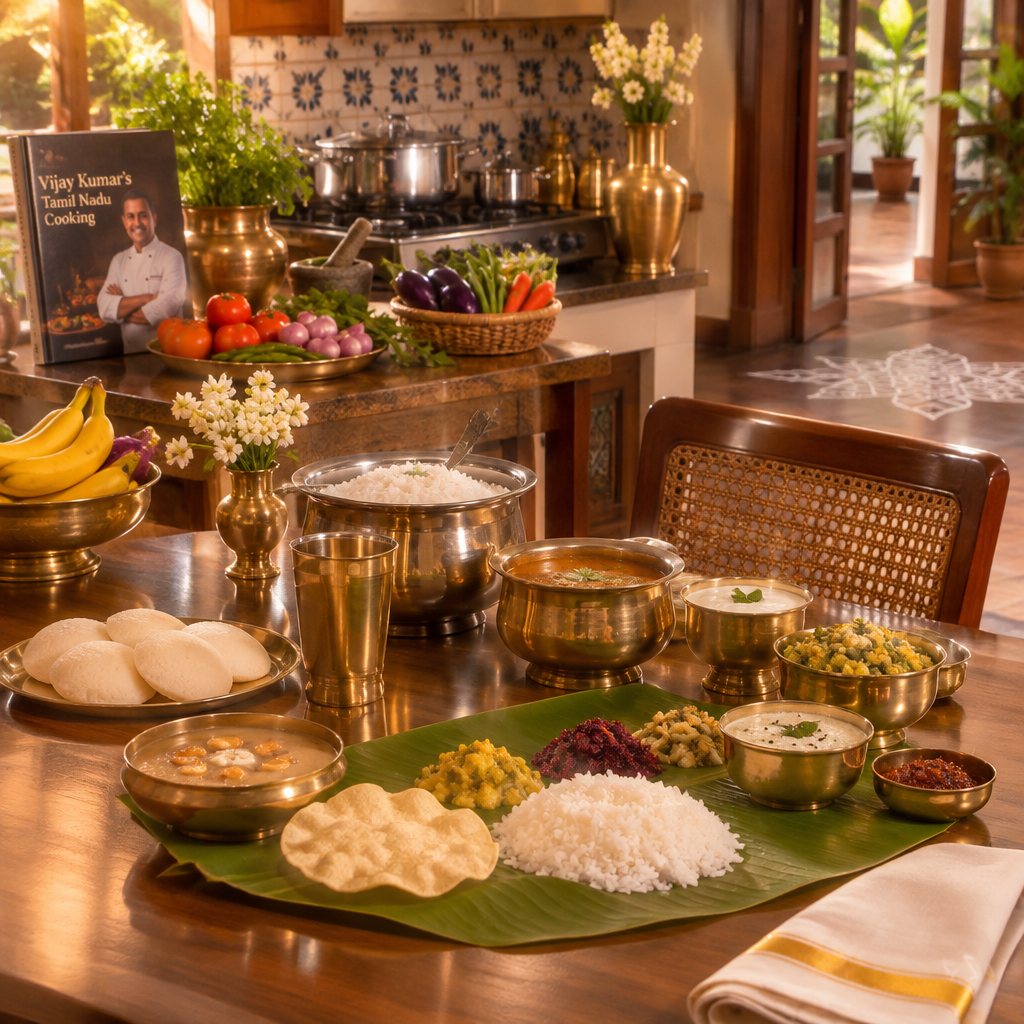
Recognition has amplified the restaurant’s profile. Semma retained its Michelin star for three years running, and at the time of Kumar’s 2025 James Beard recognition it was described as the only Indian restaurant in New York holding that honor. Kumar won the James Beard Award for Best Chef: New York in 2025. Readers can check the Michelin Guide’s Semma listing and the James Beard Foundation’s awards information for current recognition and award details, which can change over time.
The restaurant’s larger significance is not that it proves Indian cuisine can earn elite approval. It should not need a French guide’s star or an American industry award to justify its place at the table. The more useful point is that a cook’s lived knowledge can become an expressive, disciplined menu without being translated into generic luxury. Semma’s standards and Kumar’s account of hospitality sit comfortably together: serious food, made with skill, meant to be shared.
Why Semma Matters to the Luxury Dining Conversation
Semma shows how an expensive or celebrated meal can earn attention through substance rather than theater. A meal can be premium because someone has cared for the ingredients, the cooking, and the guest’s experience—not merely because the bill is high. Here are the parts worth noticing.
- Regional identity gives the meal a point of view. Semma is rooted in Kumar’s Tamil Nadu background, which makes the restaurant’s identity more specific than a broad promise of “modern Indian cuisine.” That does not mean every diner must recognize each reference before ordering. It means the cooking begins somewhere real, and the menu does not need to flatten its character to seem approachable. In a crowded market of polished concepts, specificity is a form of confidence.
- Craftsmanship is present in the food, not just the room. A dosa depends on the batter, its fermentation, and the cook’s attention to heat and texture. A sauce such as the one accompanying valiya chemmeen moilee needs balance; coconut milk alone cannot carry it. These details are easy to miss if diners treat a dish as a photograph with a price attached. I judge a premium meal by what the kitchen has to know and do, not by how many decorative gestures reach the table.
- The experience encourages connection. Kumar’s award-night remark puts hospitality ahead of status. Shared dishes can prompt conversation about taste, memory, and unfamiliar ingredients, while a good host helps diners understand without turning dinner into a lecture. That social quality is not a consolation prize for people who cannot afford something more exclusive. It is one of the oldest and most durable pleasures a restaurant can offer.
- Recognition is a signal, not a verdict on value. Michelin recognition and a James Beard Award help people notice a restaurant, and they can reflect serious work. They do not tell every diner what to order, whether a particular evening will suit them, or whether the price feels worthwhile. A star is a useful filter, not a commandment. The test remains the meal in front of you: its flavor, execution, generosity, and fit with the occasion.
- The cooks’ labor deserves to be seen. Luxury marketing tends to put the finished plate and the famous chef in the spotlight, leaving the skilled work of the kitchen invisible. But good cooking depends on repetition, judgment, coordination, and care—work that has dignity whether a restaurant receives awards or not. Beauty can point beyond its price tag, especially when it comes from patient human skill rather than spectacle. That is a quieter, better-grounded kind of prestige.
Here’s the kicker: Semma’s most convincing luxury feature may be that it treats a meal as food first. That sounds obvious. In practice, it is surprisingly rare.
How to Plan a Meal at Semma
A celebrated restaurant can still be a poor fit for a particular night if the expectations are wrong. A little preparation helps, especially when the menu is rooted in a culinary tradition a diner may not know well. I would focus less on performing expertise and more on arriving curious, hungry, and ready to ask a useful question.
- Check the current menu and booking details. Start with Semma’s official website for its current information, menu, and reservation options. Restaurant menus, service details, and availability can change; a remembered dish or an old review is not a promise that it will be offered on your date. If the meal has a specific purpose—an anniversary, a group dinner, or a guest with dietary needs—confirm the relevant details before committing. A small check beats a large assumption.
- Decide what kind of meal you want. Some diners want to explore several preparations; others prefer to order a few dishes they already understand. Neither approach is inherently better. Read the menu as a set of choices rather than a test of culinary knowledge, and consider how many people will share. If you are unsure about the scale of a dish, ask the staff how they suggest ordering for your table. Good hospitality includes useful guidance, not just polished delivery.
- Ask about unfamiliar ingredients plainly. There is no prize for pretending to know every regional term. If a dish includes an ingredient you have never tried, ask what it tastes like, how it is prepared, or how spicy it is. Tell the restaurant about allergies or dietary restrictions clearly and early; do not rely on a guess based on a dish’s name. The staff can explain what is possible on the day, but no restaurant should be expected to accommodate an unstated need.
- Order for contrast, not just abundance. Dishes with different textures and flavor profiles can make a shared meal more interesting than ordering several items that all satisfy the same craving. A crepe, a seafood preparation, and accompanying sauces or sides may offer different ways to understand the kitchen’s choices. This is not a rigid formula, and the menu should lead. Let the table’s appetite and the restaurant’s advice decide the final mix.
- Keep the occasion in perspective. Check the current prices before you go, and decide in advance what feels comfortable for your budget. Premium dining is not a moral obligation, and a Michelin star does not require anyone to overspend. If you are celebrating, leave room to enjoy the meal rather than auditing every minute against the price. If you are simply curious, that is reason enough to go. The right occasion is one that suits the people at the table.
A little openness matters more than a memorized list of dishes. Ask, listen, taste, and let the kitchen do its work. That is not complicated advice, but it is far more useful than trying to look like the most experienced person in the room.
Comparison Table: Semma vs. the Conventional Prestige-Dining Model
There is no single restaurant that can serve as a perfect rival for Semma. A more useful comparison is with the familiar prestige-dining template: the kind of high-end experience that often relies on formal rituals, a long tasting menu, and a story about exclusivity. This is a comparison of approaches, not a claim that every other restaurant follows the same formula.
| Decision point | Semma | Conventional prestige-dining model |
|---|
| Culinary center | Kumar’s cooking draws on his upbringing in Tamil Nadu. | Often organized around a chef’s broad tasting concept or a series of courses. |
| Recognizable dishes | Valiya chemmeen moilee and Gunpowder Dosa are named examples. | Signature dishes vary by restaurant; no single competitor is being ranked here. |
| What gives it distinction | The combination of regional focus, Kumar’s cooking, and the restaurant’s reported Michelin recognition. | Distinction may come from formal service, rare ingredients, a chef’s reputation, or a tasting-menu format. |
| What to check before going | Current menu, availability, reservation details, and prices on the restaurant’s official channels. | The same practical checks apply; the format alone does not guarantee a good meal. |
| Best question for a diner | Do I want to experience a specific Tamil Nadu-rooted kitchen? | Do I want a more conventional, highly structured fine-dining evening? |
Semma’s advantage is not that it rejects refinement. It is that refinement appears to serve the cooking rather than compete with it. A carefully prepared dish can be technically ambitious and still feel generous. That balance is harder to achieve than a room full of expensive materials, and it is more likely to stay with a diner after the meal ends.
The comparison also helps clarify what the awards do and do not mean. Semma’s star and Kumar’s 2025 award establish that the restaurant has attracted serious professional attention. They do not make other styles of dining inferior, nor do they settle questions about price or personal taste. The useful distinction is the experience each format offers. Choose Semma for its regional lens and dishes; choose another restaurant when its particular approach suits the evening better.
Common Mistakes to Avoid
High-end dining brings out some bad habits. People overthink the menu, confuse recognition with guaranteed pleasure, or assume that a more expensive evening must be more meaningful. Let’s be real: none of those assumptions improves the food.
- Treating awards as the whole story. A Michelin star and a James Beard win are notable, but they are not substitutes for knowing what the restaurant cooks. If you go only to collect a prestigious reservation, you may miss what makes Semma distinctive. Read the current menu, notice the Tamil Nadu connection, and decide whether that is the meal you actually want. Recognition can point you toward a restaurant; it cannot supply your curiosity for you.
- Assuming all Indian food should taste familiar. A restaurant’s regional cooking is not obliged to conform to the dishes a diner has encountered elsewhere. Nor should one restaurant be treated as a representative sample of an entire country. Semma’s menu reflects Kumar’s own background and kitchen, not a master definition of Indian cuisine. Approach unfamiliar flavors with interest rather than grading them against a narrow list of expectations.
- Ordering for appearances. A table does not need every famous dish, the longest possible order, or a photograph of each plate. Ask how the staff recommends building a meal and pay attention to appetite. Choosing a thoughtful number of dishes is better than ordering too much because a night out is supposed to look lavish. The point is to enjoy dinner, not to produce evidence that you spent money.
- Assuming a Michelin star guarantees your personal favorite. Guides evaluate restaurants through their own criteria, while diners arrive with different tastes, budgets, and needs. Semma’s star is meaningful recognition; it does not promise that every guest will prefer every preparation. The same caution applies to reviews and awards generally. Take them as evidence of attention and consistency, then make your own judgment.
- Leaving practical questions until the last minute. Menus and booking information can change. A guest with an allergy, a tight schedule, or a particular dietary requirement should check directly with the restaurant rather than infer an answer from an old article. This is not excessive fussiness. It is basic consideration for the diner and the people preparing the meal.
- Confusing luxury with distance. A meal need not feel cold or intimidating to be excellent. Kumar’s remark about connection around the table points in the opposite direction: refinement should not erase warmth. If the dining room’s reputation makes you feel you have to perform, set that notion aside. Ask questions with respect, enjoy the cooking, and let the people at the table matter more than the status attached to the booking.
The most common error is arriving ready to evaluate a symbol instead of eating a meal. Bring appetite and attention. The restaurant can take care of the rest.
Frequently Asked Questions
What makes Semma a luxury dining experience?
Semma combines carefully executed cooking, a clear regional identity, and significant industry recognition. The experience is premium because of the skill and attention behind the meal, not simply because a restaurant has a celebrated name. Its focus on Kumar’s Tamil Nadu roots gives the menu a more specific character than generic luxury branding can provide. Whether that experience is worth the cost depends on the diner’s budget and taste, so check current prices and menu details before booking.
What is Vijay Kumar known for at Semma?
Kumar is known for cooking shaped by his upbringing in Tamil Nadu and for leading the Semma kitchen. The restaurant’s dishes include valiya chemmeen moilee, with lobster tail, mustard, turmeric, and coconut milk, and Gunpowder Dosa, a rice-and-lentil crepe served with potato masala and sambar. In 2025, he received the James Beard Award for Best Chef: New York. His award-night remarks also emphasized the shared meal as a form of connection.
Does Semma have a Michelin star?
Semma retained a Michelin star for three consecutive years as reported around Kumar’s 2025 James Beard Award. At that time, it was described as the only Indian restaurant in New York holding a Michelin star. Michelin recognition can change between guide years, so check the current Michelin Guide listing for the latest status rather than relying on an older report.
What should I order at Semma?
Valiya chemmeen moilee and Gunpowder Dosa are two dishes highlighted in coverage of the restaurant, but menus can change. Check Semma’s current menu and ask the staff for guidance on portions, spice, ingredients, and how to order for your group. If you have an allergy or dietary restriction, communicate it directly before ordering. There is no need to choose a dish just because it is famous; order what sounds good to you.
Final Thought
Semma is a useful reminder that luxury does not have to mean distance from ordinary human pleasures. A meal can be refined without turning dinner into a ceremony of status, and a restaurant can take its craft seriously without pretending that food belongs to one class of diner. Kumar’s 2025 award-night words cut through the usual fuss: people gather, eat, and make time for one another. That is not a lesser ambition than exclusivity. It is a better one.
The restaurant’s Michelin star and James Beard recognition deserve attention, but they are not the heart of its appeal. The heart is a cook’s particular understanding of food, given form through a menu that carries the imprint of Tamil Nadu and the discipline of a professional kitchen. A dish made with care can hold memory, skill, and beauty at once. The people who prepare it deserve respect, whether their work is celebrated in a guidebook or not.
If Semma’s cooking suits your taste and the current menu fits your budget, go for the food, not the badge. Ask what you do not know. Share what you order. Listen to the people at your table. That is the kind of premium experience no star can manufacture—and no marketing department needs to explain.
