The Maldives is not short on beautiful resorts. With more than 180 private-island properties spread across roughly 1,190 coral islands, the real problem is...
The 15 Best Luxury Resorts in the Maldives: A No-Nonsense Guide to the Islands Worth Your Money
The Maldives is not short on beautiful resorts. With more than 180 private-island properties spread across roughly 1,190 coral islands, the real problem is separating genuine luxury from glossy nonsense. The best resorts earn their price with privacy, service, food, design, and a sense of calm that feels almost sacred.
Key Takeaways- The Maldives is best for travelers who value privacy, overwater villas, and serious service.
- Not every expensive resort is worth it; food quality, reef access, and villa design matter more than hype.
- Choose by transfer time, house reef, family needs, and whether you want quiet seclusion or polished spectacle.
- A well-run luxury resort is about stewardship of place, not just marble and social-media shine.
What is a luxury resort in the Maldives?
A true Maldivian luxury resort is not just a villa on stilts and a welcome drink with a pretty garnish. It is a place where **privacy**, **craftsmanship**, **service**, and **sea access** actually work together, instead of being shouted at you in brochure language. I have reviewed enough high-end hotels to say this plainly: the best ones make life quieter, not louder. Most luxury marketing is pretentious nonsense. What matters is whether the room stays cool, the bed is excellent, the reef is alive, and the staff solves problems before you notice the problem exists.
The Maldives rewards restraint. Beauty there is not a gimmick; it is water, light, wood, stone, and space used well. That is why the best resorts feel almost monastic in their calm, which sounds grand until you realize it is simply good design and disciplined operations. Frankly, a resort worth the fare respects the island, the people working on it, and the guest who wants peace without fuss. There is a moral clarity in that, too: good stewardship of a rare place is part of the luxury.
If you want the deeper travel standards behind luxury hospitality, the industry’s own awards and data can be useful, if you read them with skepticism. For example, the Forbes Travel Guide focuses on service rigor, while Condé Nast Traveler publishes reader-driven rankings that can surface real preferences, not just brand shine. And yes, I check both, because one source alone is how people end up overpaying for a dull island with a fancy bath tub.
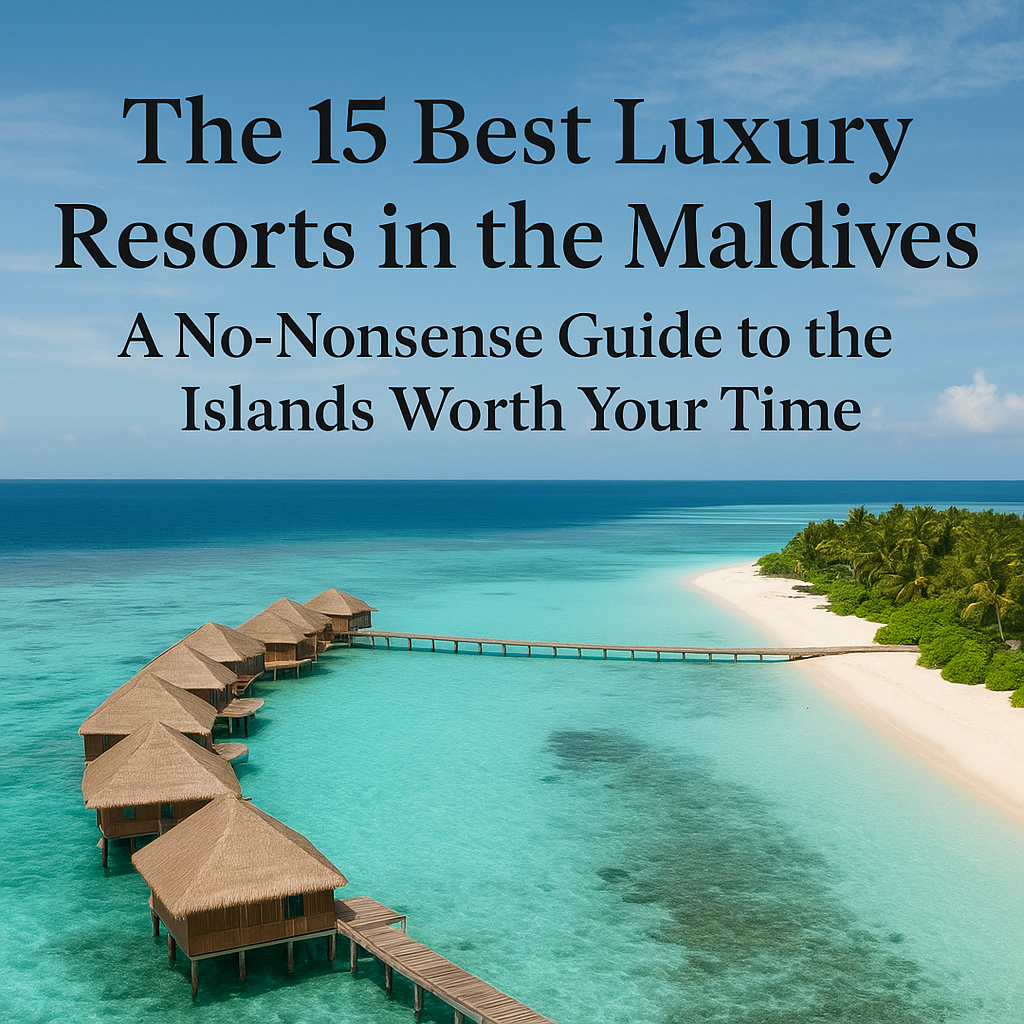
The category also includes more than overwater villas. A serious resort may offer **house reefs**, private butlers, marine biologists, excellent dining, wellness programming, and boat access to dive sites. Some properties lean into family life; others are built for couples who want quiet and no children in sight. The point is not to collect amenities like trophies. The point is fit. That is where most travelers go wrong.
In the Maldives, a resort is also a statement about time. You are paying to slow it down. That is why excellent service matters more here than in many places, because once you are on an island, there is nowhere to hide from mediocrity. The sea does not excuse bad food. A sunset does not save a sloppy check-in.
Core Benefits and Importance
- Privacy: Villas, lagoons, and isolated islands keep crowds away. That is the whole point.
- Service: The top resorts remember names, preferences, and timing. Sloppy service ruins a luxury trip fast.
- Design: The best properties use natural materials and open layouts that frame the sea rather than fight it.
- Dining: Strong resorts offer more than buffet filler; they have chefs who can actually cook.
- Reefs and Water Access: House reefs, dive centers, and safe lagoon swimming matter more than brochures admit.
- Wellness: Spas, yoga, and quiet spaces can be excellent, though some of it is decorative fluff.
- Family or Couples Fit: A honeymoon resort and a family resort are not the same thing, and pretending otherwise is silly.
Here is the kicker: expensive does not always mean better. Some resorts charge a fortune for a dull beach, weak food, and a pool nobody uses. Others justify the bill because they understand **consistency**, **discretion**, and the dignity of excellent labor. That last part matters. Luxury is not just a price tag; it is the visible result of people doing careful work well, day after day. That is a pretty old-school idea, but it happens to be right.
When the basics are strong, the trip feels effortless. Breakfast arrives on time. The villa is cleaned without intrusion. A boat is waiting when you need it. The spa is quiet. The wine list is not laughably thin. The sea is visible from the bed, not from some awkward angle over a wall of hedges. Small things, yes. But small things are where luxury lives or dies.
For broader context on premium hotel standards and service expectations, see The Leading Hotels of the World and Five Star Alliance. They are not perfect, and I would never treat any directory like scripture, but they help map which resorts are serious about guest experience and which are just dressed up for photos.

A subtle truth sits underneath all this: beautiful places invite stewardship. Not waste. Not bragging. Stewardship. If a resort treats its reef, staff, and guests with care, the experience has a quiet nobility to it. That may sound like an odd thing to say about luxury travel, but there it is. Beauty is meant to be used well, not merely displayed.
Step-by-Step Guide to Choosing the Right Resort
- Decide what kind of stay you want. If you want silent seclusion, choose a smaller island. If you want restaurants, water sports, and family amenities, pick a larger resort with more infrastructure.
- Check transfer times carefully. A gorgeous resort that requires a painful transfer is not a bargain. Speedboat or seaplane logistics can shape the entire experience.
- Study the reef. Some resorts have exceptional snorkeling right off the villa; others do not. For many travelers, this matters more than having a second bathtub.
- Review dining options. Half-board and all-inclusive packages can make sense, but only if the food is genuinely good.
- Compare villa layouts. Pay attention to shade, privacy, sunrise or sunset orientation, and whether the deck is actually usable in the heat.
- Look at service style. Some resorts are formal and polished; others are relaxed and barefoot. Pick what fits your temperament.
- Read recent guest reports. Hotel quality changes. A five-year-old rave review is about as useful as a chocolate teapot.
When I examined the highest-rated Maldivian resorts, the pattern was obvious. The best ones combine **design discipline** with operational discipline. That is why names like Soneva, Cheval Blanc, One&Only, Four Seasons, and Patina keep appearing in serious conversations. They are not magic. They are consistent. And consistency, in luxury hospitality, is worth more than fireworks.
If you want a broader luxury-travel framework, compare resort positioning with editorial coverage from Condé Nast Traveler and destination reporting from Travel + Leisure. These outlets do not always agree, which is helpful. When everyone agrees, it usually means marketing won the room.
The smartest travelers also think in categories, not brand names. A reef-focused resort has different priorities than a family resort. A design-led resort may win on aesthetics but lose on privacy. A wellness resort might be quiet to the point of boredom. There is no single “best” island. There is only the best fit for your actual plans, which is less glamorous but more useful.
Comparison Table
| Resort Type | Biggest Strength | Biggest Weakness | Best For |
|---|
| Ultra-private island resort | Maximum seclusion | High cost | Honeymoons, privacy seekers |
| Large luxury resort | More dining and activities | Can feel busier | Families, mixed groups |
| Design-led resort | Strong aesthetics | Style may outrun substance | Architecture lovers |
| Reef-focused resort | Excellent snorkeling | Fewer land amenities | Divers, marine-life fans |
Compared with a typical high-end city hotel, a Maldivian resort offers more room, more visual space, and far fewer distractions. That is the appeal. The downside is obvious: if the resort misses on food, service, or reef quality, there is no neighborhood to wander into and fix the mood. In a city, you can escape. On an island, you live with the place. That is either a gift or a penalty, depending on how carefully you booked.
For reference on how luxury travel awards and standards are framed, use Travel + Leisure World’s Best Awards as a popularity signal, but not as gospel. Popular does not always mean excellent. Sometimes it just means glossy. Here’s the thing: the Maldives is not where you should settle for merely pretty.
Common Mistakes to Avoid
- Booking on price alone. Cheap in the Maldives can become expensive in disappointment.
- Ignoring transfer logistics. The sea is beautiful; repeated airport chaos is not.
- Choosing a resort with poor reef access when snorkeling matters to you.
- Assuming all-inclusive means good value. It can mean mediocre food in a prettier wrapper.
- Falling for marketing language. If everyone says “bespoke,” nobody means it.
The most common error is simple vanity. Travelers see an overwater villa, a sunset bath, or a floating breakfast and stop thinking. That is how people end up at a resort that photographs well but feels thin in real life. Frankly, that is a waste of time and money. Luxury should reduce friction, not create a better-looking headache.
Another mistake is confusing activity with quality. A packed schedule is not the same thing as a good stay. Some people want diving, sailing, tennis, and nightlife. Fine. Others want silence and a book. Also fine. The mistake is buying the wrong experience because a sales page told you that everything is “curated,” as if that word had any moral authority. It doesn’t.
If you want more context on discerning luxury standards, check how Forbes Travel Guide reviews Maldives hotels and compare it with independent reader sentiment on major travel platforms. I trust patterns more than adjectives. Adjectives are cheap.
Frequently Asked Questions
Q1: What is the best time to visit the Maldives?
The dry season, generally November through April, is the most reliable for sun and calmer seas.
Q2: Are luxury resorts in the Maldives worth it?
Yes, if you value privacy, service, and sea access. No, if you want nightlife or urban energy.
Q3: Do Maldivian resorts have house reefs?
Some do, and some do not. Always verify before booking.
Q4: Which is better, an overwater villa or beach villa?
Overwater villas feel iconic, but beach villas often offer more privacy and easier access to sand.
For travelers comparing specific properties, it helps to check each resort’s official website and recent third-party assessments. A polished site can hide a mediocre reef; a modest site can belong to an excellent hotel. That is why the comparison work matters.
Final Thought
The best luxury resort in the Maldives is the one that respects your time, your rest, and the place itself. A beautiful island should not shout. It should steady you. That is rarer than it ought to be, and it is also why the finest resorts feel almost like a lesson in ordered beauty: careful work, thoughtful restraint, and a real sense that the good things in life are meant to be received with gratitude, not bluster.
When luxury is done well, it does not flatten the world into status symbols. It sharpens attention. You notice the grain in the wood, the quiet competence of the staff, the salt on the air, and the fact that excellence is never accidental. That is true in hospitality, and it is true everywhere else. A resort cannot save a bad trip by being expensive, but a truly excellent one can make a person grateful for how well things can be made and kept.