When there are more than 180 resorts across 1,190 tropical islands, an expert guide comes in handy. The Maldives is not short on turquoise water, overwater...
The 15 Best Luxury Resorts in the Maldives: An Expert Guide to the Islands Worth Your Money
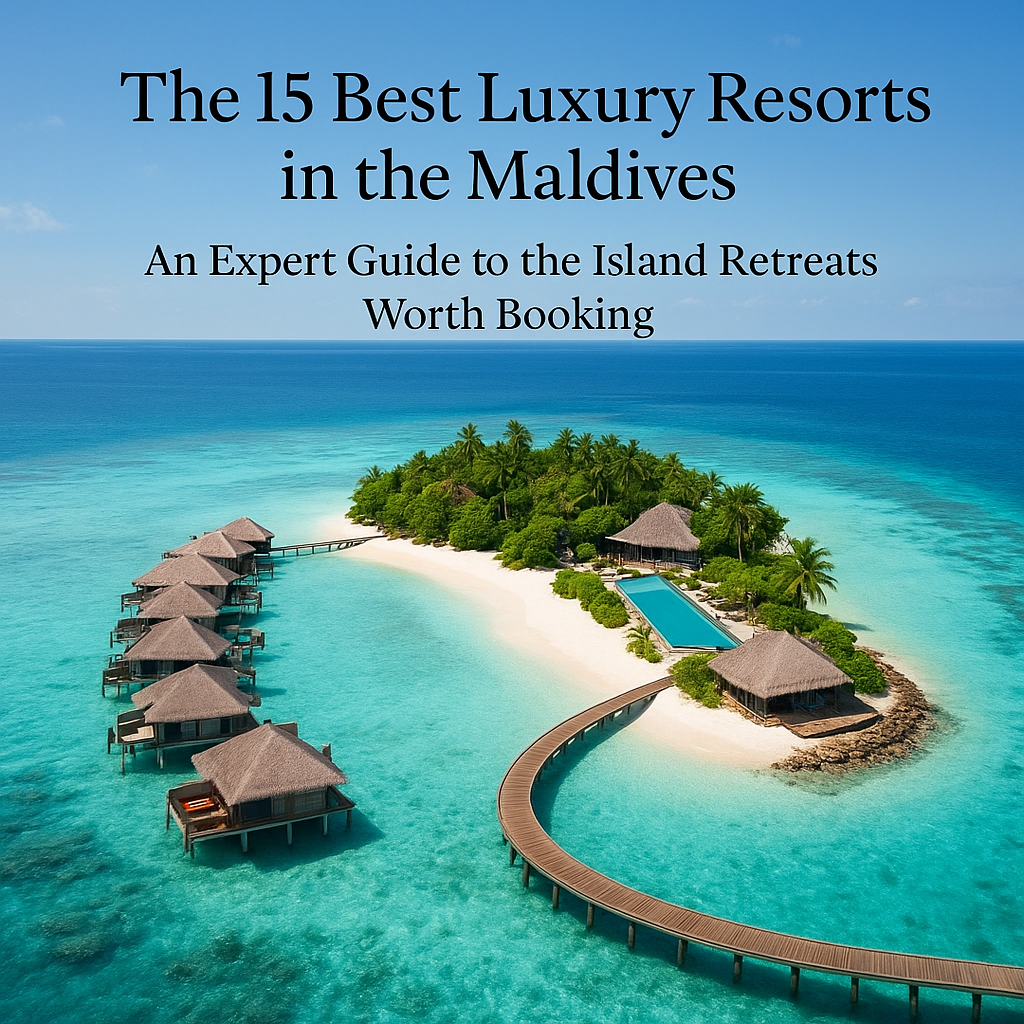
When there are more than 180 resorts across 1,190 tropical islands, an expert guide comes in handy. The Maldives is not short on turquoise water, overwater villas, or glossy brochure nonsense, but only a fraction of its resorts are worth the money, the time, and the bother of getting there. The difference comes down to service, privacy, design, marine access, and whether the place actually treats guests like people instead of walking credit cards.
Key Takeaways- The best Maldives resorts combine privacy, service, design, and reef access.
- Not every expensive resort is good; plenty are expensive for no reason.
- The right resort depends on whether you value snorkeling, dining, wellness, or seclusion.
- Transfers, meal plans, and villa orientation matter more than polished marketing copy.
- The Maldives rewards travelers who care about craftsmanship, stewardship, and quiet luxury rather than hype.
What is a luxury resort in the Maldives?
A luxury resort in the Maldives is not just a villa on stilts. It is a private island operation built around rest, marine beauty, and service precision, with enough distance from the mainland that the place can shape its own rhythm. That sounds simple. It is not.
The best resorts combine architecture, cuisine, and staff training in a way that feels almost invisible when done properly. You notice the lack of friction more than the decor. Frankly, that is the point. A real luxury resort anticipates the annoying bits—seaplane timing, snorkel gear, dinner reservations, buggy waits—so the guest can enjoy the ocean without doing logistics like an unpaid assistant.
I have reviewed enough high-end travel to know that “luxury” gets slapped on anything with a minibar and a pillow menu. In the Maldives, the label only matters if the resort delivers on the fundamentals: excellent house reefs, thoughtful privacy, fine materials, disciplined housekeeping, and staff who know when not to fuss. Good service feels almost monastic in its order. There is a lesson there. Beauty is not just decoration; it should reflect care, proportion, and human dignity.
Most travelers also underestimate the importance of geography. Some islands sit on reefs that support vivid marine life, while others offer calmer lagoons and better sunset exposure. Some are close to Malé and get you there fast. Others require a seaplane and a patience reserve. That tradeoff matters. A resort can be physically gorgeous and still be the wrong fit if the transfer is tedious, the beach is narrow, or the island is cramped.
If you want a cleaner framework for choosing, the same principles that make a luxury hotel strong usually apply here too: consistency, craftsmanship, and a sense that money was spent on things that matter, not on peacocking. For a broader look at how luxury stays are judged, see this guide to luxury hotels and this piece on exclusive destinations.
Core benefits of choosing the right Maldives resort
The right Maldives resort gives you more than a pretty photo. It gives you silence, clarity, and the kind of rest that doesn’t come from a spa coupon and a scented candle. Let’s be real, most luxury marketing tries to sell an emotion before it sells a product. In the Maldives, the emotion should be earned.
- Privacy without isolation. The good resorts make you feel alone without making you feel stranded. That is harder than it sounds.
- Better food. The Maldives has improved a lot here, and the best properties now serve serious cuisine, not just imported salmon with garnish.
- Marine access. If you care about snorkeling or diving, the reef quality can make or break the stay.
- Design that ages well. Strong materials, clean lines, and restrained interiors matter. Trendy decor gets old fast; craftsmanship does not.
- Transfer efficiency. Speedboat or seaplane, the journey needs to be smooth. Guests should arrive relaxed, not wrung out.
- Wellness that is not nonsense. Real spas, good therapists, and quiet treatment spaces beat the usual wellness theater.
- Family or couple fit. Some islands are built for romance, others for multigenerational comfort. Pick the wrong one and you will know it by day two.
The biggest advantage is simple: a great resort removes friction. That is true luxury. Not the gold faucet. Not the influencer bait. Friction removal.
There is also a deeper angle. A well-run resort honors the labor behind the scene—housekeepers, boat crews, chefs, maintenance teams, gardeners. That matters. Excellence has a moral shape to it. Work done well is not a marketing phrase; it is a form of stewardship.
If you want another example of how luxury is really judged, take a look at designer bags. The label is easy. The finish, materials, and usefulness are where the truth lives.
How to choose the best Maldives resort
Choosing well takes discipline. No, really. Most bad bookings happen because people chase drone shots and forget the boring factors that actually shape the stay.
- Start with transfer time. If you dislike long arrivals, choose a speedboat resort near Malé. If you want seclusion and do not mind the extra cost, a seaplane resort may suit you better. I’ve seen travelers ruin a first night by pretending the transfer “doesn’t matter.” It does.
- Check the reef, not just the villa. If snorkeling is important, ask about the house reef, current strength, and entry points. A stunning villa above dead water is still a dull place.
- Match the resort to your travel style. Couples often want privacy and quiet dining. Families need space, activities, and practical layouts. Some resorts skew ultra-romantic; others are better balanced.
- Study meal plans carefully. Half-board, full-board, and all-inclusive packages vary wildly. The cheapest option can become expensive fast once you factor in drinks, transfers, and taxes.
- Inspect villa orientation. Sunrise or sunset side? Lagoon or reef side? Direct beach access or steps into the water? These details matter more than many of the luxury buzzwords.
- Look for real dining credibility. A few resorts have chefs with actual pedigree and wine lists worth reading. Others serve polished mediocrity at premium prices.
- Read recent guest reports. Not the marketing page. Recent guests. I trust pattern recognition more than glossy prose, because hotels can look perfect in photos while service quietly decays.
- Value restraint. The finest resorts often feel quieter, not louder. The best places know that beauty does not need to shout. That is a very old truth, and it survives because it is true.
For travelers comparing resorts with other premium travel categories, this perspective lines up with premium travel experiences and luxury travel destinations.
Comparison table: Maldives luxury resorts vs. major Caribbean luxury resorts
| Category | Maldives Luxury Resorts | Caribbean Luxury Resorts |
|---|
| Privacy | Extremely high, especially on private islands | High, but often with more shared coastline |
| Reef / marine life | Excellent snorkeling and diving at many resorts | Good in select areas, less consistent |
| Transfers | Seaplane or speedboat, sometimes costly | Usually simpler airport transfers |
| Design | Strong contemporary island architecture | Mix of colonial, tropical, and modern styles |
| Dining | Improving fast, especially at top-tier properties | Often excellent, especially in established markets |
| Climate appeal | Tropical, remote, iconic overwater setting | Tropical, but less distinctive visually |
| Best for | Honeymoons, quiet luxury, marine life | Mixed vacations, villas, beach clubs, broader variety |
| Risk | Weather, transfer delays, high extras | Hurricane season, crowding in some areas |
The comparison is not about which region is “better” in some grand, silly sense. It is about what experience you want. The Maldives is more singular. The Caribbean is more varied. If your aim is absolute seclusion and that almost unreal water color, the Maldives wins easily. If you want easier logistics and broader dining outside the resort, the Caribbean may be smarter.
Here’s the kicker: a resort can’t fake place. The sea, the sand, the horizon—those are given, not invented. Hotels can polish them, but they cannot manufacture them. The best properties respect that fact and build around it with restraint.
Common mistakes to avoid when booking Maldives resorts
The first mistake is assuming every luxury resort is equally good. It is not. Some are lavish in the way a cheap suit is flashy—obvious, expensive, and not especially well made. Marketing copy hides a lot of sins.
- Ignoring transfer costs. Seaplanes and domestic flights can add hundreds or thousands of dollars. Budget for them early.
- Booking the wrong meal plan. A resort with pricey beverages and limited dining outside the package can surprise you in the worst way.
- Choosing by villa size alone. Bigger does not mean better. Orientation, privacy, shade, and access are more useful.
- Overlooking reef quality. If the marine environment matters to you, research it properly.
- Falling for “new and shiny.” A new resort may still be finding its footing. I’ve seen polished openings with clumsy service and weak kitchens.
- Assuming adults-only is always best. Sometimes it is. Sometimes it is just quieter and less flexible than you need.
- Ignoring weather and seasonality. The Maldives is lovely year-round, but conditions vary. Plan with reality, not brochure fantasy.
A lot of people also make the mistake of chasing sameness. They want the same resort experience everyone else has seen on social media. Why? Luxury should be personal. Stewardship of your time and money means choosing what is actually good for you, not what photographs best.
If you care about the wider world of upscale travel and objects, the same discipline applies to high-end automobiles and luxury jewelry: know what is crafted well, and ignore the glitter that tries too hard.
Frequently asked questions
What is the best time to visit the Maldives?
The Maldives is warm year-round, but the dry season, generally from November to April, is the most popular for clear skies and calmer sea conditions. That said, shoulder seasons can offer better value. Pretty simple.
Are Maldives resorts worth the high price?
Yes, if you value privacy, service, and a dramatic setting. No, if you only want a beach and do not care about the details. The price is justified when the resort gets the basics right—space, food, transfers, and reef access.
Do all Maldives resorts have overwater villas?
No. Some resorts focus more on beach villas, lagoon villas, or mixed accommodation types. Frankly, overwater is iconic, but not always the best choice for families or travelers who prefer easier access to the beach.
How do I choose between a seaplane and speedboat resort?
Choose a speedboat if you want easier arrival and less expense. Choose a seaplane if you want more remote islands and do not mind paying for the experience. Both can be excellent. The right answer depends on your patience and priorities.
Final thought
The best Maldives resort is not the one with the loudest marketing or the most dramatic drone footage. It is the one that gets the unglamorous details right and lets the island do the talking. That is the real measure of luxury: not excess for its own sake, but order, beauty, and care used well.
When I look at the strongest properties in the Maldives, I see the same pattern again and again. Good materials. Good staff. Good restraint. A respect for the place, and for the people who serve in it. That combination is rare enough to matter. It also feels morally cleaner than the usual luxury theater, because excellence is most convincing when it is quiet.
So if you are choosing among the islands, do not let the brochure bully you. Ask what the resort gives you in return for the cost: peace, privacy, comfort, marine life, and a setting that reminds you the world still holds beauty worth caring for. That is not frivolous. It is a proper use of good things.