The most luxurious restaurants in the world are not just places to eat. They are rooms where service, setting, and serious cooking meet, often at obscene...
The 16 Most Luxurious Restaurants in the World: Where Fine Dining Becomes an Experience
The most luxurious restaurants in the world are not just places to eat. They are rooms where service, setting, and serious cooking meet, often at obscene prices, and sometimes with genuine brilliance. The trick is telling the difference between real craft and polished theater.
Key Takeaways- Luxury dining is about more than cost; it is about service precision, ingredient quality, ambience, and execution.
- The best restaurants combine culinary skill with design, hospitality, and restraint.
- Expensive does not always mean excellent. Frankly, some places sell trophies, not meals.
- The finest dining rooms often treat luxury as stewardship: careful sourcing, skilled labor, and beauty used with discipline.
- If you care about memorable meals, look for consistency, not just buzz.
What is a luxurious restaurant? It is a restaurant that delivers exceptional food, but also exceptional control over the whole experience: arrival, pacing, tableware, wine service, room acoustics, light, privacy, and the strange calm that comes when every detail has been thought through. The best ones do not shout. They are quietly exacting.
I have reviewed high-end dining for years, and here is the blunt truth: most luxury marketing is pretentious nonsense. The real question is whether the kitchen can cook at a level that justifies the room, the staff, and the bill. A place can have silk banquettes, rare truffles, and a wine list thick enough to stop a door, yet still fail if the sauce is muddy or the proteins are overworked. Beauty matters, sure. But beauty without discipline is just expensive clutter.
That said, the very best restaurants in the world do something rarer. They turn hospitality into an act of service. They respect the product, respect the guest, and respect the labor behind the plate. That last point matters. A dining room at this level is built on the dignity of work: farmers, fishers, butchers, cooks, sommeliers, porters, and hosts all pulling in the same direction. There is something almost liturgical about that when it is done well.
If you want a deeper sense of how premium hospitality is judged, see our guide to luxury hotels, our luxury travel essentials checklist, and our take on fine dining etiquette. Those pieces help separate real refinement from costume jewelry in a waiter jacket.
What is The Most Luxurious Dining in the World?
Luxury dining is not one thing. It is a bundle of signals, and the better restaurants know exactly which ones matter. Price is the laziest signal. A tasting menu for several hundred dollars, rare vintages, and a front-row seat to the kitchen do not automatically create excellence. They create expense. Big difference.
The most luxurious restaurants usually share a few traits. First, craftsmanship: the kitchen can execute difficult food with quiet confidence. Second, heritage or vision: the restaurant has a point of view, whether that comes from culinary history, a star chef, or a specific place. Third, materials: the ingredients are extraordinary, and not merely because someone slapped caviar on everything and called it elevated. Fourth, service cadence: the staff knows when to appear and when to disappear. Good service is invisible until it is badly done.
Some restaurants go heavy on drama. Chandeliers, rare wood, uniforms, silver cloches, the works. Fine. But if the bread service is stale or the tasting menu feels like a parade of tiny ego exercises, the illusion falls apart. The truth is, the finest rooms often feel almost modest in one respect: they do not force luxury on you. They let it emerge from precision.
When I examined the most acclaimed dining rooms across Europe, Asia, the Middle East, and North America, the pattern was clear. The best places treat the guest’s time as something valuable. They do not rush you. They do not bore you. They move with purpose. That is rare.
For instance, many travelers obsess over famous names, but I would rather dine in a room that understands its own scale. A compact chef’s counter with flawless pacing can feel richer than a grand palace restaurant that is merely expensively arranged. That is where discernment matters. Anyone can spend money. Few can spend it wisely.
Luxury restaurants also sit at the crossroads of travel and culture. People do not just book them for dinner; they build trips around them. That is why the best lists are usually part culinary ranking, part destination guide, part status signal. If you are planning a city break around Michelin-starred meals, our luxury city break guide is worth a look.
Why Luxurious Restaurants Matter
- They preserve culinary excellence. The top restaurants push technique, sourcing, and service standards forward. They make ordinary places improve. That is good for everyone who likes to eat well.
- They reward craftsmanship. A beautiful plate does not happen by accident. Neither does a seamless wine pairing or a perfectly timed bread course. Someone trained for years to make it look easy.
- They create memorable settings for milestones. Anniversaries, deals, proposals, and family gatherings are different when the room is exceptional. The setting becomes part of the memory.
- They support serious hospitality labor. At this level, the work is exacting and physical. The dignity of that work deserves recognition. The polished surface hides a great deal of effort.
- They offer a more honest form of luxury than many goods. A handbag can be beautiful. A watch can be superb. But a meal is fleeting, which forces the experience to justify itself in the moment. No hiding. No excuses.
- They reflect a disciplined idea of beauty. Beauty, properly understood, is not excess for its own sake. It is ordered, fitting, and purposeful. The finest dining rooms get that. The weak ones just drown the plate in truffle oil and call it sophistication.
Here’s the kicker: luxury dining is often less about indulgence than attention. That attention is what guests remember. The temperature of the sauce. The texture of the linen. The way the sommelier explains a bottle without showing off. Those are not trivial details. They are the thing.
It also matters because premium restaurants have become cultural markers. They tell you where a city sees itself in the world. Tokyo’s precision, Paris’s restraint, Dubai’s scale, Copenhagen’s seasonality, New York’s speed, London’s old-money confidence—each market conditions shapes its dining culture differently. If you care about luxury travel, you care about restaurants, period.
For more on destination context, see our guide to luxury destinations and our best luxury hotels for food lovers. Food and place belong together more often than travel brochures admit.
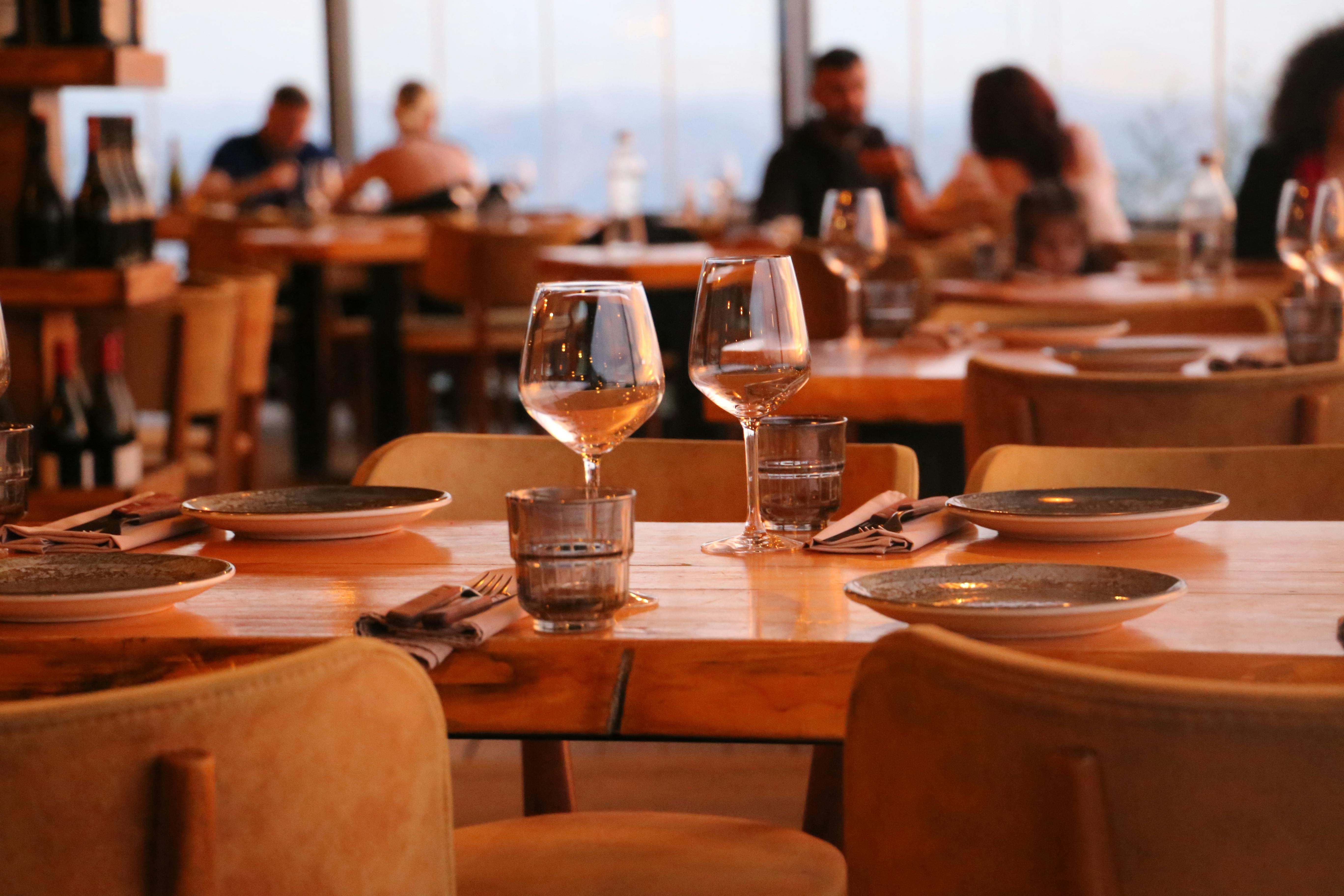
How to Choose a Truly Luxurious Restaurant
- Start with the restaurant’s purpose. Is it a tasting-menu temple, a seafood specialist, a temple of classic French cooking, or a modern regional room? You want clarity. A restaurant that knows exactly what it is usually performs better than one trying to be every luxury cliché in one place.
- Study the menu, not just the price. I look for restraint, focus, and ingredient logic. Too many luxury menus read like procurement brag sheets: lobster, truffle, wagyu, caviar, saffron, repeat. That is not a vision. That is a shopping list with a chandelier.
- Check the sourcing story. The best kitchens say where ingredients come from and why they matter. This is not corporate puffery when done right. It is stewardship. A responsible kitchen respects supply chains, seasons, and labor.
- Read the service language. Good service is neither stiff nor chatty. It is measured. It remembers your pace, allergies, and preferences without turning the meal into a corporate onboarding process.
- Look at the beverage program. A serious wine list is not just large. It is balanced, coherent, and intelligently priced at multiple levels. Great restaurants also know spirits, tea, coffee, and non-alcoholic pairings. If the beverage program is lazy, the room is probably lazy.
- Consider the room’s acoustics and privacy. Luxury is not only visual. If you cannot hear your companion without shouting, the room has failed a basic test.
- Book for the right reason. If you want spectacle, say so. If you want a meal that changes how you think about seafood, say that too. The wrong expectation ruins good food.
I have one simple rule: choose restaurants that make complex things look calm. That calm is earned. It means the kitchen has practiced, the floor has rehearsed, and the management has not confused confusion with energy.
If you are comparing cities, pair this with our best luxury travel planning tips and our guide to premium hotel dining. The whole trip improves when you stop treating dinner as an afterthought.

Comparison Table: Luxurious Restaurant vs. Famous Chain Fine Dining
| Feature | Most Luxurious Restaurants | Famous Chain Fine Dining | Why It Matters |
|---|
| Culinary identity | Distinct, chef-led, often regionally rooted | Standardized, designed for consistency | Identity creates memory; repetition creates sameness |
| Ingredients | Seasonal, rare, meticulously sourced | Broad-market supply, consistent but less singular | Luxury depends on material quality |
| Service | Highly trained, anticipatory, discreet | Polished but procedural | True hospitality feels human, not scripted |
| Ambience | Designed for intimacy, acoustics, and ritual | Built for throughput and brand recognition | The room should support the meal, not compete with it |
| Wine and beverage program | Deep, selective, and often exceptional | Reliable but limited | Beverage pairing can elevate or flatten the experience |
| Price | Very high, but tied to execution and scarcity | High, but more standardized | High price alone is not proof of quality |
| Guest experience | Personal, memorable, sometimes theatrical | Predictable and efficient | Luxury should feel intentional, not mass-produced |
The distinction is simple. One sells distinction. The other sells reliability.
That does not make chain fine dining bad. It just means you should not confuse it with the best of the best. A famous brand can deliver a pleasant evening. A world-class luxury restaurant can alter your standards for food, service, and room design. Those are not the same thing.
The 16 Most Luxurious Restaurants in the World: What Sets Them Apart
This list is not a holiness ranking. Taste is personal, and cities change fast. But these restaurants repeatedly appear in serious conversations about luxury because they combine reputation, execution, scarcity, and hospitality in ways few others manage.
- Sublimotion, Ibiza — Famous for immersive dining theater, technology, and tightly choreographed spectacle.
- Masa, New York — Omakase luxury at an extreme level, with sparse decor and intense ingredient focus.
- Alain Ducasse au Plaza Athénée, Paris — Classic Parisian elegance, restrained luxury, and a strong sense of place.
- Le Louis XV – Alain Ducasse, Monaco — Formal, polished, and deeply tied to Riviera glamour.
- The French Laundry, California — Precision, pilgrimage status, and a menu built on detail.
- Per Se, New York — Serious technique, refined service, and a benchmark-level tasting menu.
- Restaurant Guy Savoy, Paris — Old-world French luxury, technical assurance, and a calm room.
- Arpège, Paris — Vegetable-focused haute cuisine with clear discipline and identity.
- Osteria Francescana, Modena — Creative force, humor, and high-concept Italian cooking.
- Alinea, Chicago — Contemporary fine dining with strong theatrical instincts and technical precision.
- Mugaritz, San Sebastián — Experimental, cerebral, and deeply committed to culinary ideas.
- Narisawa, Tokyo — Japanese refinement, nature-inspired tasting, and immaculate technique.
- Gaggan Anand, Bangkok — Bold modern Indian cooking with luxury energy and playful rebellion.
- Sukiyabashi Jiro’s elite sushi traditions, Tokyo — Ultra-focused craftsmanship and reverence for sushi making.
- The Ledbury, London — Elegant modern cooking with strong ingredient sourcing and restraint.
- Atelier Crenn, San Francisco — Artistic, poetic, and highly personal cuisine executed at a premium level.
What do these places share? More than you might think. They all understand control. The top rooms control the pace, the tone, the temperature, and the narrative of the meal. They also know when not to overdo it. Luxury is often the art of stopping one step before vulgarity.
Not every one of these restaurants is luxurious in the same way. Some lean into theater. Some lean into tradition. Some are about purity, some about performance. That variety is useful. It reminds us that luxury is not one aesthetic. It is an agreement between intention, skill, and the guest’s willingness to pay for excellence.
If you are also interested in the broader world of premium hospitality, read our luxury restaurant etiquette guide and our best Michelin-starred travel routes. They will save you from looking like a tourist with money.
Common Mistakes to Avoid
- Confusing fame with quality. A famous chef and a flawless meal are not automatically the same thing. Some famous rooms coast on name recognition. Happens all the time.
- Chasing the most expensive menu. Price alone does not buy coherence. A restaurant can charge a fortune and still produce a muddled tasting menu with no rhythm.
- Ignoring location and context. A restaurant’s luxury often depends on its setting. A seaside room with local seafood has different strengths than a tower restaurant in a capital city.
- Overrating theatrics. Smoke, foam, dry ice, and synchronized service can be fun. They can also be a mask for weak cooking. Do not let the fireworks distract you.
- Not checking reservation policies. Some elite restaurants require deposits, strict cancellations, or months of planning. That is not just snobbery. It is capacity management and, sometimes, a reasonable way to protect high-touch service.
- Assuming all luxury is wasteful. That is too easy. Real luxury can be disciplined, local, and responsible. A well-run kitchen that treats ingredients with respect is not frivolous. It is a form of excellence.
- Expecting speed. The finest meals take time. If you are in a hurry, eat elsewhere and spare everyone the drama.
Here is what nobody tells you: the most expensive part of luxury dining is often not the food. It is the labor. The staff-to-guest ratio, the training, the sourcing, the room design, the waste management, the wine program, the laundry, the plating discipline—this all costs money. If you want to know whether a restaurant is worth it, ask where the money goes.
I also think people underrate silence. A luxury dining room should feel composed. Not sterile. Composed. That is a small but serious distinction, and it reflects a broader moral idea: good things are made for use, not for bragging. That is as true of a dining room as it is of a well-made watch or a hand-stitched jacket.
Frequently Asked Questions
What makes a restaurant luxurious?
A restaurant feels luxurious when food, service, room design, privacy, and pacing all work together. Price matters, but only as part of the equation. Real luxury shows up in control, not noise.
Are Michelin-starred restaurants always luxurious?
No. Some are modest, focused, and almost austere. Michelin stars measure culinary excellence, not necessarily plushness, extravagance, or status signaling.
Is expensive dining worth it?
Sometimes. If the restaurant delivers precision, memorable flavors, and outstanding service, yes. If it is just expensive theater, no. Let’s be real: nobody needs a £400 meal that tastes like a marketing deck.
What should I wear to a luxury restaurant?
Check the restaurant’s dress code first. In general, polished and understated is safer than flashy. Respect the room. That basic courtesy still matters.
Final Thought
Luxury restaurants reveal whether a society still knows how to prize excellence without apology. That matters more than it sounds.
When a dining room gets it right, it does more than feed people. It honors labor, order, and beauty in a way that feels almost old-fashioned, which is exactly why it endures. The best meals are never just about abundance. They are about fittingness: the right ingredients, the right service, the right restraint, the right moment shared with the right people.
I trust that more than hype. Most luxury talk is just perfume sprayed on mediocrity. But the truly great restaurant, the one that earns its price, does something different. It makes excellence feel natural, even humble. That is a rare thing. And in a world addicted to excess, rare is worth noticing.