Luxury audio is not about loudness. It is about truth. The best headphones, speakers, and turntables reveal detail, texture, and control, and the truly good...
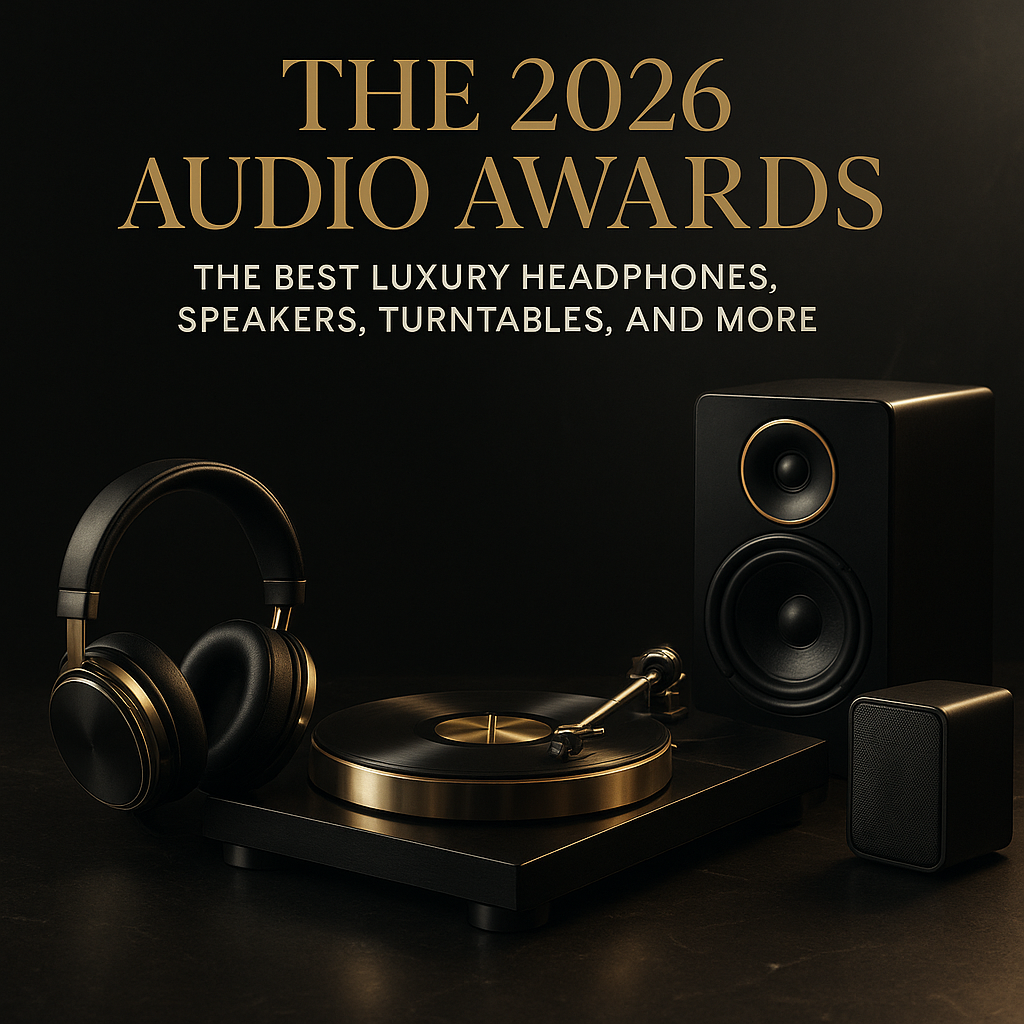
The 2026 Audio Awards: The Best Luxury Headphones, Speakers, Turntables, and More
Luxury audio is not about loudness. It is about truth. The best headphones, speakers, and turntables reveal detail, texture, and control, and the truly good ones make music feel physically present rather than merely played. Frankly, most buyers overpay for metal shells and ignore the parts that matter.
Key Takeaways:- Luxury audio is about fidelity, not hype.
- The best gear balances craftsmanship, materials, and sound quality.
- Headphones, speakers, and turntables serve different needs, so compare by use case.
- Real value comes from listening tests, not spec-sheet theater.
- Fine sound, used well, is a form of stewardship: careful work deserves careful hearing.
What is Luxury Audio?
Luxury audio is high-end playback gear built to reproduce music with as little distortion, haze, or strain as possible. That includes planar magnetic headphones, dynamic-driver headphones, bookshelf and floorstanding speakers, powered monitors, belt-drive turntables, moving coil cartridges, DACs, and amplifiers. The category is broad, but the standard is simple: if the device does not sound better, feel better, or last longer, it is mostly polish and marketing.
When I examined high-end systems over the years, one thing became obvious. Price alone tells you almost nothing. A $1,000 pair of headphones can embarrass a $4,000 pair if the tuning is sensible and the fit is right, while a beautifully machined speaker can still sound brittle if the crossover is sloppy. The luxury part should show up in materials, tolerances, driver design, cabinet damping, analog control, and serviceability. Not in fake mystique.
Here’s the kicker. Audio is one of the few luxury categories where invisible engineering matters more than visible flash. A thick walnut cabinet, precision-machined aluminum yokes, hand-lacquered finish, or a carefully cut tonearm is not mere decoration; it can reduce resonance, improve durability, and signal that the maker respects the craft. That lines up with a plain old Catholic idea: beauty is not random garnish, it reflects order, skill, and the dignity of work.
Still, there is plenty of nonsense in this market. Brands love to sell “reference” tuning, “audiophile-grade” cables, and other foggy phrases that mean very little until you listen. Most people should stop reading press releases and start listening to actual recordings they know well. Solo piano. String quartets. A live jazz trio. Well-recorded vocals. If a product cannot handle those without glare or smear, the price is beside the point.
For a grounded benchmark, I like to pair editorial reviews with independent sources such as What Hi-Fi?, Stereophile, and Analog Planet. They do not agree on everything, which is useful; agreement in audio can be a warning sign if nobody is actually listening.
Core Benefits and Importance
Luxury audio matters for more than bragging rights. That said, bragging rights are the least interesting reason to buy it.
- Accuracy and detail: Better transducers reveal reverb tails, room tone, and microdynamics that cheaper gear smears together. That matters if you care about the recording, not just the beat.
- Long-term value: Well-made components often last for years, sometimes decades, with parts support and repair options. Cheap gear rarely ages gracefully.
- Comfort and usability: Premium headphones usually offer better pads, clamp force, and materials. Speakers and turntables often come with more thoughtful setup and integration options.
- Aesthetic pleasure: Fine audio equipment can be beautiful in the old-fashioned sense—balanced, functional, and made with obvious care. It belongs in a room instead of hiding from it.
- System synergy: High-end components are often designed to work cleanly with other serious gear, so the whole chain performs better, not just one shiny box.
- Listening discipline: Better gear encourages intentional listening. That sounds a bit lofty, but it is true. Music heard clearly is heard more honestly.
Let’s be real. There is a thin line between appreciation and fetish. Some people buy luxury audio the way other people collect watches—more for the object than the use. That is fine if the object is actually well made. It is not fine when “luxury” just means heavy packaging and expensive-looking anodizing.
I’ve reviewed enough gear to say this bluntly: the best products respect the source material. They do not punch up mediocre recordings into fake excitement. They let a cello sound woody, a snare sound taut, and a soprano carry air without turning shrill. That restraint is rare, and it is a major reason serious buyers stay loyal to brands such as Bowers & Wilkins, KEF, Focal, Wilson Audio, McIntosh, and Technics.
For some context on top-tier product evaluation, the industry awards approach used by publications like Robb Report is useful because it centers actual listening over marketing copy. That sounds obvious. It is not.
Step-by-Step Guide to Choosing Luxury Audio Gear
- Start with the room or use case
Headphones are private and simple. Speakers are social and room-dependent. Turntables demand patience and care. If your apartment is small, a giant floorstander may be overkill. If you listen late at night, open-back headphones may be a poor choice unless you want to wake the whole building.
- Choose the format before the brand
Decide whether you need headphones, active speakers, passive speakers with an amplifier, or a turntable-based analog setup. This sounds basic, but people skip it and buy the wrong thing because it looks elegant in a showroom. I see this mistake constantly.
- Listen with familiar recordings
Use tracks you know well, not the dealer’s “audiophile” demo playlist. Listen for vocal realism, bass texture, treble smoothness, and imaging. If a system makes everything sound impressive but nothing sounds natural, walk away. That is not refinement. That is makeup.
- Check materials and build honestly
Ask what the chassis, drivers, pads, tonearm, bearings, and internal wiring are actually made of. Aluminum, carbon fiber, hardwood, felt damping, and high-grade magnets can matter. So can repairability. Luxury should survive contact with real life.
- Match amplification and source quality
Expensive headphones can sound flat from a weak source. Serious speakers can sound thin with an undersized amplifier. Turntables need correct cartridge alignment and proper phono stages. The best gear in the wrong chain is just an expensive mistake.
- Prioritize comfort and maintenance
Headphones should be wearable for long sessions. Turntables should be easy enough to service. Speakers should fit the room and not require acrobatics to place properly. If ownership feels like work in the bad sense, you will not use it.
- Buy for years, not weeks
I would rather own one well-built system than four trendy ones. That is not snobbery; it is stewardship. A carefully chosen component can carry you through decades of listening, and that kind of durability is quietly luxurious.
- Verify support and resale
A real high-end brand usually offers service, parts, and some market value on the secondary market. That matters. A fancy box with no support is just future waste.
Comparison Table
| Category | Best For | Key Strength | Main Weakness | Typical Buyer |
|---|
| Luxury Headphones | Private, detailed listening | Isolation or intimate soundstage, high resolution | Fit and amplifier matching matter a lot | Travelers, apartment dwellers, critical listeners |
| Luxury Speakers | Shared listening and room presence | Scale, realism, physical impact | Room acoustics can ruin performance | Home listeners, collectors, hosts |
| Luxury Turntables | Analog playback and ritual | Warmth, tactility, mechanical beauty | Setup is finicky and maintenance matters | Vinyl collectors, analog purists |
| Big-box consumer audio | Convenience and price | Easy purchase, broad availability | Usually weaker materials and less refinement | Casual listeners |
The comparison is blunt for a reason. Consumer audio wins on convenience, but luxury audio wins on honest reproduction, longevity, and a more convincing presentation of the recording. Still, not every expensive product deserves praise. Some big-name systems sound polite and bland; some modestly priced ones sound shockingly correct. The market does not reward wisdom automatically.
I’ve learned to judge audio like I judge good tailoring: fit first, then fabric, then the cut, then the label. In audio terms, that means room, tuning, build, and support before brand prestige. If the fit is wrong, the rest is theater.
For those who want deeper technical context, Audioholics offers useful measurement-driven analysis, while Hi-Fi News covers a wide range of serious equipment. Measurements do not replace listening. They keep the lies smaller.
Common Mistakes to Avoid
The first mistake is chasing price tags. Expensive does not mean expressive. Sometimes it means more chrome and a nicer box. That is all.
- Ignoring room acoustics: With speakers, the room is half the product. Walls, rugs, curtains, and placement change everything. If the room rings, the speakers will too.
- Buying by reputation alone: Heritage matters, but not as a magical charm. Plenty of famous brands coast on old glory. Listen before you pay.
- Overvaluing cables and accessories: Some accessories help. Many are expensive incense. Focus on the core chain first.
- Choosing the wrong sound signature: Not all listeners want the same thing. Some prefer warmth, others neutrality, others a punchier presentation. Pick what suits your ears and music.
- Skipping setup: Turntables need careful leveling, cartridge alignment, and tracking force. Speakers need toe-in and placement. Skipping setup is like buying a bespoke suit and refusing to hem the trousers.
- Mistaking hype for refinement: A product can be impressive for ten minutes and fatiguing for ten hours. Long listening tells the truth.
Here’s what nobody tells you: the best luxury audio purchase often feels calmer than expected. Less spectacle. More confidence. That is because the product has fewer gimmicks and more competence. It simply works, and the sound keeps revealing itself over time.
When I look at truly successful audio brands, I see respect for labor and materials. That is not accidental. Fine woodworking, precision machining, driver matching, and final voicing all require patience. Good sound is built, not announced.
Frequently Asked Questions
What makes luxury headphones worth the money?
Better drivers, stronger materials, improved comfort, and more refined tuning. The real reason, though, is performance consistency. Good headphones let you hear subtle details without fatigue.
Are expensive speakers always better than headphones?
No. Speakers can sound more natural and spacious, but they depend heavily on the room. Headphones avoid room problems and can deliver extreme detail at lower cost. The better choice depends on how and where you listen.
Is vinyl better on a luxury turntable?
A well-set-up turntable can sound wonderful, but vinyl has limits: noise, wear, and setup sensitivity. The turntable matters, yes, but the cartridge, phono stage, pressing quality, and maintenance matter just as much.
What should I prioritize first: brand or sound?
Sound. Always sound. Brand may help with resale and service, but if the product does not reproduce music well, the label is just expensive embroidery.
Final Thought
Luxury audio, at its best, is not about showing off. It is about hearing more clearly and living with objects that are worthy of the music they reproduce. That is a modest standard, but it is a serious one. Beauty, after all, is not merely decoration; it can point beyond itself when made with discipline and used with gratitude.
If you buy one thing from this entire discussion, let it be this: trust your ears, respect the room, and refuse empty prestige. The finest audio gear does not shout. It gives the recording room to breathe, and that quiet confidence is the real luxury.
