The best audiophile gear of 2026 is not about price alone. It is about <strong>accuracy</strong>, <strong>craft</strong>, and the strange, stubborn fact that...
The Best Audiophile Gear of 2026: Robb Report’s Finest Picks for Serious Listeners
The best audiophile gear of 2026 is not about price alone. It is about accuracy, craft, and the strange, stubborn fact that music should sound like people made it in a room, not like it was flattened by a committee. The finest systems reveal texture, space, and intent. Most expensive gear? Frankly, that’s often just jewelry for a rack.
Key Takeaways- Audiophile gear is judged by clarity, timing, tonal balance, and real-world musicality—not hype.
- The best systems in 2026 favor engineering, materials, and listener satisfaction over bragging rights.
- Speaker placement, room treatment, and source quality matter more than most marketing claims.
- Luxury audio is also about stewardship: good tools, well made, used with care, honor both skill and the gift of sound.
- Serious buyers should compare features, sonic character, and system matching before spending.
What is Audiophile Gear?
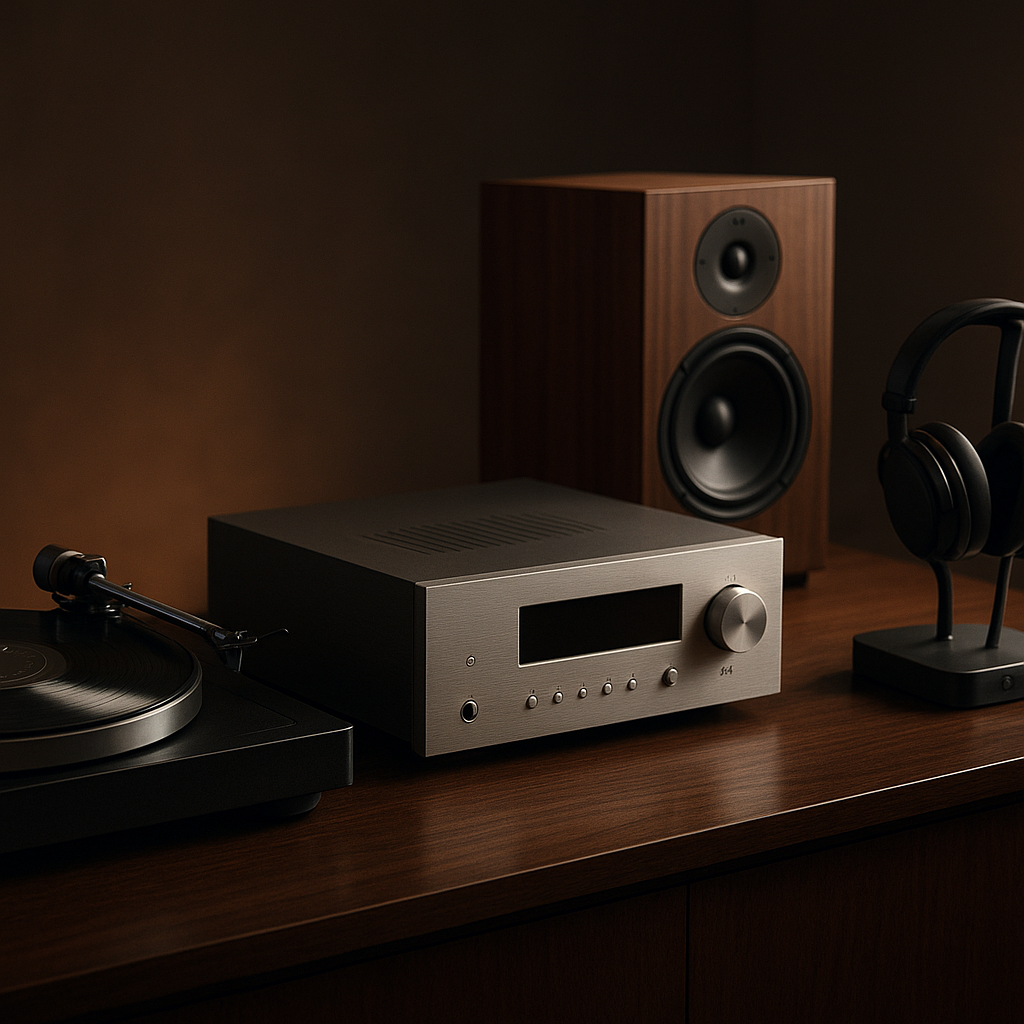
Audiophile gear is audio equipment designed to reproduce music with the least distortion, the greatest fidelity, and enough finesse to preserve nuance. That includes speakers, headphones, turntables, DACs, amplifiers, streamers, and the cables that everyone pretends not to care about until they do. I’ve reviewed enough of it to say this: the word “audiophile” gets abused badly. A polished aluminum box with a fat price tag is not automatically high fidelity.
At its best, audiophile gear serves the recording. It does not grandstand. It does not smear detail into mush. It lets a bow scrape, a breath, or a kick drum hit with believable weight. The point is not “more sound.” The point is truer sound.
Here’s the kicker. The finest audio products often disappear emotionally even while they become more technically revealing. That sounds contradictory, but it isn’t. A great system gives you access without forcing itself on you. You hear the performance, not the machinery.
That standard has teeth. It means measurements matter, but they are not the whole story. A sterile machine can measure beautifully and still leave music cold. A lush system can flatter everything and tell you very little. The sweet spot is hard to find, which is why competent designers earn their keep.
There is also a moral dimension people rarely mention. Beauty is not frivolous when it is ordered toward truth. A well-built turntable, a hand-finished speaker cabinet, a carefully voiced amplifier—these are examples of human skill doing honest work. In a decent world, craftsmanship is not a sin. It is a form of stewardship.
If you want the current benchmark in serious listening, Robb Report remains a useful place to compare elite products, while technical background from SoundStage! and measured reviews from Stereophile help separate real performance from perfume-counter nonsense.
Core Benefits and Why It Matters
The benefits are real.
And no, not all of them are glamorous.
- Better detail retrieval: You hear the room, the studio, and the edges of a performance with more precision.
- Stronger imaging: Instruments and voices occupy believable positions instead of floating around like stray smoke.
- Lower fatigue: Good gear can be revealing without being harsh, which matters if you listen for hours.
- Long-term value: Well-made components often last, can be serviced, and hold up better than disposable consumer junk.
- System flexibility: Strong components can grow with your collection rather than forcing a full replacement every time your tastes sharpen.
Most people overspend in the wrong places. That’s the ugly truth. They buy a more expensive amplifier when their room sounds like a tiled bathroom, then wonder why cymbals slice their ears. I’ve seen it repeatedly. The room is the kingmaker, not the brochure.
That does not mean gear is irrelevant. It means context matters. A great pair of speakers in a bad room will disappoint. A modest system set up properly can embarrass gear costing far more. The better the equipment, the more brutally it exposes weak links upstream and downstream.
This is why serious listeners obsess over synergy. A warm amplifier can balance bright loudspeakers. A precise DAC can rescue a system that veers soft around the edges. A turntable with stable speed and a proper cartridge can make vinyl make sense again instead of sounding like nostalgia in a blazer.
For enthusiasts who care about more than specs, there is also a deeper pleasure: attention. Audio rewards patience, and patience is underrated. In an age of instant noise, choosing components carefully is almost a small act of discipline. The old biblical idea that work should be done well—without slop, without vanity—fits here more than people admit.
If you want a broader premium-lifestyle lens on how buyers actually think about quality and craft, Robb Report Lifestyle often frames luxury as function plus finish, not just shine.
Step-by-Step Guide to Choosing the Best Audiophile Gear of 2026
Choosing the right gear is methodical.
And if it sounds romantic, fine—but the shopping part is mostly discipline.
- Start with your source
I always begin here. If you stream, prioritize a strong streamer, stable network performance, and a DAC that fits your taste. If you spin vinyl, buy a turntable with consistent speed, good isolation, and a cartridge that matches your tonearm. Garbage in, garbage out still applies. - Fix the room first
This is the least sexy step and the most important. Measure the room, add treatment where reflections are ugly, and place speakers properly before you spend another dime. I’ve heard mid-tier setups that sounded superb because the room behaved, and ultra-expensive ones that sounded like wet cardboard. - Choose the transducer before the cosmetics
Speakers and headphones shape the final result more than almost anything else. Pick the sound signature you can live with: neutral, warm, lively, or richly textured. A gorgeous finish is nice. It does not help if the treble makes your fillings ache. - Match amplification carefully
Power is not everything. Control matters. Look at impedance, sensitivity, and current delivery—not just watts. A well-judged amplifier can make difficult speakers sing; a mismatched one can make expensive drivers sound tired. - Listen for musical truth, not fireworks
The flashy demo track is a trap. Always audition vocals, piano, strings, and dense orchestral passages. Those reveal tonal balance and timing better than a bass slam playlist built to impress people who think louder equals better. - Check serviceability and build
Luxury should not mean fragile ego in a box. Ask about warranty, upgrade paths, parts availability, and repair support. Good gear should age gracefully, like a fine watch or a serious chair, not crumble like trend-driven tat. - Buy for the way you live
If you travel often, maybe a reference headphone setup makes more sense than a sprawling speaker rig. If you host dinners and entertain, a beautiful integrated system may matter more than lab-grade obsessiveness. Use should shape purchase. - Audit the brand claims
I’m skeptical by default. “Reference,” “flagship,” and “heritage” are marketing wallpaper. Read measurements, compare reviews, and, when possible, listen yourself. The best gear survives scrutiny.
For readers who also care about luxury design and how objects earn their keep in the home, Architectural Digest often offers useful context on integrating high-end equipment into real living spaces.

Comparison Table: Audiophile Gear vs Mainstream Audio
| Factor | Audiophile Gear | Mainstream Audio |
|---|
| Sound Quality | High resolution, precise imaging, low distortion | Fun, convenient, often compressed |
| Build Quality | Premium materials, serviceable construction | Cost-cut materials, limited repairability |
| Tuning | Focused on accuracy and musicality | Tuned for mass-market punch and loudness |
| Longevity | Designed for years of use | Faster obsolescence, weaker support |
| Price | High upfront cost | Lower entry price |
| System Matching | Requires care and setup | Easier plug-and-play |
| Best For | Critical listening, collectors, enthusiasts | Casual listening, background use |
The comparison is not subtle.
And that is exactly why people confuse convenience with quality.
Mainstream audio has improved, sure. Wireless convenience is terrific. But convenience is not fidelity, and it never was. The best audiophile gear asks more of you because it gives more back. That exchange can be annoying. It is also honest.
Common Mistakes to Avoid
Most bad advice sounds confident.
That should make you suspicious.
- Buying by price alone: Expensive does not equal excellent. Sometimes it equals expensive finishing.
- Ignoring the room: A $20,000 system in a bad room can sound worse than a sensible setup placed properly.
- Chasing specs without listening: Measurements matter, but ears still decide whether music feels alive.
- Overlooking source quality: A weak streamer or sloppy turntable setup can kneecap the whole chain.
- Believing brand mythology: Heritage is fine. It is not magic.
- Mixing gear without compatibility checks: Impedance, gain, and output levels are not decorative terms.
- Choosing gear for show: If it looks like it belongs in a lobby but sounds thin, you bought furniture with an audio label.
The biggest mistake is philosophical. People treat audio as consumption when it really rewards attention. The point is not to collect shiny boxes. The point is to hear a recording with enough integrity that the performance retains its shape. That is where craft matters, and where the whole luxury category becomes more defensible than its loudest critics admit.
If you like comparing premium categories and the standards that separate true excellence from mere markup, Hodinkee is a useful parallel read for how enthusiasts evaluate craftsmanship, value, and ownership.
Frequently Asked Questions
What makes a product audiophile grade?
A product is audiophile grade when it prioritizes fidelity, low distortion, channel balance, and system transparency. In plain English, it should help music sound more real, not merely louder or shinier.
Are expensive audio products always better?
No.
And anyone who says otherwise wants your wallet, not your ears.
Price can reflect better drivers, smarter circuits, and stronger cabinets, but it can also reflect branding, exotic finishes, and retailer markup. Always compare performance, not mythology.
Do cables really matter?
Sometimes, but not in the mystical way salespeople prefer.
Well-designed cables can help with noise rejection, durability, and proper connection quality. They are not magic wands. Fix your speakers, source, and room first.
What is the most important part of an audiophile system?
The speakers or headphones, followed by room setup in a speaker system.
Source matters too, obviously, but the transducer does the final conversion from electrical signal to sound. That is where most of the character lives.
The best audiophile gear of 2026 is not the loudest, the flashiest, or the one with the most ridiculous claim printed on the box. It is the gear that respects music, respects the listener, and respects the labor that made it possible in the first place. That is rare enough to matter.
When I look at truly great audio products, I see a simple pattern: careful design, honest materials, and a refusal to cut corners where the ear will catch the lie. That is good stewardship. It is also, frankly, one of the few corners of luxury where the price can still make moral sense when the object is made to last, perform, and serve beauty without shouting about itself.
So buy with discipline. Listen first. Trust your ears, then your measurements, then the brand story if it still survives the first two. That order saves money, and more importantly, it saves you from collecting very expensive disappointment.