The Most Famous Painters in the World: Five Artists Who Changed Art
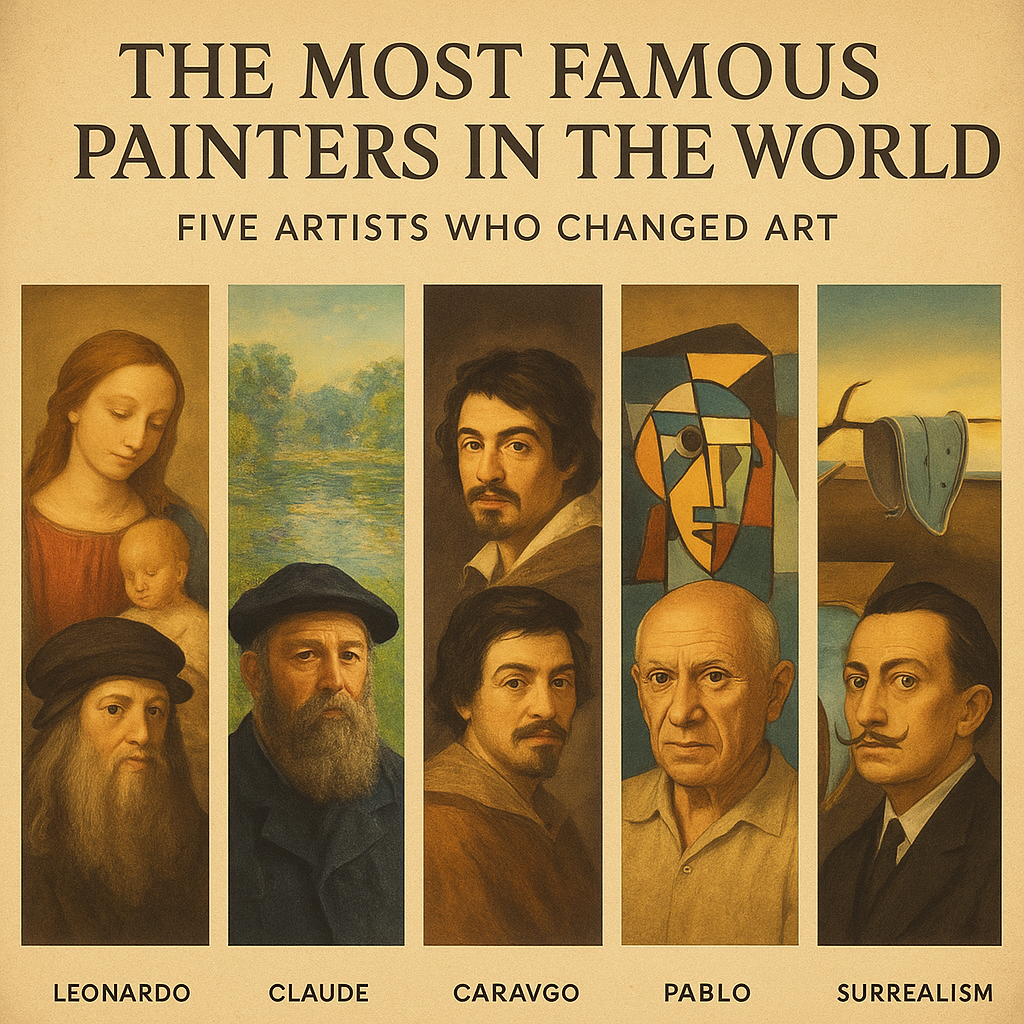
The most famous painters in the world are not simply the artists whose names fill museum labels; they are creators whose images, methods, and ideas altered how people see art. Vincent van Gogh, Leonardo da Vinci, Pablo Picasso, Michelangelo, and Claude Monet each changed painting in a distinct way, from luminous color and close observation to radical shifts in form.
What Makes These Painters Famous?
Fame in art is built from more than skill. It may come from technical innovation, a recognizable body of work, historical influence, the survival and display of important paintings, and the stories later generations attach to an artist. In the case of these five, those forces overlap. Their works are taught, reproduced, discussed, and preserved by major museums, while their names have become familiar even to people who rarely visit galleries.
That familiarity can make art history sound tidier than it is. There was no single contest in which these five defeated every other painter. Rembrandt, Artemisia Gentileschi, Caravaggio, Frida Kahlo, Titian, and many others have also shaped the history of painting. The group here is better understood as a widely recognized selection, not a definitive ranking. Each artist belongs to a different period and worked under different social, religious, political, and technical conditions.
Leonardo da Vinci and Michelangelo worked during the Italian Renaissance, when artists studied classical sources, human anatomy, mathematics, and perspective. Van Gogh and Monet worked in nineteenth-century Europe, as modern life, new pigments, photography, and changing ideas about art reshaped painting. Picasso, born in 1881, moved through several styles and helped define the visual vocabulary of modern art. Comparing them is useful, but only if we resist pretending that they were solving the same problem.
When I examine why a painter lasts in public memory, I look beyond the easy label of genius. I ask what the artist actually changed: the way a figure is built, the use of color, the handling of light, the structure of a scene, or the expectations placed on a painting. Most luxury marketing is pretentious nonsense; art-world mythmaking can be just as inflated. The work itself still has to hold attention.
The word famous also has a practical dimension. Museums, schools, books, films, and popular culture keep certain names in circulation. Leonardo’s Mona Lisa is among the most recognized paintings in the world, while Monet’s water lilies and Van Gogh’s swirling skies have become visual shorthand. Recognition can open the door, but it should not end the conversation. A familiar image deserves a closer look at its materials, making, historical setting, and meaning.
Why Their Work Still Matters
The importance of these painters is not that everyone must admire every canvas. It is that each offers a different way to understand what painting can do. Looking carefully develops visual judgment: a viewer begins to notice how a contour guides the eye, how a color changes beside another color, and how a seemingly casual brushstroke may be the result of deliberate decisions.
- They reveal different ideas of skill. Leonardo pursued controlled transitions and convincing space. Michelangelo gave the human body force and monumentality. Van Gogh made the mark itself carry feeling. Monet studied shifting light, while Picasso treated form as something that could be taken apart and rebuilt.
- They make history visible. Their paintings bear traces of patronage, religion, wealth, politics, technology, and changing ideas about the individual. A Renaissance altarpiece and a modern portrait did not emerge from the same world.
- They encourage sustained attention. A painting is not a disposable image. It rewards a slower look, where structure and detail gradually become clear. In a culture trained to skim, this is a useful discipline.
- They connect craft with imagination. Pigments, supports, drawing, composition, and workshop practice matter. So does invention. Beauty can suggest something beyond utility, but it is also made through disciplined human labor and care for materials.
- They complicate the idea of genius. Each artist had influences, collaborators, teachers, patrons, and practical constraints. The lone-genius story is memorable, but it leaves out much of the work.
There is also a sensible caution. Fame is not the same as artistic superiority, and a celebrated name does not guarantee that every work is authentic, well preserved, or worth a particular asking price. The art market reflects scarcity, ownership history, condition, attribution, demand, and social prestige. Those factors can affect a price without settling the question of artistic merit.
The best reason to learn these artists is not to memorize a list for a quiz. It is to gain a richer vocabulary for looking. When I compare a painting’s surface, composition, and subject, I can explain why it moves me—or why it does not—without hiding behind a famous name. Frankly, that is a better use of art history than treating every masterpiece as an unquestionable object of reverence.
A Step-by-Step Guide to the Five Painters
A good first encounter does not require a specialist’s training. Choose one well-documented painting, look at it without reading the wall text for a minute, then return to it with basic historical information. Notice what your eye follows, where the light falls, and what seems unusually handled. Only then ask what the artist may have intended. The sequence matters: looking first helps prevent a label from dictating your response.
- Vincent van Gogh: color as a form of expression. Van Gogh is known for intense color, energetic brushwork, and images that make the painted surface feel active. His work includes portraits, landscapes, still lifes, and views of ordinary surroundings. The Starry Night is famous for its rolling sky, but it is not a simple record of a view. Its rhythm and color transform the scene. The Van Gogh Museum’s collection and stories offer useful background on his life and work: Van Gogh Museum. Approach his biography with care. His struggles are part of his story, not a shortcut that explains every painting.
- Leonardo da Vinci: observation joined to invention. Leonardo’s reputation reaches well beyond painting: he studied anatomy, engineering, nature, and the movement of water. In his paintings, careful observation works alongside composition and mystery. The Last Supper organizes a complex narrative around Christ and the apostles; the Mona Lisa is known for its subtle expression, atmospheric background, and softly blended transitions. Leonardo left relatively few paintings, and conservation has been difficult for some works. The Louvre’s overview of the Mona Lisa provides context for the painting and its history: the Louvre on the Mona Lisa. Admiration need not mean accepting every legend about it.
- Pablo Picasso: reinvention as a method. Picasso worked across painting, drawing, printmaking, sculpture, and ceramics. His career passed through distinct periods, and he did not settle on one signature look. Cubism, developed with Georges Braque, challenged the convention that a subject should be represented from a single fixed viewpoint. In a Cubist painting, forms may be fractured into planes and shown through multiple perspectives. That does not mean the artist abandoned structure; the structure became the subject. Picasso’s 1937 painting Guernica responds to the bombing of the Basque town during the Spanish Civil War, using monumental scale and a stark visual language to convey violence and grief. The Metropolitan Museum of Art provides a concise account of Picasso’s work and historical setting: The Met on Picasso.
- Michelangelo: monumental figures and Renaissance ambition. Michelangelo is often introduced as a painter, but he was also a sculptor, architect, and poet. His painting on the ceiling of the Sistine Chapel is one of the most prominent achievements of the Renaissance. The ceiling’s densely arranged figures and biblical scenes demand attention from below, while the bodies convey weight, tension, and movement. Michelangelo’s work also shows how large commissions relied on patrons, assistants, planning, and years of demanding labor. His artistic identity should not be reduced to a single ceiling, however; the Last Judgment on the chapel’s altar wall and his sculptures reveal other aspects of his practice. A reliable biographical overview is available from Encyclopaedia Britannica’s Michelangelo biography.
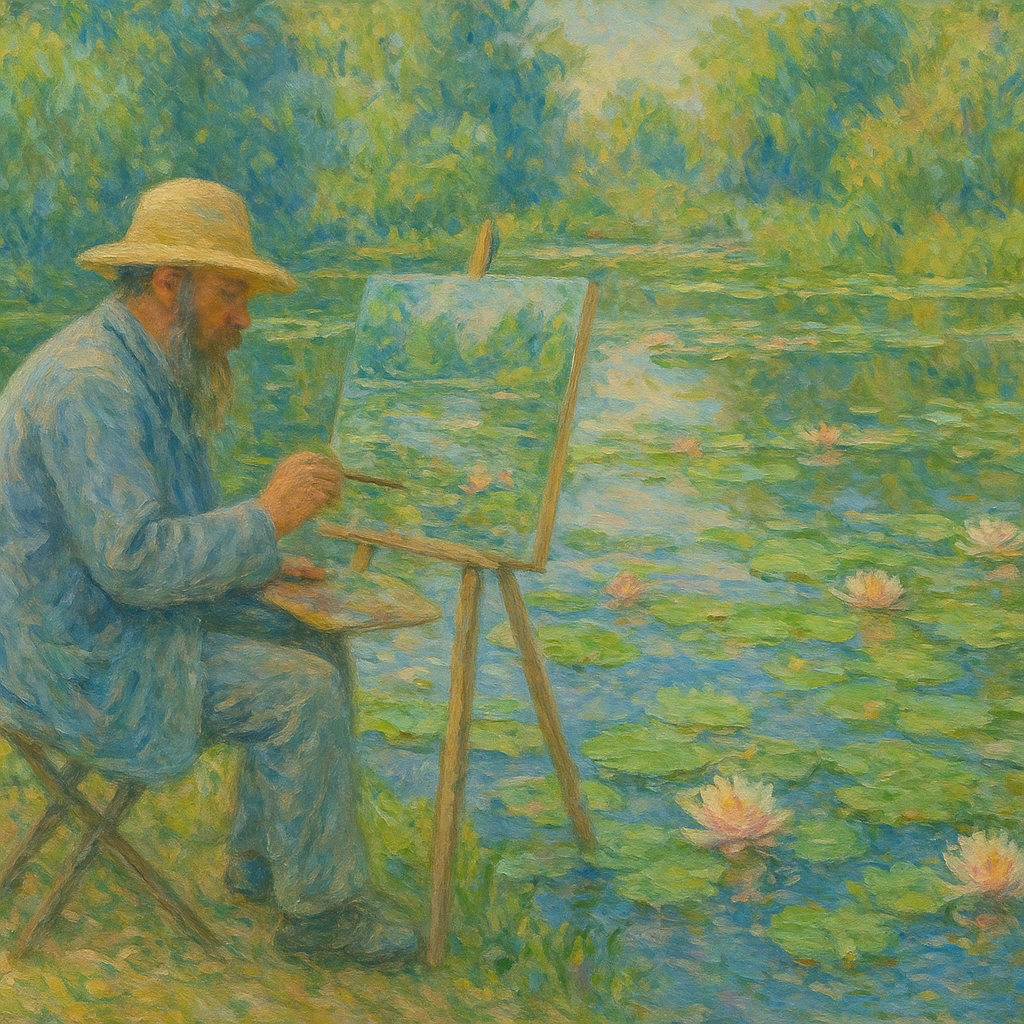
- Claude Monet: light observed over time. Monet was a central figure in Impressionism, a movement associated with modern subjects, visible brushwork, and attention to changing conditions of light. The title Impression, Sunrise helped give the movement its name, though the label began as a critic’s dismissive description. Monet often painted the same subject repeatedly, including haystacks, Rouen Cathedral, and water lilies, to examine how atmosphere and light altered what he saw. This was not merely a choice of pleasant color; it was a sustained study of perception. Tate’s artist page offers a useful introduction to Monet and his practice: Tate on Claude Monet.
Try comparing the artists by looking at one feature at a time. For instance, follow the edge of a face in Leonardo, then in Van Gogh. The difference is not simply realistic versus expressive. It reflects different aims, methods, and historical moments. A single comparison can reveal more than a stack of trivia.
Comparison Table: Five Famous Painters at a Glance
| Painter | Period and association | Distinctive contribution | A useful starting point | What to notice |
|---|
| Leonardo da Vinci | High Renaissance | Observation, composition, and subtle transitions | Mona Lisa | Soft edges, balance, and the relationship between figure and setting |
| Michelangelo | High Renaissance | Monumental figures and ambitious narrative painting | Sistine Chapel ceiling | The weight, scale, and movement of the human body |
| Vincent van Gogh | Post-Impressionism | Expressive color and emphatic brushwork | The Starry Night | How marks and color establish mood and rhythm |
| Claude Monet | Impressionism | Repeated study of light and atmosphere | Water-lily paintings | Changes in color and surface across a series |
| Pablo Picasso | Modern art; Cubism and later styles | Repeated reinvention and fractured perspective | Guernica or a Cubist work | How form is reorganized to create meaning |
This is a comparison of approaches, not a scoreboard. Leonardo and Michelangelo worked within the same broad Renaissance period, yet their artistic priorities differed. Van Gogh and Monet are often grouped within the larger story of nineteenth-century modern painting, but Monet’s sustained study of light is not interchangeable with Van Gogh’s emotionally charged handling of paint. Picasso’s long career makes a single label especially inadequate.
The comparison also explains why rankings tend to mislead. Which painter is most important depends on the question. If the question concerns perspective and subtle modeling, Leonardo is an obvious subject. If it concerns monumental anatomy, Michelangelo deserves attention. If it concerns the expressive potential of paint, Van Gogh becomes central. If it concerns the perception of light, Monet is essential. If it concerns a radical break with conventional representation, Picasso belongs in the discussion.
A painting’s market price would add little to this table. Prices can vary dramatically according to provenance, condition, rarity, attribution, and market demand. Many of the most significant works are held in public collections and are not available for purchase. Anyone discussing art as an investment should distinguish an artist’s historical importance from the price of a particular object. Those are related topics, not the same one.
Common Mistakes to Avoid
Treating fame as a ranking. The phrase most famous painters sounds like an official list, but no universal authority has selected these five as the only artists who matter. They are among the best-known names in Western art history. Other traditions and artists deserve serious attention, including painters whose recognition has been limited by historic exclusions from museums and textbooks.
Reducing an artist to one image. Van Gogh is more than The Starry Night, Monet more than water lilies, Leonardo more than the Mona Lisa, Picasso more than Cubism, and Michelangelo more than the Sistine ceiling. A single masterpiece is a useful introduction, not a complete account. Explore different subjects, periods, and materials before deciding you understand an artist’s work.
Confusing biography with interpretation. The facts of an artist’s life can illuminate a painting, but they do not automatically decode it. Van Gogh’s mental health, Picasso’s personal life, or the patronage behind a Renaissance commission may be relevant, yet none should replace close attention to the work. Sensational biography can sell books; it often explains less than people think.
Assuming skill means photographic realism. Painting involves choices. A convincing likeness is one kind of achievement, but so are compositional invention, expressive distortion, control of color, and the ability to organize a complex image. Picasso did not fail at realism because he later made radically different work. Monet was not careless because his brushwork can appear loose from a distance.
Believing that a high price proves greatness. Auction headlines are not reliable guides to artistic quality. A sale price belongs to a particular work, at a particular time, under particular conditions. Public attention, scarcity, provenance, and wealthy buyers can all influence a transaction. Museums and art historians use other forms of evidence when assessing significance.
Mistaking reproduction for the original. A screen or printed image cannot fully show scale, surface, pigment, texture, or the effect of standing before a painting. Reproductions are useful, but they flatten the experience. If possible, see works in a museum and read the label critically. Conservation notes, technical studies, and collection information often add more than a promotional summary.
Ignoring the labor behind the image. The myth of effortless genius hides drawing, revisions, workshop practice, preparation, technical skill, and years of work. Beauty and excellence are not opposed to discipline; they often depend on it. Appreciating a well-made painting can include respect for the dignity of the people and craft that made it possible.
Frequently Asked Questions
Who is considered the most famous painter in the world?
There is no objective winner. Leonardo da Vinci is often named because the Mona Lisa is widely recognized, while Van Gogh, Picasso, Michelangelo, and Monet are also globally familiar. The answer depends on whether fame means name recognition, museum attendance, historical influence, or the reach of a particular painting.
Why are Van Gogh, Leonardo, Picasso, Michelangelo, and Monet so well known?
They produced influential work, developed distinctive approaches, and became central to widely taught accounts of Western art. Their paintings are held or displayed by major museums and have been reproduced in books, education, film, and popular culture. Their fame is also reinforced by memorable biographies and iconic works, though those stories do not tell the whole history of painting.
Which famous painter should a beginner study first?
Start with the painter whose work you genuinely want to look at. Monet is an accessible entry to color and light; Van Gogh offers a clear way to notice brushwork; Leonardo introduces Renaissance composition; Michelangelo rewards attention to anatomy and scale; and Picasso offers a direct challenge to conventional perspective. Choose one painting, spend time observing it, and then consult a dependable museum or art-history source.
Are famous paintings good investments?
A famous artist’s reputation does not make every related object a sound investment. Authenticity, provenance, condition, ownership history, market demand, and legal title all matter, and works by these artists are exceptionally scarce. Art collecting should not be treated as guaranteed financial growth. For any significant purchase, seek independent specialist advice and verified documentation rather than relying on a seller’s claims.
Final Thought
The most famous painters in the world remain famous because their work keeps asking something of the viewer. Leonardo invites attention to the intelligence of a composition; Michelangelo makes the body carry extraordinary physical and spiritual force; Van Gogh lets the surface pulse with color; Monet insists that a familiar scene changes with the light; and Picasso shows that representation can be taken apart and remade. Their differences matter more than a tidy ranking.
A sensible way to meet these artists is neither to worship them nor dismiss them as overexposed. Stand before a work, or study a trustworthy image, and ask what is happening in its shape, color, rhythm, and space. Then learn the history around it. That combination of close looking and informed context is more rewarding than memorizing a list of names or chasing auction records.
Art can be costly, fashionable, and surrounded by grand claims. It can also be a record of patient work and a source of beauty that asks for no purchase at all. The care involved in making and preserving an artwork deserves respect; so does the viewer’s freedom to respond honestly. Start with curiosity, keep your judgment, and give the painting more than a passing glance.