Luxury is not just price. It is rarity, workmanship, service, restraint, and taste, with the best examples proving that excellence can be felt, not just...
Luxury is not just price. It is rarity, workmanship, service, restraint, and taste, with the best examples proving that excellence can be felt, not just advertised. Most luxury marketing is noisy nonsense. The real thing is quieter, harder to fake, and far more demanding of the buyer.
Key Takeaways- Luxury is judged by craftsmanship, provenance, service, and consistency.
- The best luxury brands earn loyalty through substance, not slogans.
- Travel, dining, and experiences often age better than objects.
- Smart buyers compare quality, not just logos.
- Beauty matters when it is well made and responsibly enjoyed.
What is Luxury?
Luxury is the disciplined use of rare materials, skilled labor, and thoughtful design to create something that exceeds ordinary utility. That can mean a hand-finished watch, a leather bag stitched by a trained artisan, a hotel suite where every detail is right, or a tasting menu that respects ingredients instead of smothering them.
I have reviewed enough luxury products to say this plainly: most so-called luxury is just mark-up with perfume on it. Real luxury has structure. It has provenance. It has evidence. It often comes from houses with deep heritage, but heritage alone does not save a sloppy product. Plenty of old brands coast on their names. Plenty of new ones try to buy prestige with celebrity noise. Neither deserves blind trust.
The better way to think about luxury is through four filters: craftsmanship, materials, service, and restraint. A beautiful object should be useful or at least meaningful. A beautiful trip should feel effortless without being sterile. A fine meal should honor the cook, the land, and the guest. That last part matters more than most people admit. There is something proper, even humane, about excellence done well. Beauty is not sinful extravagance when it is ordered, grateful, and well stewarded.
Luxury also crosses categories. A Patek Philippe watch and a Bergdorf Goodman gown live in different closets, but they share the same idea: the buyer is paying for judgment, rarity, and care. The same logic applies to private villas, Michelin-star dining, and first-class cabins. If the product does not improve your life in a concrete way, it is usually just theater.
For a wider view of premium categories, see this guide to luxury watches and timepieces, this overview of luxury travel experiences, and this feature on fine wines and premium spirits. Those categories reveal the same rule from different angles: excellence must hold up under scrutiny.
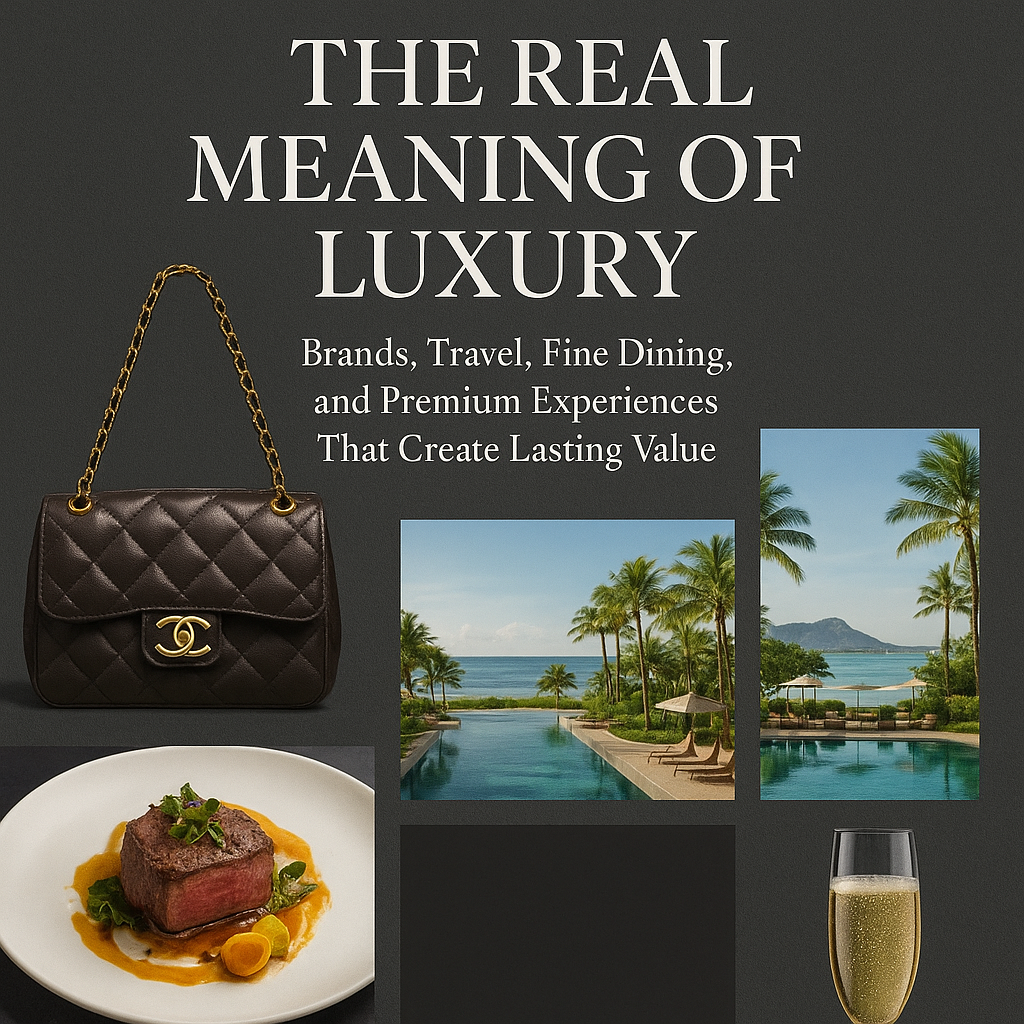
Core Benefits and Why Luxury Still Matters
Luxury matters because it rewards human skill. That sounds obvious. It is not.
- Craftsmanship lasts. A well-made object can outlive trends, repairs are possible, and materials age with character instead of collapsing after one season.
- Service changes everything. In a strong hotel, restaurant, or boutique, service removes friction without acting like it is doing you a favor. That is rare.
- Rarity creates discipline. Limited production often means more attention to detail, though not always. Scarcity by itself is not virtue. Do not confuse shortage with quality.
- Experience beats clutter. A great trip, dinner, or cultural event often produces more durable satisfaction than another item sitting in a drawer.
- Resale and investment can matter. Certain watches, handbags, and jewelry pieces retain value if bought intelligently, maintained well, and chosen without panic.
- Taste becomes visible. A thoughtful buyer does not need loud logos to signal status. Quiet quality speaks for itself.
Here is the kicker: most luxury buyers are not paying only for the item. They are paying to avoid mistakes. A reliable house, a good hotel, a proper table, a trusted tailor, a solid pilot, a skilled sommelier—these reduce risk. That is worth money. The world is full of mediocre things dressed as premium. Picking well saves time, stress, and embarrassment.
There is also a moral angle that rarely gets mentioned. Stewardship matters. Buying fewer, better things is often wiser than chasing cheap abundance. The Catholic instinct here is not anti-beauty; it is anti-waste. Good work deserves respect. So do the hands that made the thing.
If you want the best travel case studies, the editors at Forbes Luxury and Tatler regularly cover the brands and properties that still care about standards. I do not agree with every ranking, naturally, but the reporting is useful.

Step-by-Step Guide to Choosing Luxury Well
Buying luxury badly is easy. Buying it well takes patience and a little spine.
- Define the use case first. Ask what the item or experience must actually do. A travel bag needs durability and access. A watch needs legibility and serviceability. A hotel needs sleep, privacy, and competent staff. If you cannot explain the use, you probably want a logo, not luxury.
- Study the maker, not just the marketing. I always check origin, construction, materials, and finishing. For watches, that means movement, case finishing, and after-sales support. For bags, it means leather quality, edge painting, stitching, and hardware. For restaurants, it means sourcing, technique, and consistency over time.
- Compare against the obvious rival. If one brand charges more, why? Better workmanship? Better service? Better repairability? A nicer experience? If the answer is just “prestige,” that is weak sauce.
- Inspect in person when possible. Photos lie. So do polished review videos. Feel the weight of the bag. Open the clasp. Check the seam alignment. Read the menu before booking. Study the suite layout. Real quality survives close inspection.
- Check the long game. Will this age gracefully? Will it be serviced? Will it remain useful in five years? Will the hotel still be good after the Instagram crowd moves on? The best luxury pieces often become better with time, not worse.
- Pay for things that improve experience, not theater. A better bed, quieter cabin, stronger service, or properly tailored jacket is money well spent. A gold-plated gadget nobody uses is not.
- Buy from places that stand behind the product. Warranty, repair, authentication, and clear return policies matter. The luxury world loves to speak of permanence while acting temporary. I find that tiresome.
For destination planning, these reviews of Condé Nast Traveler and Travel + Leisure are still useful because they benchmark service and design across hotels and resorts. Use them as a starting point, not gospel.
Comparison Table: Luxury Goods vs. Mass-Market Competitor
| Category | Luxury Choice | Mass-Market Competitor | What Really Changes |
|---|
| Watch | Hand-finished mechanical timepiece | Battery-powered fashion watch | Craft, repairability, heirloom value |
| Handbag | Full-grain leather, artisanal construction | Synthetic materials, glued assembly | Durability, aging, tactile quality |
| Hotel | Personalized service, quiet rooms, strong design | Standardized chain room | Sleep quality, attention, atmosphere |
| Dining | Ingredient-led tasting menu | Large-portion casual dining | Precision, pacing, memory |
| Travel | Private transfer, curated itinerary | Self-managed logistics | Time saved, friction reduced |
| Spirits | Small-batch or aged bottle | Commodity blend | Complexity, finish, provenance |
The table is blunt on purpose. Luxury is not magic. It is usually better materials, better labor, and fewer compromises. Sometimes that is worth the premium. Sometimes it is not. Frankly, the answer depends on whether you value the thing or just the label.
If you are comparing watches specifically, this survey of Hodinkee has long been one of the better places to study movements, finishing, and collector behavior. They do not always worship the same brands, which is a good sign.
Common Mistakes to Avoid
People make the same foolish mistakes over and over. The luxury industry encourages it, because easy buyers are profitable.
- Buying logos instead of objects. The logo is the least interesting part. Sometimes it is the only part worth less than the sticker price.
- Confusing hype with value. A waitlist is not proof of excellence. It can simply mean a brand has trained buyers to chase scarcity.
- Ignoring maintenance. If you cannot service it, clean it, insure it, or store it properly, it is not a wise purchase.
- Choosing trend over proportion. Big monograms, loud colors, and novelty shapes age poorly. Taste tends to quiet down with maturity.
- Trusting fake exclusivity. “Limited edition” means nothing if the model is produced in absurd numbers or discounted within months.
- Underestimating hospitality. A luxury trip can be ruined by poor staff training, bad soundproofing, or a chef who thinks smoke equals flavor.
- Overpaying for novelty in dining. Foam and tweezers do not guarantee skill. Sometimes they hide a lack of depth.
Most advice online tells you to buy the “iconic” version of everything. That is lazy. Better to ask whether the item or experience suits your life, not someone else’s social feed. A classic private villa in luxury destinations may bring more satisfaction than an overexposed hotspot with terrible service and pretty lighting.
For market reality, the Bain luxury goods market study is still one of the cleanest ways to understand category growth, client behavior, and why the strongest houses keep investing in quality rather than noise. That is the sort of evidence I trust more than glossy hype.
Frequently Asked Questions
What makes something truly luxury and not just expensive?
True luxury combines superior materials, careful workmanship, service, and longevity. Expensive things can still be crude, loud, or badly made. Price alone proves nothing.
Are luxury purchases a good investment?
Sometimes. Certain watches, bags, jewelry, and limited-edition objects can hold or grow in value, but only if they are authentic, desirable, and well maintained. Buy for use first, resale second.
Why do luxury hotels and restaurants cost so much?
Because they pay for prime locations, highly trained staff, excellent ingredients, design, and low guest-to-staff ratios. Good hospitality is labor-intensive. It is not cheap to do well.
Is it worth paying extra for heritage brands?
Sometimes yes, sometimes no. Heritage can signal expertise, but some brands rest on old reputations. Inspect the current product. Do not worship the name.
Final Thought
Luxury at its best is not about showing off. It is about recognizing human excellence in a world that often settles for slop.
The finest watches, handbags, hotels, destinations, spirits, and dinners share a common truth: they honor time, labor, materials, and the person using them. That is why they endure. That is why the good ones matter. And that is why the bad ones feel so hollow, no matter how loudly they advertise. I have little patience for luxury theater, but I have plenty for craftsmanship, hospitality, and restraint. Those virtues still count.
If you buy carefully, luxury can sharpen your taste, improve your daily life, and remind you that beauty is not an accident. It is made. Often by patient hands, sometimes by old families of practice, and always by people who understand that excellence is a form of stewardship. That is the standard worth keeping.