Vijay Kumar’s 2025 James Beard Award for Best Chef: New York recognized more than technical skill; it drew attention to Semma’s distinctive expression of...
Vijay Kumar and Semma: The Real Luxury of Dining Together
Vijay Kumar’s 2025 James Beard Award for Best Chef: New York recognized more than technical skill; it drew attention to Semma’s distinctive expression of Tamil cuisine and to his belief that a shared meal is the real luxury. The restaurant’s Michelin recognition matters, but Kumar’s point is simpler: food has power when people gather around it.
Key Takeaways- Kumar won the 2025 James Beard Award for Best Chef: New York.
- Semma opened in 2022 with hospitality group Unapologetic Foods.
- Its cooking reflects Kumar’s upbringing in Tamil Nadu, southern India.
- Luxury dining can mean attention, cultural specificity, and shared pleasure—not just price or prestige.
The award offers a useful occasion to look past the usual shorthand for luxury dining. A star, a reservation, or an expensive room can signal status, but none guarantees a meal with meaning. Semma’s appeal, as described around Kumar’s award, rests on a more particular combination: a chef’s personal culinary inheritance, dishes that do not soften their identity for broad approval, and a table where strangers can meet through food.
That distinction matters. Kumar has said there is no “poor person’s food” or “rich person’s food”; there is food, and it is powerful. It is a bracing thought in a business that can mistake price for value. Semma’s story makes a stronger case for luxury as care, craft, and the pleasure of being present with other people.
What Is Luxury Dining at Semma?
Luxury dining is often described through visible signals: lavish surroundings, rare ingredients, famous names, or a long tasting menu. Those things may contribute to a memorable evening, but they are not a definition. In Semma’s case, the more useful measure is how a restaurant brings culinary knowledge, precise cooking, and hospitality together without disguising the traditions that shaped the food.
Semma opened in New York in 2022 after Roni Mazumdar and Chintan Pandya of Unapologetic Foods persuaded Kumar to build a restaurant with them. The concept draws on his upbringing in Tamil Nadu, a state in southern India. That personal grounding gives the menu a clear point of view; it is not presented as a generic sampler of Indian cooking, but as a restaurant shaped by a chef’s particular experience and regional connection.
The dishes named in the account of Kumar’s award make that specificity tangible. Valiya chemmeen moilee pairs lobster tail with mustard, turmeric, and coconut milk. Gunpowder Dosa brings together a rice-and-lentil crepe, potato masala, and sambar. These descriptions are not a full menu, and they do not tell us every technique or ingredient choice; they do show how the restaurant places recognizable components within a distinct culinary frame.
Frankly, “authenticity” is an overused word in restaurant writing. It can turn a living cuisine into a museum label, as though one version of a dish could stand for every household, cook, or region. Better questions are more concrete: whose knowledge informs the cooking, what choices shape the menu, and whether the finished meal gives guests a reason to pay attention. Semma’s link to Kumar’s Tamil Nadu upbringing answers the first question more clearly than a vague claim of authenticity ever could.
Luxury, then, is not simply a price bracket. It can be the care required to make a dish well, the confidence to serve food with a strong cultural identity, and the generosity of inviting guests into that experience. A restaurant may earn formal recognition and still be judged by ordinary standards: Is the cooking thoughtful? Does the meal feel coherent? Are the people at the table treated as guests rather than spectators?
Why Semma’s Approach Matters
Semma’s recognition is worth discussing because it puts attention on a kind of value that luxury marketing often neglects: meaning. A prestigious award can bring visibility, but visibility alone is a thin measure of a restaurant’s contribution. The more interesting question is what the recognition asks diners to notice.
- Regional identity, not a blurred category. Kumar’s connection to Tamil Nadu gives the restaurant a defined reference point. That does not make Semma a stand-in for all South Indian food, still less all Indian food. It gives diners a reason to approach the dishes as expressions of a particular culinary perspective instead of expecting one restaurant to represent an entire country.
- Technique made legible through the plate. The named dishes combine ingredients and forms that invite attention: lobster tail with mustard, turmeric, and coconut milk in the moilee; rice and lentils shaped into a dosa, served with potato masala and sambar. A menu description cannot prove execution, of course. It can show that the cooking is presented through more than expensive ingredients alone.
- Recognition with a limit. Kumar’s James Beard win and Semma’s Michelin star are meaningful markers. The restaurant retained its star for three years running in the period described around the 2025 award, and it was described as the only Indian restaurant in New York holding that honor. These distinctions can help diners find a restaurant, but they are not a substitute for tasting the food or understanding its point of view.
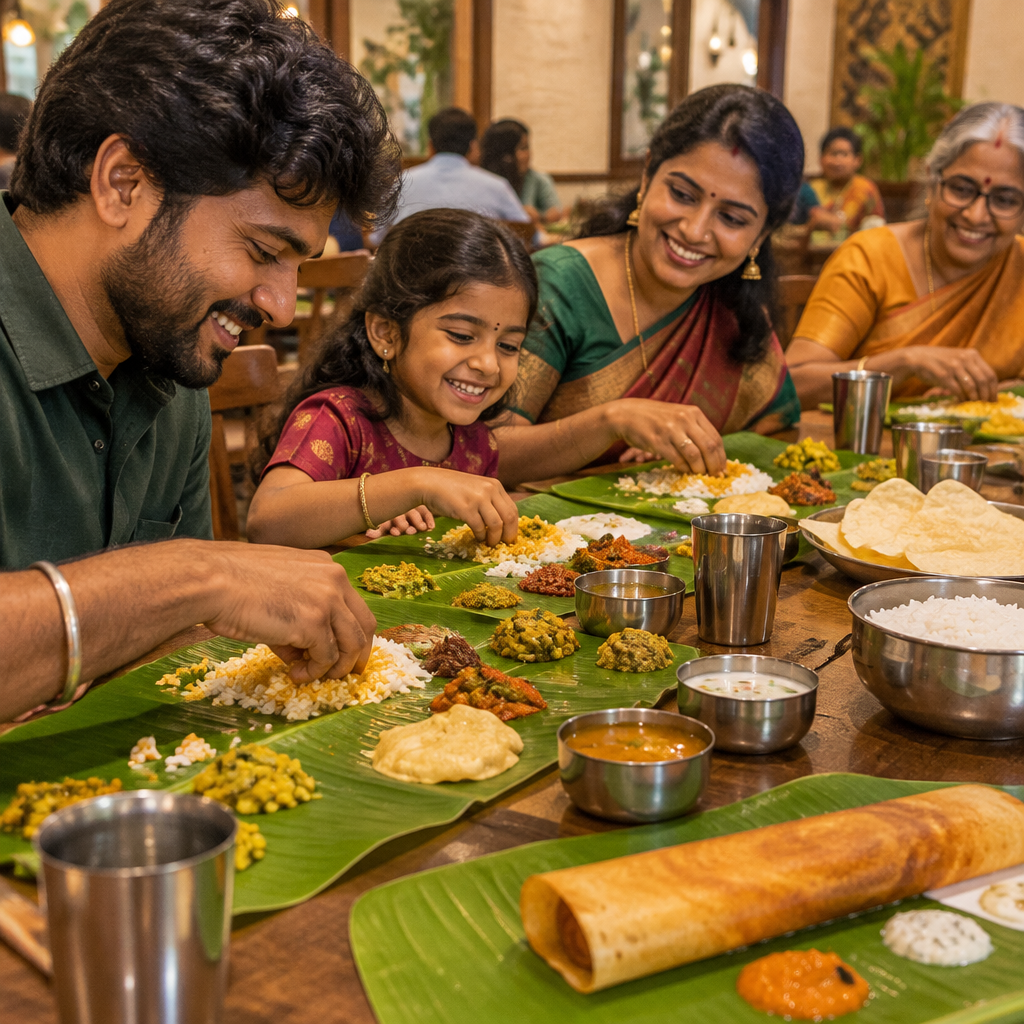
- A table as a social good. Kumar’s acceptance remarks put connection at the center of the experience. That is not a sentimental extra. Meals are among the ordinary ways people make time for one another, and a restaurant can give that time a setting, a rhythm, and something worth discussing. Beauty, when joined to skilled work and shared generously, is more than display; it can make attention itself feel valuable.
Here’s the kicker: the most convincing luxury often does not announce itself with a gold-trimmed menu. It shows up in the thought behind a dish, the confidence to avoid flattening a tradition, and the welcome that lets guests meet the food on its own terms. Semma’s story is compelling because the chef’s words about the table fit the restaurant’s culinary premise, rather than serving as a decorative slogan.
How to Choose a Meaningful Fine-Dining Experience
A celebrated restaurant can be a poor fit for a particular evening. A little preparation helps separate genuine interest from the reflex to book whatever has the biggest reputation. When I assess a fine-dining experience, I look first for a clear reason to go, then for practical details and a willingness to meet the restaurant where it is.
- Start with the food’s point of view. Read the restaurant’s own description and look for a meaningful culinary reference, not just a list of luxury ingredients. Semma’s connection to Kumar’s Tamil Nadu upbringing is a specific reason to be curious. If the only appeal is that a place is famous or difficult to book, ask whether that is enough for you.
- Read the menu as an invitation, not a promise. Valiya chemmeen moilee and Gunpowder Dosa offer a glimpse of Semma’s cooking, but a short description cannot tell you portion size, seasoning, presentation, or the full range of the current menu. Restaurant offerings change. Check the official site for current information before making plans, and contact the restaurant directly if an important detail is unclear.
- Treat awards as useful evidence, not a verdict. The James Beard Award recognizes Kumar as Best Chef: New York in 2025. Michelin recognition gives another reference point for Semma. Neither accolade can tell you whether you will enjoy a particular dish, whether the room suits your occasion, or whether the evening’s cost matches your priorities. Use them to narrow your search, not to outsource your judgment.
- Consider the cultural context. A regional cuisine is not a prop or a novelty challenge. Go with curiosity rather than a checklist of expectations about what Indian food “should” be. If you are unfamiliar with a dish, ask a sincere question; good hospitality should make room for conversation without turning the meal into a lecture or the diner into an examiner.
- Plan for the experience you actually want. Check the restaurant’s current booking, menu, timing, and accessibility details. The available account does not report Semma’s current prices, reservation policies, or every practical service detail, so do not guess from its awards. Decide what matters to your group—conversation, a special occasion, culinary exploration, or a particular dish—and choose accordingly.
I would not spend the evening trying to prove that a restaurant deserves its reputation. Let the meal be a meal. Pay attention to what arrives, how the flavors work together, and whether the people around the table feel included; those details reveal more than another round of status-checking ever will.

Comparison: Semma’s Cultural Focus and Status-Led Fine Dining
A fair comparison needs a little restraint. The available account describes Semma, but it does not identify a direct rival or provide comparative prices, service metrics, or diner surveys. The second column below is therefore an analytical contrast with a status-led model of luxury dining, not a claim about any named competitor.
| Dimension | Semma’s described approach | Status-led model: analytical contrast |
|---|
| Central appeal | Tamil Nadu roots and Kumar’s culinary perspective | Recognition, exclusivity, or conspicuous luxury may lead the pitch |
| Evidence in the account | Named dishes, the 2022 opening, chef background, awards, and Michelin recognition | No named restaurant or comparative performance data is reported |
| Role of ingredients | Ingredients appear in dishes tied to a specific culinary frame | A status-led pitch may foreground rarity or expense; that alone does not establish quality |
| Meaning of recognition | Awards and a Michelin star provide useful reference points | Prestige can become the whole story if diners treat the accolade as the experience itself |
| Measure of value | Craft, cultural specificity, hospitality, and connection at the table | Price and exclusivity may be mistaken for value if substance is not considered |
| Best question for diners | What can I learn or enjoy through this particular cooking? | Is the experience compelling beyond its reputation? |
The contrast is not an argument that expensive restaurants lack substance or that awards are empty. It is a reminder to distinguish a signal from the thing being signaled. A Michelin star can help identify a restaurant recognized by a guide; a James Beard Award can mark a chef’s achievement. Neither tells the whole story of a meal.
Semma’s case is stronger when its distinctions are read together. Kumar’s background gives the cooking a personal anchor; the named dishes offer a concrete glimpse of the menu; and his remarks frame the dinner table as a place for human connection. Those elements do not guarantee that every guest will love every dish. They do give the restaurant an intelligible identity, which is more compelling than a vague promise of “the best.”
The distinction also helps set expectations. A guest seeking spectacle above all may value different things from someone interested in regional cooking and conversation. Neither preference is a moral failing. But if a diner wants an experience with cultural depth, a restaurant’s culinary reference and the chef’s own account of the work deserve at least as much attention as the star count.
Common Mistakes to Avoid
Luxury dining invites a few predictable errors. Some come from marketing; others come from guests who treat a restaurant visit as a test they need to pass. Let’s be real: a good meal should not require a performance from either side of the table.
- Treating awards as a guarantee. A James Beard win and Michelin recognition are useful credentials, not a promise that every diner will love every course. Taste is personal, and a restaurant’s current menu may differ from the dishes mentioned in an earlier account. Check the latest details and keep your expectations human-sized.
- Calling one restaurant representative of a whole cuisine. Semma’s connection to Tamil Nadu is a strength, not a license to treat it as a complete survey of Indian food. India’s culinary traditions are broad and varied. A single chef’s restaurant can express a particular perspective; it cannot be reduced to a national summary.
- Assuming price equals craft. The account does not provide Semma’s current prices, and a star or award is not a price list. More broadly, expense cannot by itself prove careful sourcing, skilled preparation, or good service. Ask what makes the experience valuable to you, rather than assuming a high bill answers the question.
- Confusing unfamiliarity with failure. A dish may differ from a diner’s familiar reference and still be thoughtful, balanced, and well made. Try to describe what you taste before reaching for a broad verdict. Curiosity is more useful than demanding that every meal confirm what you already know.
- Making the meal about status. A hard-to-get table can become a trophy in the guest’s mind. That is a dull way to spend an evening. Kumar’s remarks point toward a better measure: whether people connected, whether the cooking held their attention, and whether the meal gave them something worth remembering together.
The truth is, luxury should sharpen appreciation, not replace it. A guest does not need specialized vocabulary to enjoy a meal, and a restaurant’s cultural identity should not be treated as a puzzle to solve. Respect the work, bring an open appetite, and let the table do its quiet social work.
Frequently Asked Questions
What award did Vijay Kumar win in 2025?
Vijay Kumar won the James Beard Award for Best Chef: New York in 2025. The James Beard Foundation’s 2025 award information is a useful place to verify the category and honoree. Kumar’s acceptance remarks emphasized food’s power and the importance of connecting around the dinner table.
What is Semma known for?
Semma is a New York restaurant opened in 2022 by Kumar with Roni Mazumdar and Chintan Pandya of Unapologetic Foods. Its cooking draws on Kumar’s upbringing in Tamil Nadu, southern India. Dishes cited in connection with the restaurant include valiya chemmeen moilee and Gunpowder Dosa; check Semma’s official site for current restaurant details.
Does Semma have a Michelin star?
Semma retained a Michelin star for three years running in the period described around Kumar’s 2025 award, and it was reported then as the only Indian restaurant in New York holding that honor. Michelin’s Semma listing is the appropriate place to check the guide’s current information, since recognition can change.
What does Kumar mean by calling connection the real luxury?
His remarks put shared attention ahead of status. A fine meal can be expensive and still feel empty if the people present are not engaged with the food or one another. Kumar’s point is that the deeper value of dining may be the chance to gather, appreciate skilled cooking, and make time for other people.
Final Thought
Vijay Kumar’s award gives Semma a public milestone, but his remarks offer the more durable idea. Food does not become meaningful only when an expert praises it, an ingredient is rare, or a dining room is difficult to enter. Skill matters; so do ingredients, memory, and the labor behind a dish. Yet a meal reaches its fullest purpose when it becomes an occasion for attention and welcome.
Semma’s connection to Tamil Nadu makes that principle specific. The restaurant is not presented as an abstract luxury brand selling prestige alone; its story joins a chef’s background, a particular culinary point of view, and dishes that invite diners to encounter that perspective. The Michelin star and James Beard Award add recognition, but they are not the meal itself. They are signposts, and the diner still has to show up hungry and curious.
Beauty in food can be a form of gratitude: for the earth’s gifts, for skilled hands, and for the people gathered nearby. That is a richer kind of luxury than simply owning or displaying something costly. Kumar said it plainly—the real luxury is connecting around the dinner table. Semma’s achievement gives that sentence a place to sit.