Yangwang U9 Xtreme Hits 312.66 MPH: The World’s Fastest Production Car
The Yangwang U9 Xtreme has reached 312.66 mph, a new production-car speed mark recognized by Guinness World Records. Driven by Marc Basseng on a prepared section of road in Abu Dhabi, the electric supercar also became the first production vehicle to exceed 500 km/h. The number is startling; the conditions and classification matter just as much.
The speed is higher than the U9 Xtreme’s earlier 308.34-mph mark, set at ATP Automotive Testing Papenburg in Germany in September 2025. That earlier run happened at a test facility; this one took place on a public road that had been closed and prepared for the attempt. That distinction makes the headline more vivid, but it does not make the test casual or uncontrolled.
BYD, Yangwang’s parent company, has spent years building an electric performance story around serious power and ambitious engineering. Now its flagship has a Guinness-recognized production-car record, with the Fédération Internationale de l’Automobile (FIA) also recognizing the achievement. Here’s the kicker: a spectacular top speed tells us something about engineering, but very little about whether a car is a sensible purchase—or a sound investment.
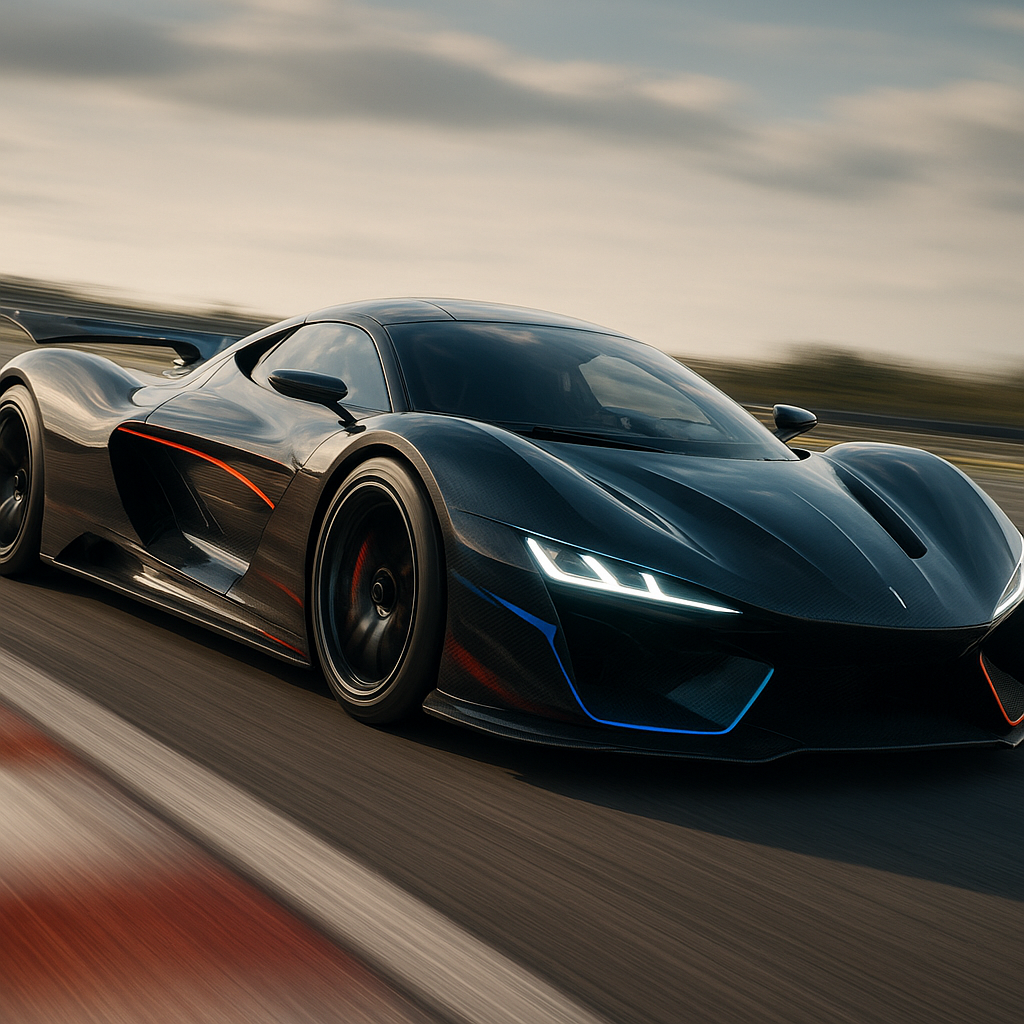
What Is the Yangwang U9 Xtreme?
The Yangwang U9 Xtreme is a limited-production electric supercar from Yangwang, BYD’s high-end marque. It is a two-door car with a quad-motor powertrain: one electric motor sits at each wheel. Together, those motors are rated at 2,978 horsepower and 2,478 lb-ft of torque. Those figures put the U9 Xtreme in a rarefied class where performance is not an accessory to the product. It is the product.
That layout matters. Four motors give the engineering team a motor at each corner, rather than a single engine sending power through a conventional drivetrain. But a spec sheet cannot explain how the car manages heat, traction, or stability at extreme speed. Those technical details are not reported here, and it would be foolish to pretend that horsepower alone explains a 312-mph run. At that velocity, the tires, aerodynamics, surface, weather, driver, and test procedure all matter.
On Sunday, November 1, 2026, German driver Marc Basseng reached 503.17 km/h on Sheikh Khalifa Bin Zayed International Road in Abu Dhabi’s Al Dhafra region. The measured speed converts to 312.66 mph. Guinness World Records recognized the result as the fastest production car and the first production vehicle to exceed 500 km/h; the FIA also acknowledged the achievement. Guinness’s production-car record page is a useful reference for understanding how such claims are classified.
The wording deserves care. The road is public infrastructure, but the record attempt did not take place amid ordinary traffic. A 6.21-mile section was closed, cleaned, and prepared. That is a controlled record setting, even if it is not a permanent racing circuit. Calling it a public-road run is accurate; picturing a routine drive with open traffic is not.
The U9 Xtreme had already set a mark of 308.34 mph at ATP Automotive Testing Papenburg in September 2025. The new result improves on that earlier figure by 4.32 mph. That may sound modest beside the headline speed, but pushing beyond 300 mph leaves little room for casual experimentation. The car’s record is not merely a claim about a big motor; it is a claim about the entire vehicle and the conditions in which the measurement was made.
Only 30 examples are planned, and the reported starting price is $2.76 million. The car is currently unavailable for purchase or import in the United States, according to the report. In practice, that makes the U9 Xtreme less like a showroom choice and more like a rare piece of automotive engineering with a very narrow route to ownership.
Why the Record Matters
A new speed record is easy to reduce to a number. That misses the useful part. The U9 Xtreme’s 312.66-mph run draws attention to the systems required to make a high-performance electric car operate at an extreme limit, while also forcing a clear distinction between marketing language and verified performance.
- It sets an electric benchmark. The U9 Xtreme is a production electric vehicle, not a one-off turbine experiment or a conventional petrol hypercar. Its four-motor arrangement and stated output show how far electric power has moved from quiet commuter duty. That is an engineering milestone, not proof that every electric car is faster or better than every combustion car.
- It raises the bar for production-car claims. Guinness’s recognition matters because record categories have rules. A company announcement alone is not the same thing as an independently recognized result. Readers should still check what a record measures—peak speed, an average, a standing start, or another defined test—before comparing one headline with another.
- It rewards the whole engineering chain. A motor can produce enormous power, but the car also has to put that power on the road. Tire capability, stability, aerodynamics, suspension, braking, and careful preparation all become part of the story. The available reporting does not disclose every technical detail of the attempt, so claims about those systems should be treated with restraint.
- It gives a young luxury marque an unusually strong calling card. Yangwang is not relying on a century of European racing history to explain the U9 Xtreme. It has a record result, a very high output figure, and a 30-car production plan. Heritage can matter, but it is not the only way to establish credibility; performance that survives scrutiny counts too.
- It makes scarcity part of the product. Thirty cars at a reported $2.76 million each are not a mainstream commercial proposition. Scarcity can raise attention and desirability, but it does not automatically create investment value. There is no dependable resale forecast in the available facts, and collectors should not confuse a limited allocation with guaranteed appreciation.
Frankly, the most interesting part may be the contrast between technical achievement and ordinary use. A car capable of 312 mph is not made more useful by proving it can do so. But engineering excellence has value beyond daily convenience: skilled work, patience, and disciplined craft deserve respect. Appreciation for beautiful making can coexist with stewardship, which means asking whether the purchase and its upkeep are responsible rather than treating price as a virtue in itself.
For BYD, the record also strengthens a broader claim: Chinese manufacturers can build high-end performance machinery, not only mass-market electric vehicles. The BYD news page provides the company’s own announcements, while the FIA news archive offers an official source for motorsport-related recognition. Neither corporate enthusiasm nor a record badge should end the discussion. They should start a more careful one.
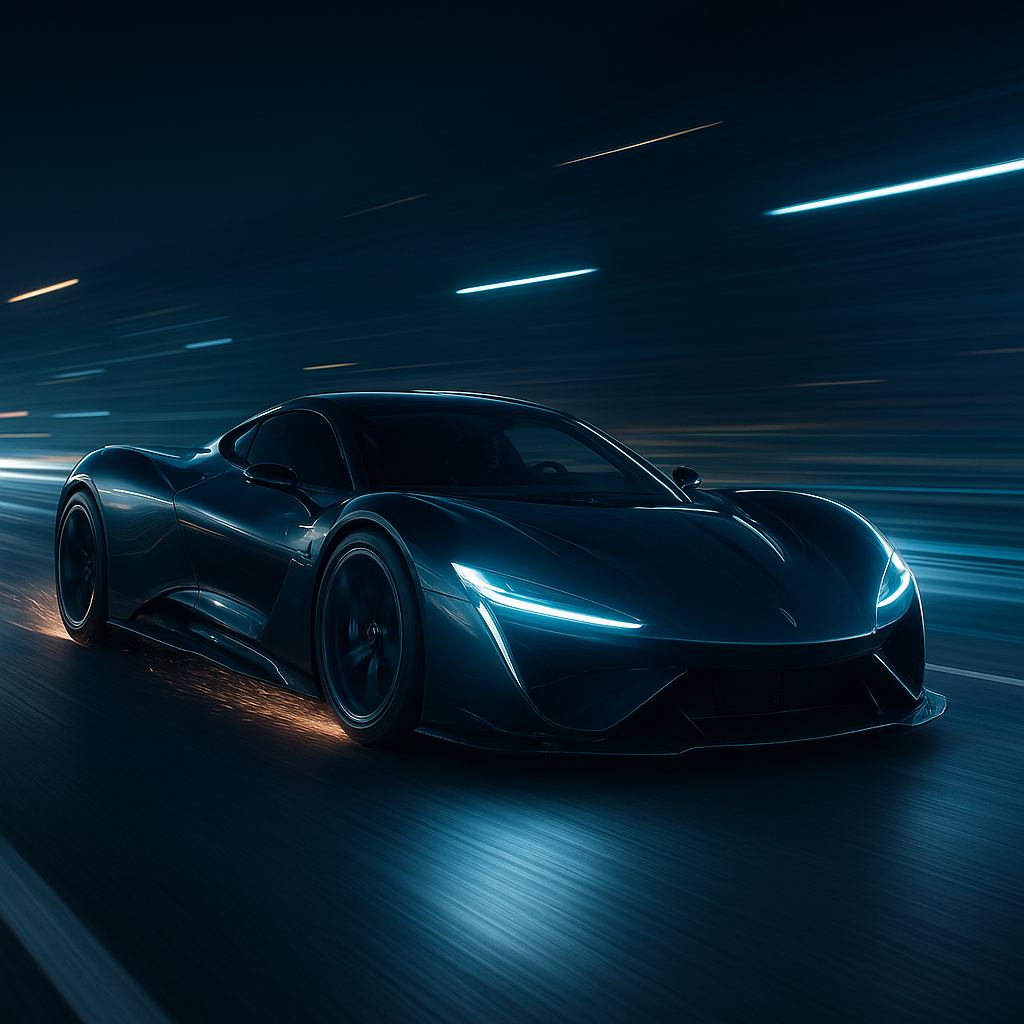
How to Evaluate a Record-Breaking Hypercar
A record car is not a normal luxury-car purchase. If you are evaluating the U9 Xtreme—or any hypercar promoted through a dramatic speed claim—separate the achievement from the ownership decision. I find that a short, disciplined checklist is more useful than a glossy brochure.
- Check the exact record and its measurement. Start with the organization that recognized the result, then confirm the stated speed, date, location, and category. In this case, the reported figure is 503.17 km/h, or 312.66 mph, recorded by Marc Basseng on November 1, 2026. Ask whether the published number is a single peak, a two-way average, or another defined result. Those measures are not interchangeable.
- Understand the test conditions. A closed and prepared road is not an open-road joyride. The Abu Dhabi attempt used a 6.21-mile section that was closed, cleaned, and prepared. Ask about the surface, weather, safety controls, and run protocol when those facts are available. Some details are not reported, so a careful reader should not fill gaps with assumptions.
- Look beyond headline power. The U9 Xtreme’s four motors are rated at 2,978 hp and 2,478 lb-ft of torque. Impressive, yes. But a buyer should also ask about battery capacity, charging, cooling, tire specification, maintenance intervals, warranty, and parts support. Those details are not included in the reported facts; for a car at this price, they are essential questions, not fussy extras.
- Clarify production and delivery. A stated plan to build 30 cars is not the same as a confirmed delivery schedule, a guaranteed allocation, or an established service network. Ask which markets can buy the car, what compliance requirements apply, and how repairs will be handled. The U9 Xtreme is reported as unavailable to purchase or import in the United States, so an American buyer should not assume that a record headline creates a lawful, practical route to ownership.
- Calculate the full cost of ownership. The reported starting price is $2.76 million, but that is only the first number. Insurance, transport, storage, specialist servicing, tires, and access to trained technicians can substantially affect the cost of keeping a limited-production hypercar. No verified operating-cost schedule is reported, which makes direct questions to the manufacturer or dealer essential.
- Treat investment value as uncertain. A record, a short production run, and a prestigious badge can attract collectors. They do not guarantee a profit. Resale depends on execution, condition, market access, provenance, support, and changing taste. I would buy a car like this only if the owner values the machine and can afford it without relying on an optimistic auction result.
- Decide what ownership is meant to provide. Is the draw engineering, the rarity, the record, or the experience of driving a very fast electric car? Those are different motives. A car built to prove a limit may be less satisfying on ordinary roads than a less extreme machine with better usability. Be honest about that before a seven-figure commitment becomes a heroic story you tell yourself.
Yangwang U9 Xtreme vs. a Historic Rival
The most useful competitor comparison is not a claim that two record runs were identical. The Koenigsegg Agera RS is a historic benchmark because Guinness recognized its 277.87-mph two-way average in 2017. The U9 Xtreme’s reported 312.66 mph is a peak speed. The figures can show scale, but they are not a clean apples-to-apples contest.
| Measure | Yangwang U9 Xtreme | Koenigsegg Agera RS |
|---|
| Record figure | 312.66 mph (503.17 km/h) | 277.87 mph (447.19 km/h) |
| Measurement described | Reported top speed in the Abu Dhabi attempt | Guinness-recognized two-way average |
| Powertrain | Four electric motors, one per wheel | Twin-turbocharged V8 petrol engine |
| Stated output in this report | 2,978 hp; 2,478 lb-ft | Not compared here; specifications vary by configuration |
| Record context | Closed, prepared road in Abu Dhabi, November 2026 | Two-way average recorded in Nevada in 2017 |
| Production plan or status | 30 examples planned; reported from $2.76 million | Production model; historic record benchmark |
The Agera RS record is documented by Koenigsegg’s official model page and Guinness’s record material. The comparison is about record history, not a verdict on which car is better. A peak speed and a two-way average answer different questions: a two-way average accounts for runs in opposite directions, while a peak figure reports the highest recorded speed in the described attempt.
There is another practical difference. The U9 Xtreme’s production run is exceptionally small, and it is not available to U.S. buyers according to the reported information. A record car can be more important as a technical statement than as a product most people can actually order. That distinction is worth keeping in view whenever a press release turns a number into a luxury narrative.
Common Mistakes to Avoid
Speed records invite overstatement. The right response is not to dismiss them, but to read the fine print before repeating the headline as settled fact.
- Treating a peak speed and an average as equivalent. They are not. The U9 Xtreme’s reported 312.66 mph is a top-speed figure; the Agera RS’s historic 277.87 mph is a two-way average. Put both in a table if useful, but label the methods clearly. Without that context, the comparison misleads more than it informs.
- Calling the attempt an ordinary public-road drive. The location was a public road, but the 6.21-mile section was closed, cleaned, and prepared. That distinction is not pedantry. It separates a controlled record attempt from driving at extreme speed in public traffic, which is dangerous and unacceptable.
- Assuming horsepower explains the record. Nearly 3,000 hp is a striking figure, but power alone cannot establish a safe, stable run. The tire, road, weather, aerodynamics, setup, and driver all matter. If a detail has not been reported, say so; inventing a technical explanation does not make the article smarter.
- Confusing a limited run with guaranteed investment value. Thirty planned examples may mean scarcity, but scarcity is not a return. The market for an expensive, market-restricted electric hypercar could behave in ways no press release can forecast. Buy for the machine, not a speculative resale story.
- Assuming world records settle every classification dispute. Guinness and the FIA are meaningful authorities, yet the record category and method still matter. The phrase fastest car can refer to very different classes and testing rules. Use the precise designation reported, rather than turning one recognized production-car result into a claim about every vehicle ever built.
- Believing global attention means global availability. The U9 Xtreme is reported as unavailable for purchase or import in the United States. A wealthy enthusiast cannot simply assume that a car can be registered, serviced, insured, or legally imported because it has a price and a production plan. Access is part of the product.
- Letting luxury language replace basic due diligence. Words such as exclusive, bespoke, and historic do not answer questions about warranty, parts, charging, maintenance, or after-sales support. At $2.76 million, polite skepticism is not bad manners; it is good buying practice. Ask for written answers, not just a guided tour and a dramatic video.
Let’s be real: the record is extraordinary, but extraordinary is not the same as fully understood. The public facts are enough to explain why the result matters. They are not enough to judge the car’s long-term reliability, its real-world range, its service burden, or its resale prospects. Those claims need evidence of their own.
Frequently Asked Questions
How fast did the Yangwang U9 Xtreme go?
The U9 Xtreme reached 503.17 km/h, equivalent to 312.66 mph, in its Abu Dhabi record attempt on November 1, 2026. Marc Basseng was the driver. Guinness recognized the achievement, which also made the car the first production vehicle reported to exceed 500 km/h.
Was the record set on an open public road?
The attempt took place on Sheikh Khalifa Bin Zayed International Road, a public road in the Al Dhafra region of Abu Dhabi. A 6.21-mile stretch was closed, cleaned, and prepared for the run. So the location was public infrastructure, but the record attempt was controlled rather than a normal drive in traffic.
How many Yangwang U9 Xtreme cars will be made, and what do they cost?
The reported production plan is 30 examples, with pricing starting at $2.76 million. The car is currently unavailable for purchase or import in the United States, according to the report. Availability, delivery timing, taxes, and final transaction prices are not reported here; prospective buyers would need direct confirmation from the brand.
Is the U9 Xtreme faster than the Koenigsegg Agera RS?
Its reported peak of 312.66 mph is higher than the Agera RS’s Guinness-recognized 277.87-mph two-way average. That does not make the comparison perfectly like for like. One is reported as a top speed and the other as an average over runs in opposite directions, so both figures need their measurement labels attached.
Final Thought
The Yangwang U9 Xtreme’s new mark is not just a bigger number than its own earlier record. It is a sharp demonstration of what a manufacturer can do when it combines electric power, a four-motor layout, a specialized vehicle, a prepared course, and a driver willing to test the limit. At 312.66 mph, the result is extraordinary by any ordinary measure—and properly noteworthy as a Guinness-recognized production-car record.
Still, the most useful luxury stories do not stop at the price tag or the speed. They ask what the achievement proves, what remains unknown, and whether the product can be owned and maintained as promised. Here, the available facts establish the speed, the driver, the date, the location, the stated output, the proposed production count, and the reported starting price. They do not establish every detail of the test protocol, the car’s long-term durability, or its future value. That is a meaningful boundary, not a blemish.
A beautiful machine can reflect patience, skill, and the dignity of work; it can also remind its admirers that excellence should be handled with care. That is a better measure of luxury than sheer excess. The U9 Xtreme has earned attention by going faster than any production car before it, as Guinness classifies the record. Whether it earns lasting respect will depend on more than one spectacular run: it will depend on how the engineering holds up, how the company supports its owners, and whether the achievement is discussed with the same precision that produced it.
FAQPage JSON-LD